Tale of a Strange Marriage (Konkai Zoshi). Artist: Ukita Ikkei (Japanese, 1795-1859). Culture: Japan. Dimensions: 11 3/4 in. x 25 ft. 6 in. (29.8 x 777.2 cm). Date: ca. 1858.Satirical paintings with animals standing in for humans have a long history in Japanese art. A special genre of such paintings involves foxes, which are believed to transform themselves into humans on moonlit nights.This somewhat eerie depiction of a fox wedding under an autumn moon expresses the artist's biting criticism of the Tokugawa shogunate and its attempt to shore up its waning authority by marrying an imperial princess to the shogun. The artist, Ukita Ikkei, was an important member of opposition political circles and a major figure in the revival of yamato-e, a distinctively Japanese style of courtly painting. As such, he was familiar with yamato-e masterpieces preserved in Kyoto, skillfully interpreting this traditional Japanese idiom. Each of the five scenes is taken directly from a venerated Kamakura-pe
This asset has restrictions and cannot be purchased online. Get in touch for more details.
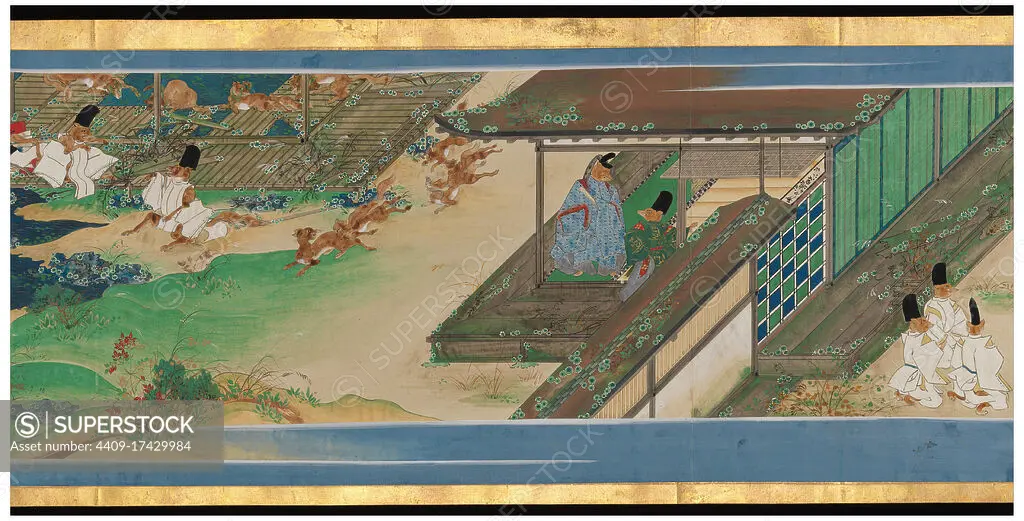
SuperStock offers millions of photos, videos, and stock assets to creatives around the world. This image of Tale of a Strange Marriage (Konkai Zoshi). Artist: Ukita Ikkei (Japanese, 1795-1859). Culture: Japan. Dimensions: 11 3/4 in. x 25 ft. 6 in. (29.8 x 777.2 cm). Date: ca. 1858.Satirical paintings with animals standing in for humans have a long history in Japanese art. A special genre of such paintings involves foxes, which are believed to transform themselves into humans on moonlit nights.This somewhat eerie depiction of a fox wedding under an autumn moon expresses the artist's biting criticism of the Tokugawa shogunate and its attempt to shore up its waning authority by marrying an imperial princess to the shogun. The artist, Ukita Ikkei, was an important member of opposition political circles and a major figure in the revival of yamato-e, a distinctively Japanese style of courtly painting. As such, he was familiar with yamato-e masterpieces preserved in Kyoto, skillfully interpreting this traditional Japanese idiom. Each of the five scenes is taken directly from a venerated Kamakura-pe by Album/Metropolitan Museum of Art, NY/Album Archivo is available for licensing today.
Looking for a license?
Click here, and we'll help you find it! Questions? Just ask!
Click here, and we'll help you find it! Questions? Just ask!
DETAILS
Image Number: 4409-17429984Rights ManagedCredit Line:Album/Metropolitan Museum of Art, NY/Album Archivo/SuperStockCollection:Album Archivo Contributor:Album / Metropolitan Museum of Art, NY Model Release:NoProperty Release:NoResolution:4800×2444