Suona ( ). Culture: Chinese. Dimensions: L: 44.2 cm (17-15/16 in.).; Diam. of Bell: 13.7 cm (5-3/8 in.). Date: 19th century.Double-reed instruments first appeared during the late Han dynasty, having originated in the Middle East. The term suona derives from zurna, the Arabic name for the instrument. It is depicted, along with many other instruments, in images created from the third to the fifth century in the Buddhist cave temples at Kizil. The penetrating sound of the suona, ideal for processions and military functions, was easily appropriated for popular music. Several varieties are found in China, including a smaller version called a haidi. The player, whose mouth completely covers the small reeds, uses circular breathing (inhaling through the nose) to maintain a constant tone. Museum: Metropolitan Museum of Art, New York, USA.
This asset has restrictions and cannot be purchased online. Get in touch for more details.
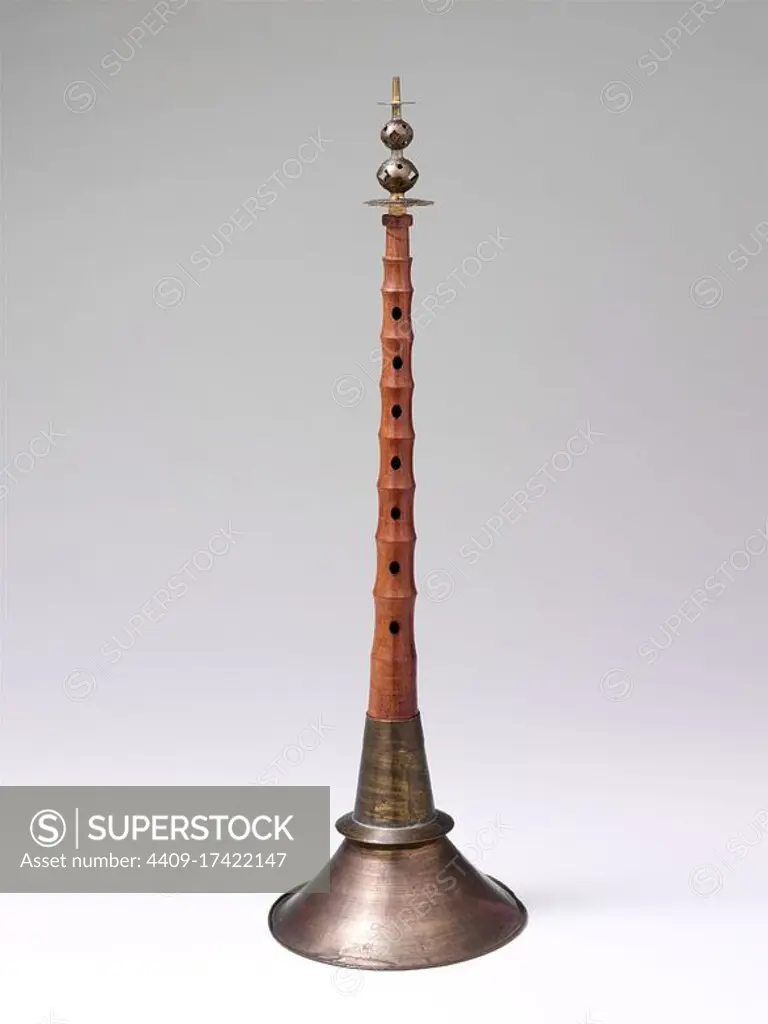
SuperStock offers millions of photos, videos, and stock assets to creatives around the world. This image of Suona ( ). Culture: Chinese. Dimensions: L: 44.2 cm (17-15/16 in.).; Diam. of Bell: 13.7 cm (5-3/8 in.). Date: 19th century.Double-reed instruments first appeared during the late Han dynasty, having originated in the Middle East. The term suona derives from zurna, the Arabic name for the instrument. It is depicted, along with many other instruments, in images created from the third to the fifth century in the Buddhist cave temples at Kizil. The penetrating sound of the suona, ideal for processions and military functions, was easily appropriated for popular music. Several varieties are found in China, including a smaller version called a haidi. The player, whose mouth completely covers the small reeds, uses circular breathing (inhaling through the nose) to maintain a constant tone. Museum: Metropolitan Museum of Art, New York, USA. by Album/Metropolitan Museum of Art, NY/Album Archivo is available for licensing today.
Looking for a license?
Click here, and we'll help you find it! Questions? Just ask!
Click here, and we'll help you find it! Questions? Just ask!
DETAILS
Image Number: 4409-17422147Rights ManagedCredit Line:Album/Metropolitan Museum of Art, NY/Album Archivo/SuperStockCollection:Album Archivo Contributor:Album / Metropolitan Museum of Art, NY Model Release:NoProperty Release:NoResolution:3150×4200