Summer Robe (Katabira) with Autumn Flowers and Insect Cages late 18th-early 19th century Japan In Japan, insects beloved for their chirping song were sometimes caught or purchased and kept in cages. This unlined summer robe features a variety of insect cages amid autumn grasses on an indigo blue ground that suggests cool autumn days and the color of watera favorite conceit for summer kimonos. The design is rendered using paste-resist dyeing (y?zen) and embroidery. The scattered, glinting gold embroidery evokes the quality of light on an autumn day. The insect-cage design was already popular in the early Edo period and is depicted in the earliest woodblock-printed book of patterns for kimonos, published in 1666.. Summer Robe (Katabira) with Autumn Flowers and Insect Cages. Japan. late 18th-early 19th century. Bast fiber with resist?dyeing, silk-thread embroidery, and gold-thread couching. Edo period (1615-1868). Costumes-Embroidered
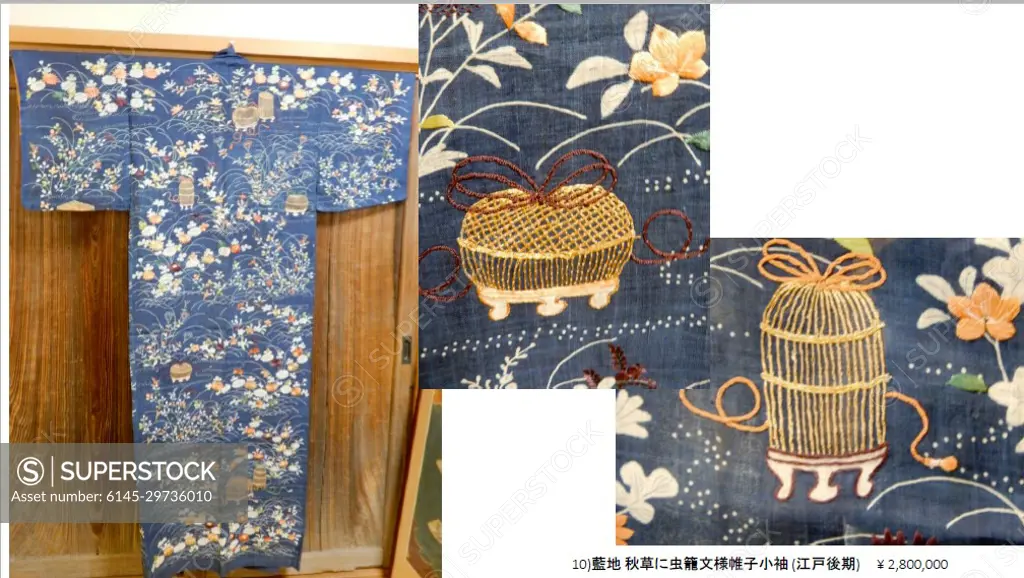
SuperStock offers millions of photos, videos, and stock assets to creatives around the world. This image of Summer Robe (Katabira) with Autumn Flowers and Insect Cages late 18th-early 19th century Japan In Japan, insects beloved for their chirping song were sometimes caught or purchased and kept in cages. This unlined summer robe features a variety of insect cages amid autumn grasses on an indigo blue ground that suggests cool autumn days and the color of watera favorite conceit for summer kimonos. The design is rendered using paste-resist dyeing (y?zen) and embroidery. The scattered, glinting gold embroidery evokes the quality of light on an autumn day. The insect-cage design was already popular in the early Edo period and is depicted in the earliest woodblock-printed book of patterns for kimonos, published in 1666.. Summer Robe (Katabira) with Autumn Flowers and Insect Cages. Japan. late 18th-early 19th century. Bast fiber with resist?dyeing, silk-thread embroidery, and gold-thread couching. Edo period (1615-1868). Costumes-Embroidered by Piemags/PL Photography Limited is available for licensing today.
Looking for a license?
Click here, and we'll help you find it! Questions? Just ask!
Click here, and we'll help you find it! Questions? Just ask!
DETAILS
Image Number: 6145-29736010Royalty FreeCredit Line:Piemags/PL Photography Limited/SuperStockCollection:PL Photography Limited Contributor:Piemags Model Release:NoProperty Release:NoResolution:1008×569