Summer Mountains ca. 1050 Attributed to Qu Ding Chinese Between the years 900 and 1100, Chinese painters created visions of landscape that depicted the sublimity of creation. Viewers are meant to identify with the human figures in these paintings. In Summer Mountains, travelers make their way toward a temple retreat. The central mountain sits in commanding majesty, like an emperor among his subjects, the culmination of natures hierarchy. The advanced use of texture strokes and ink wash suggests that Summer Mountains is by a master working about 1050, a date corroborated by collectors seals belonging to the Song emperor Huizong (r. 1101-25), whose paintings catalogue records three works entitled Summer Scenery by the otherwise unknown artist Qu Ding. Listen to experts illuminate this artwork's story Listen Play or pause #7311. Summer Mountains, Part 1 Play or pause #7321. Summer Mountains, Part 2 Supported by Bloomberg Philanthropies We're sorry, the transcript for this audio track
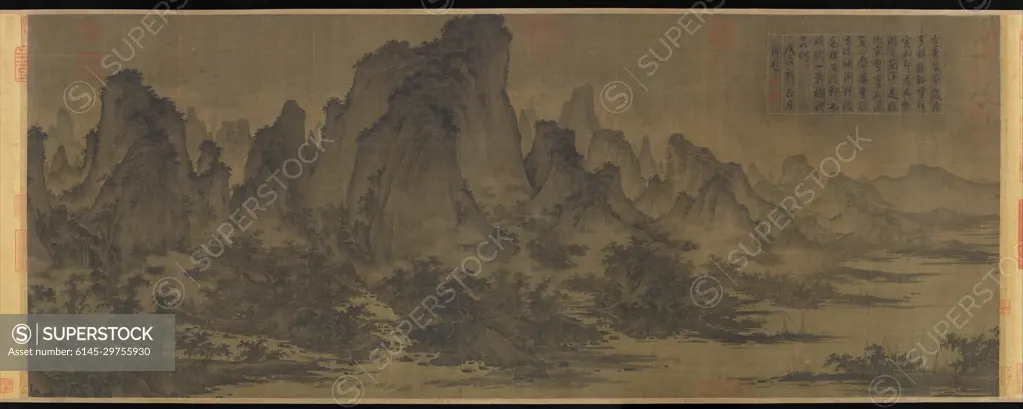
SuperStock offers millions of photos, videos, and stock assets to creatives around the world. This image of Summer Mountains ca. 1050 Attributed to Qu Ding Chinese Between the years 900 and 1100, Chinese painters created visions of landscape that depicted the sublimity of creation. Viewers are meant to identify with the human figures in these paintings. In Summer Mountains, travelers make their way toward a temple retreat. The central mountain sits in commanding majesty, like an emperor among his subjects, the culmination of natures hierarchy. The advanced use of texture strokes and ink wash suggests that Summer Mountains is by a master working about 1050, a date corroborated by collectors seals belonging to the Song emperor Huizong (r. 1101-25), whose paintings catalogue records three works entitled Summer Scenery by the otherwise unknown artist Qu Ding. Listen to experts illuminate this artwork's story Listen Play or pause #7311. Summer Mountains, Part 1 Play or pause #7321. Summer Mountains, Part 2 Supported by Bloomberg Philanthropies We're sorry, the transcript for this audio track by Piemags/PL Photography Limited is available for licensing today.
Looking for a license?
Click here, and we'll help you find it! Questions? Just ask!
Click here, and we'll help you find it! Questions? Just ask!
DETAILS
Image Number: 6145-29755930Royalty FreeCredit Line:Piemags/PL Photography Limited/SuperStockCollection:PL Photography Limited Contributor:Piemags Model Release:NoProperty Release:NoResolution:3951×1580