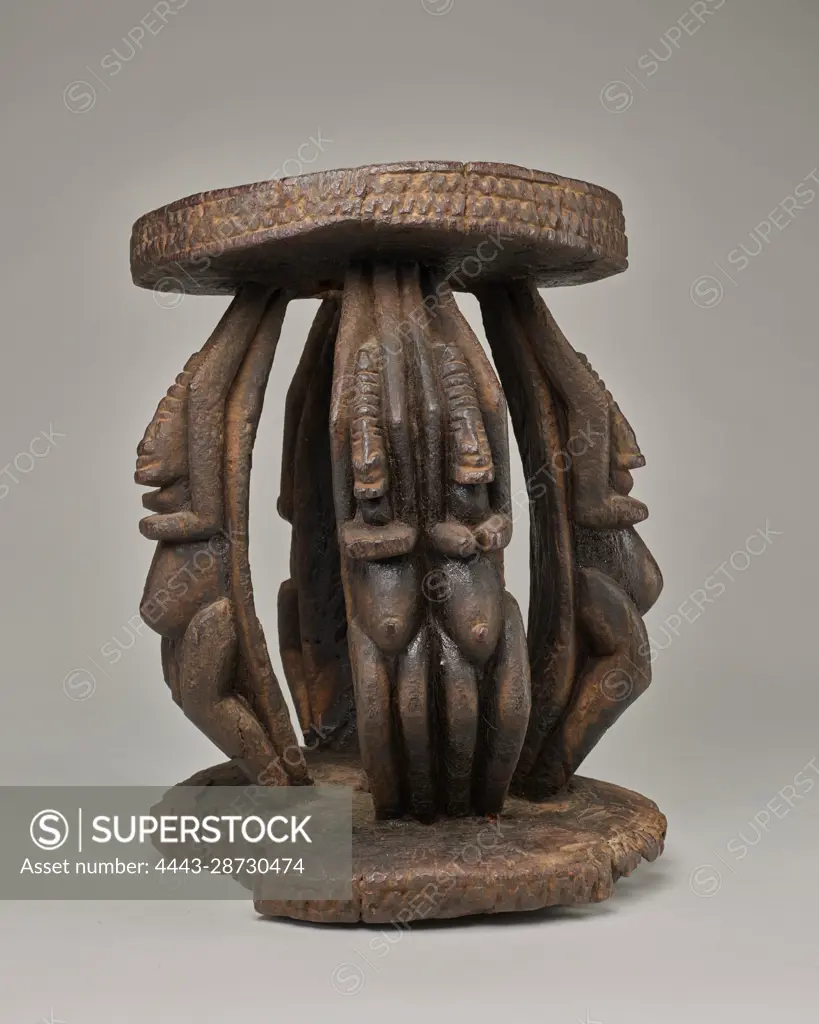
Stool, 16th-17th century, 17 3/16 × 13 5/16 × 13 in. (43.7 × 33.8 × 33 cm), Wood, Mali, 16th-17th century, The Dogon from Mali have a long artistic tradition, and some of their wooden artworks have survived over the centuries. This ceremonial stool is over 400 years old. Never meant to be sat upon, it combines sculptural elegance with cultural meaning. The seat seems to be supported by delicately carved figures, four pairs in total. They represent the nommos, male-female pairs of twins who are the founding ancestors of humankind and teachers of culture. The nommos join the sky, the seat, with the earth, the base of the stool. This is how the Dogon historically viewed the universe, made of two disks connected by a tree. If you carefully look between the figures, you can see the stools central post, which represents the cosmic tree.
SuperStock offers millions of photos, videos, and stock assets to creatives around the world. This image of Stool, 16th-17th century, 17 3/16 × 13 5/16 × 13 in. (43.7 × 33.8 × 33 cm), Wood, Mali, 16th-17th century, The Dogon from Mali have a long artistic tradition, and some of their wooden artworks have survived over the centuries. This ceremonial stool is over 400 years old. Never meant to be sat upon, it combines sculptural elegance with cultural meaning. The seat seems to be supported by delicately carved figures, four pairs in total. They represent the nommos, male-female pairs of twins who are the founding ancestors of humankind and teachers of culture. The nommos join the sky, the seat, with the earth, the base of the stool. This is how the Dogon historically viewed the universe, made of two disks connected by a tree. If you carefully look between the figures, you can see the stools central post, which represents the cosmic tree. by Artokoloro is available for licensing today.
Looking for a license?
Click here, and we'll help you find it! Questions? Just ask!
Click here, and we'll help you find it! Questions? Just ask!
DETAILS
Image Number: 4443-28730474Rights ManagedCredit Line:Artokoloro/SuperStockCollection:Artokoloro Model Release:NoProperty Release:NoResolution:4823×6029