Stone Celt before 16th century Taíno The most numerous category of polished stone sculpture emerging from the Taíno world of the ancestral Caribbean islands are ceremonial axes and blades, which take many forms and may have been an important medium of exchange. Axes feature abstract zoomorphic forms in stone, or consisted of wooden handles with stone blades hafted to them. Stone axe handle-shaped figures may have been ceremonial scepters. Ceremonial blades made of different types of greenstone, both local and imported, have been recovered in large numbers. These axes, known as petaloid celts for their resemblance to flower petals, could have served as dedicatory offerings, which have a long history on the Caribbean mainland in Mesoamerica.. Stone Celt. Taíno. before 16th century. Stone. Dominican Republic, Caribbean. Stone-Implements
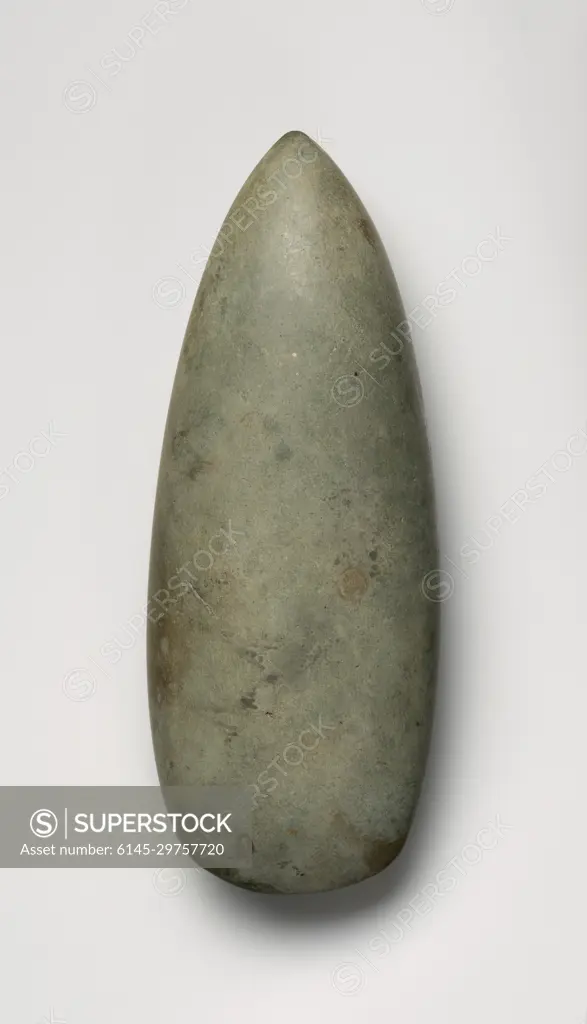
SuperStock offers millions of photos, videos, and stock assets to creatives around the world. This image of Stone Celt before 16th century Taíno The most numerous category of polished stone sculpture emerging from the Taíno world of the ancestral Caribbean islands are ceremonial axes and blades, which take many forms and may have been an important medium of exchange. Axes feature abstract zoomorphic forms in stone, or consisted of wooden handles with stone blades hafted to them. Stone axe handle-shaped figures may have been ceremonial scepters. Ceremonial blades made of different types of greenstone, both local and imported, have been recovered in large numbers. These axes, known as petaloid celts for their resemblance to flower petals, could have served as dedicatory offerings, which have a long history on the Caribbean mainland in Mesoamerica.. Stone Celt. Taíno. before 16th century. Stone. Dominican Republic, Caribbean. Stone-Implements by Piemags/PL Photography Limited is available for licensing today.
Looking for a license?
Click here, and we'll help you find it! Questions? Just ask!
Click here, and we'll help you find it! Questions? Just ask!
DETAILS
Image Number: 6145-29757720Royalty FreeCredit Line:Piemags/PL Photography Limited/SuperStockCollection:PL Photography Limited Contributor:Piemags Model Release:NoProperty Release:NoResolution:2296×4000