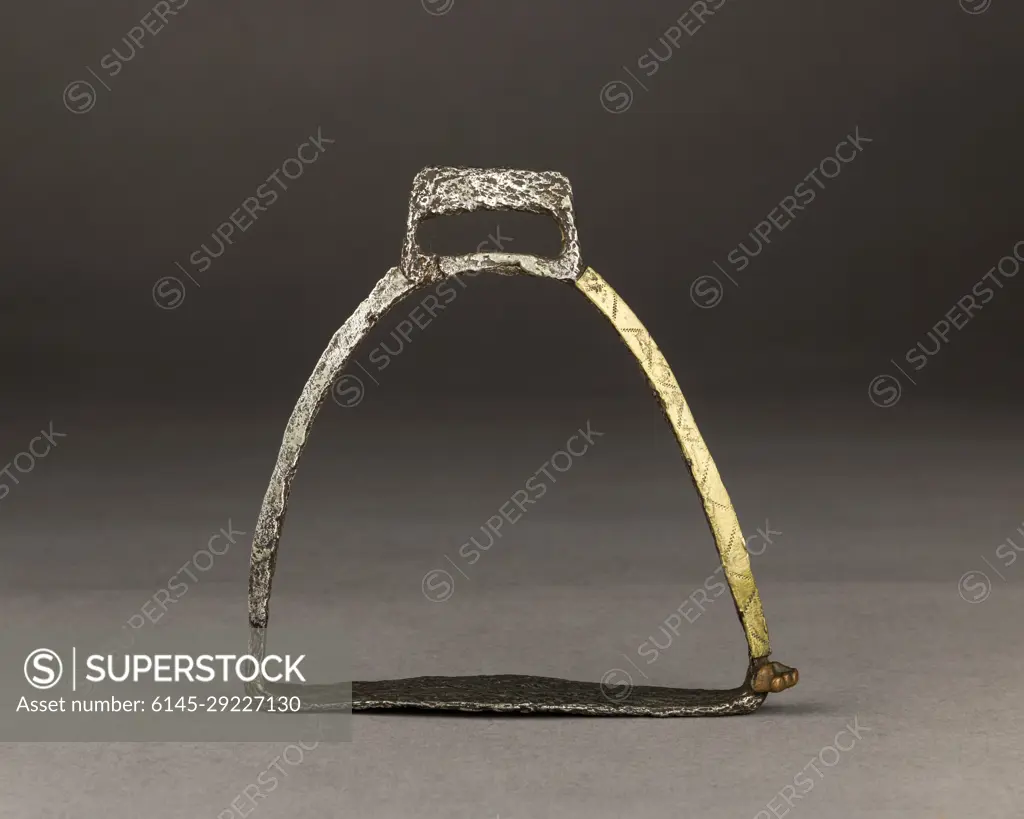
Stirrup 10th-11th century German One of the branches of this stirrup retains part of its decoration consisting in a brass applique strip engraved with a zigzag motif, and a cast bronze terminal. This type of stirrup is typical of the Germanic populations living in central Europe in the 10th-11th century.Horses had a great importance in the society of the Germanic cultures living in these areas, in both social and religious aspects. Equestrian equipment, like stirrups, spurs and bits, are regularly found in their burials, among the goods warriors wanted to bring with them to the afterlife. The elite would sometimes even be accompanied by sacrificed horses, a meaningful practice at that time, considering the high economic value of horses.. Stirrup. German. 10th-11th century. Iron, copper alloys. Cologne. Equestrian Equipment-Stirrups
SuperStock offers millions of photos, videos, and stock assets to creatives around the world. This image of Stirrup 10th-11th century German One of the branches of this stirrup retains part of its decoration consisting in a brass applique strip engraved with a zigzag motif, and a cast bronze terminal. This type of stirrup is typical of the Germanic populations living in central Europe in the 10th-11th century.Horses had a great importance in the society of the Germanic cultures living in these areas, in both social and religious aspects. Equestrian equipment, like stirrups, spurs and bits, are regularly found in their burials, among the goods warriors wanted to bring with them to the afterlife. The elite would sometimes even be accompanied by sacrificed horses, a meaningful practice at that time, considering the high economic value of horses.. Stirrup. German. 10th-11th century. Iron, copper alloys. Cologne. Equestrian Equipment-Stirrups by Piemags/PL Photography Limited is available for licensing today.
Looking for a license?
Click here, and we'll help you find it! Questions? Just ask!
Click here, and we'll help you find it! Questions? Just ask!
DETAILS
Image Number: 6145-29227130Royalty FreeCredit Line:Piemags/PL Photography Limited/SuperStockCollection:PL Photography Limited Contributor:Piemags Model Release:NoProperty Release:NoResolution:4000×3200