Star-Shaped Tile. Dimensions: W. 9-3/4 in. (24.8 cm). Date: first half 15th century.Eight-pointed star tiles from Nasrid Spain are rare, but this example bears motifs specific to lusterware produced in Málaga, such as the botanical decoration radiating from a central flower or plant motif. The grapevine pattern with naturalistic leaves and bunches of fruit is a reference to the classical heritage of Islamic art. The arrival of the luster-painting technique in Islamic Spain is now thought to have come from Egyptian craftsmen who moved to the Malagan coast after the fall of the Fatimid Empire in 1171. The relocation of such craftsmen contributed to the dissemination of designs from North Africa and the western Islamic world into Andalusian arts. Museum: Metropolitan Museum of Art, New York, USA.
This asset has restrictions and cannot be purchased online. Get in touch for more details.
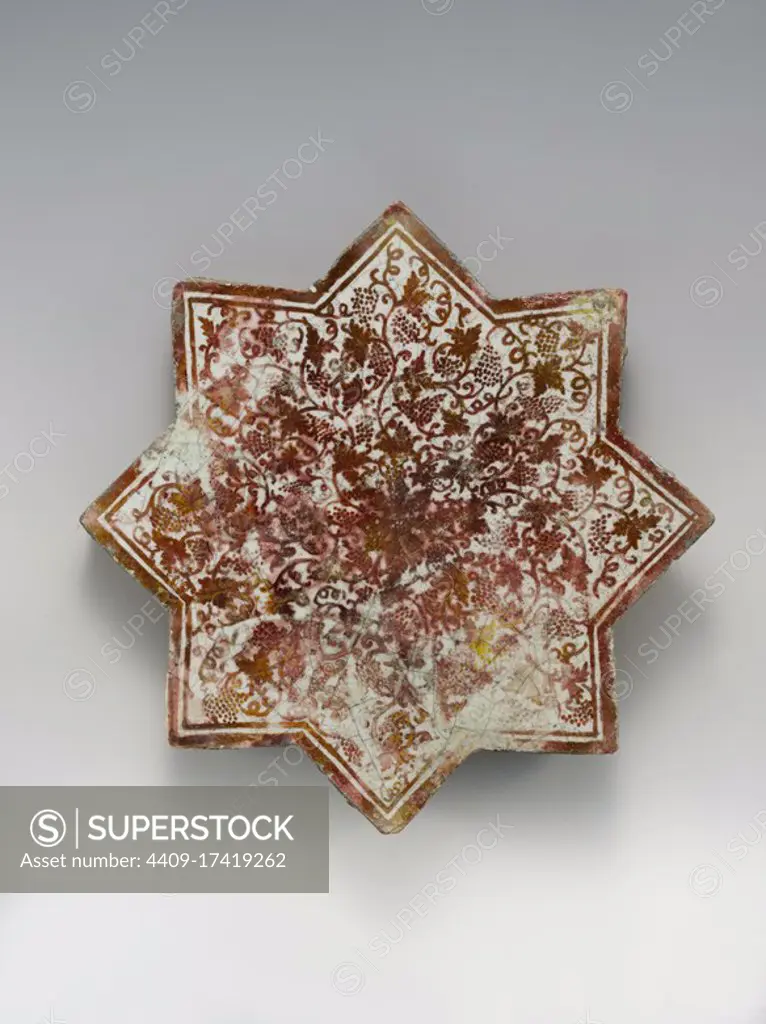
SuperStock offers millions of photos, videos, and stock assets to creatives around the world. This image of Star-Shaped Tile. Dimensions: W. 9-3/4 in. (24.8 cm). Date: first half 15th century.Eight-pointed star tiles from Nasrid Spain are rare, but this example bears motifs specific to lusterware produced in Málaga, such as the botanical decoration radiating from a central flower or plant motif. The grapevine pattern with naturalistic leaves and bunches of fruit is a reference to the classical heritage of Islamic art. The arrival of the luster-painting technique in Islamic Spain is now thought to have come from Egyptian craftsmen who moved to the Malagan coast after the fall of the Fatimid Empire in 1171. The relocation of such craftsmen contributed to the dissemination of designs from North Africa and the western Islamic world into Andalusian arts. Museum: Metropolitan Museum of Art, New York, USA. by Album/Metropolitan Museum of Art, NY/Album Archivo is available for licensing today.
Looking for a license?
Click here, and we'll help you find it! Questions? Just ask!
Click here, and we'll help you find it! Questions? Just ask!
DETAILS
Image Number: 4409-17419262Rights ManagedCredit Line:Album/Metropolitan Museum of Art, NY/Album Archivo/SuperStockCollection:Album Archivo Contributor:Album / Metropolitan Museum of Art, NY Model Release:NoProperty Release:NoResolution:3145×4200