Stand 5th-6th century Korea This large footed stand is an example of the gray stoneware vessels found in tombs from the fifth to sixth centuries and is the product of important technological advances in Korean ceramic production. With the exception of Chinese stoneware, the Korean stoneware (kyōngjil t'ogi) of the Three Kingdoms period is the earliest known high-fired ware in the world, requiring kiln temperatures in excess of 1000°C. These wares were produced in a wood-fired climbing kiln, a tunnel-shaped structure typically built up the side of a hill. This closed-kiln design, in contrast to the earlier open or semi-open kiln, produces intense and steady heat and allows control of the oxygen flow into the firing chamber. The characteristic gray color of Three Kingdoms stoneware is the result of the reduction of oxygen in the chamber. Unlike the soft, low-fired earthenware (wajil t'ogi) of earlier periods, stoneware is hard, dense, and impervious to liquids.High-fired glazes represent
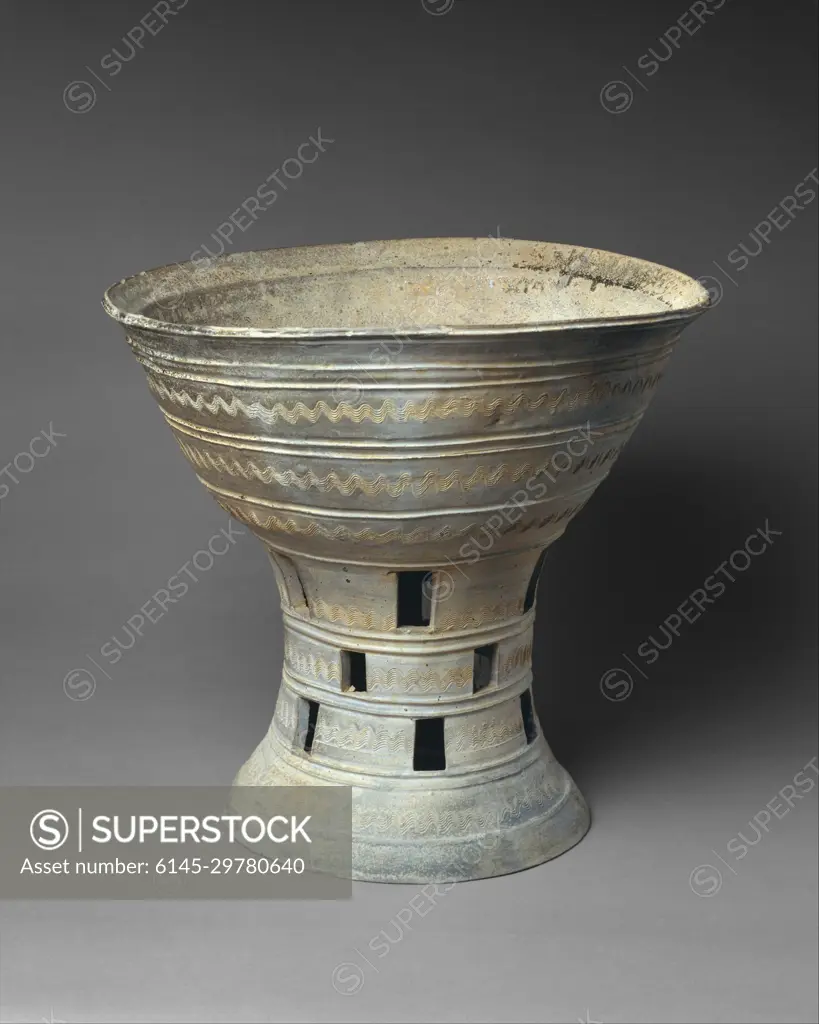
SuperStock offers millions of photos, videos, and stock assets to creatives around the world. This image of Stand 5th-6th century Korea This large footed stand is an example of the gray stoneware vessels found in tombs from the fifth to sixth centuries and is the product of important technological advances in Korean ceramic production. With the exception of Chinese stoneware, the Korean stoneware (kyōngjil t'ogi) of the Three Kingdoms period is the earliest known high-fired ware in the world, requiring kiln temperatures in excess of 1000°C. These wares were produced in a wood-fired climbing kiln, a tunnel-shaped structure typically built up the side of a hill. This closed-kiln design, in contrast to the earlier open or semi-open kiln, produces intense and steady heat and allows control of the oxygen flow into the firing chamber. The characteristic gray color of Three Kingdoms stoneware is the result of the reduction of oxygen in the chamber. Unlike the soft, low-fired earthenware (wajil t'ogi) of earlier periods, stoneware is hard, dense, and impervious to liquids.High-fired glazes represent by Piemags/PL Photography Limited is available for licensing today.
Looking for a license?
Click here, and we'll help you find it! Questions? Just ask!
Click here, and we'll help you find it! Questions? Just ask!
DETAILS
Image Number: 6145-29780640Royalty FreeCredit Line:Piemags/PL Photography Limited/SuperStockCollection:PL Photography Limited Contributor:Piemags Model Release:NoProperty Release:NoResolution:2978×3722