Stamp seal and modern impression: unicorn and incense burner () ca. 2600-1900 B.C. Indus Stamp seals were used in antiquity as marks of ownership and badges of status. In the large urban centers of the Harappan civilization, hundreds of square-shaped stamp seals were found in excavations. They are engraved with images of wild or domestic animals, humans, fantastic creatures, and possibly divinities. In this example, the creature is rendered in the typical strict profile, standing before what might be an altar. Its shoulder is covered by a decorated quilt or harness in the shape of an upside-down heart pattern. Most of the square stamp seals have inscriptions along the top edge. The Indus script, invented around 2600 B.C., is yet to be fully deciphered.. Stamp seal and modern impression: unicorn and incense burner (). Indus. ca. 2600-1900 B.C.. Burnt steatite. Mature Harappan. Indus Valley
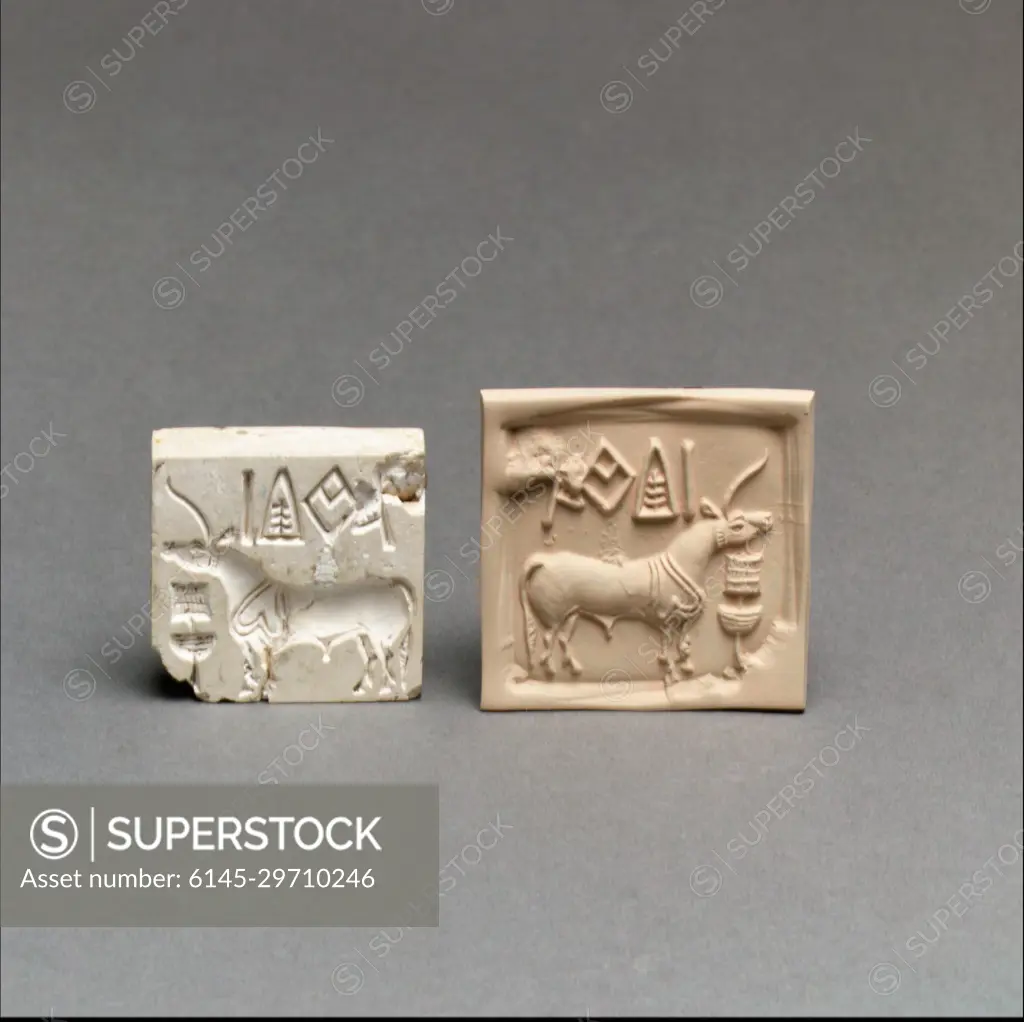
SuperStock offers millions of photos, videos, and stock assets to creatives around the world. This image of Stamp seal and modern impression: unicorn and incense burner () ca. 2600-1900 B.C. Indus Stamp seals were used in antiquity as marks of ownership and badges of status. In the large urban centers of the Harappan civilization, hundreds of square-shaped stamp seals were found in excavations. They are engraved with images of wild or domestic animals, humans, fantastic creatures, and possibly divinities. In this example, the creature is rendered in the typical strict profile, standing before what might be an altar. Its shoulder is covered by a decorated quilt or harness in the shape of an upside-down heart pattern. Most of the square stamp seals have inscriptions along the top edge. The Indus script, invented around 2600 B.C., is yet to be fully deciphered.. Stamp seal and modern impression: unicorn and incense burner (). Indus. ca. 2600-1900 B.C.. Burnt steatite. Mature Harappan. Indus Valley by Piemags/PL Photography Limited is available for licensing today.
Looking for a license?
Click here, and we'll help you find it! Questions? Just ask!
Click here, and we'll help you find it! Questions? Just ask!
DETAILS
Image Number: 6145-29710246Royalty FreeCredit Line:Piemags/PL Photography Limited/SuperStockCollection:PL Photography Limited Contributor:Piemags Model Release:NoProperty Release:NoResolution:2003×2001