Stamp seal ca. 17th-16th century B.C. Hittite Stamp seals first appeared in northern Mesopotamia during the 6th millennium and were exclusively used throughout the ancient Near East until the innovation of the cylinder seal in the second half of the 4th millennium BC. Cylinder seals were the preferred administrative tool in Mesopotamia during the 3rd and 2nd millennia B.C. and in the 1st millennium B.C., stamp seals were once again adopted by the administrative classes. In Anatolia, stamp seals predominated and it was only during the Old Assyrian Period (ca. 2000-1700 B.C.) that Anatolians used cylinder seals in their administrative practices. Like cylinder seals, stamp seals could be made from a variety of local and exotic stones as well as metal and even clay. They were impressed directly upon tablets, vessels, and clay bullae used to seal storage containers and doors. Stamp seals exhibit either perforated backs or handles, sometimes with perforation, for ease in wearing and handling
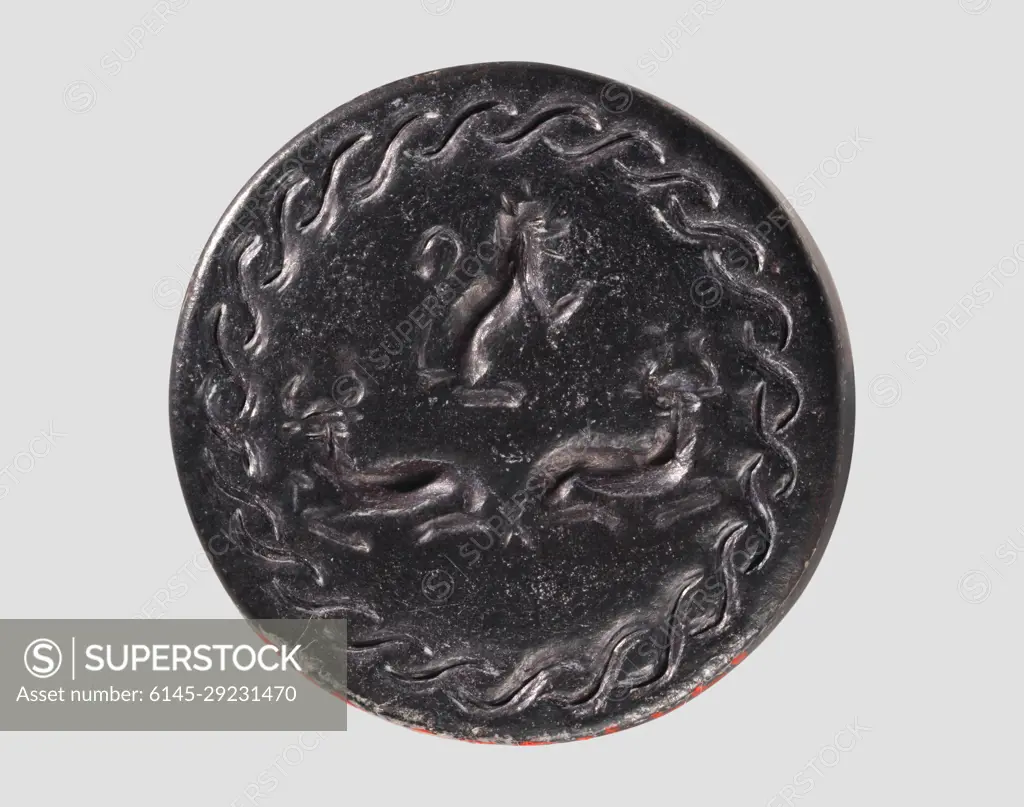
SuperStock offers millions of photos, videos, and stock assets to creatives around the world. This image of Stamp seal ca. 17th-16th century B.C. Hittite Stamp seals first appeared in northern Mesopotamia during the 6th millennium and were exclusively used throughout the ancient Near East until the innovation of the cylinder seal in the second half of the 4th millennium BC. Cylinder seals were the preferred administrative tool in Mesopotamia during the 3rd and 2nd millennia B.C. and in the 1st millennium B.C., stamp seals were once again adopted by the administrative classes. In Anatolia, stamp seals predominated and it was only during the Old Assyrian Period (ca. 2000-1700 B.C.) that Anatolians used cylinder seals in their administrative practices. Like cylinder seals, stamp seals could be made from a variety of local and exotic stones as well as metal and even clay. They were impressed directly upon tablets, vessels, and clay bullae used to seal storage containers and doors. Stamp seals exhibit either perforated backs or handles, sometimes with perforation, for ease in wearing and handling by Piemags/PL Photography Limited is available for licensing today.
Looking for a license?
Click here, and we'll help you find it! Questions? Just ask!
Click here, and we'll help you find it! Questions? Just ask!
DETAILS
Image Number: 6145-29231470Royalty FreeCredit Line:Piemags/PL Photography Limited/SuperStockCollection:PL Photography Limited Contributor:Piemags Model Release:NoProperty Release:NoResolution:4000×3154