The southeastern coastline of India, known as the Coromandel Coast, was home to three Portuguese settlements by late 1530 at Nagapattinam, Sao Tome de Meliapore, and Pulicat. Later, in the 17th and 18th centuries, the Coromandel Coast was the scene of rivalries among European powers for control of the India trade and the 'Spice Trade'. The British established themselves at Fort St George (Madras) and Masulipatnam, the Dutch at Pulicat, Sadras and Covelong, the French at Pondicherry, Karaikal and Nizampatnam, and the Danish in Dansborg at Tharangambadi. Eventually the British won out, although France retained the tiny enclaves of Pondicherry and Karaikal until 1954. Chinese lacquer goods, including boxes, screens, and chests, became known as 'Coromandel' goods in the 18th century, because many Chinese exports were consolidated at the Coromandel ports.
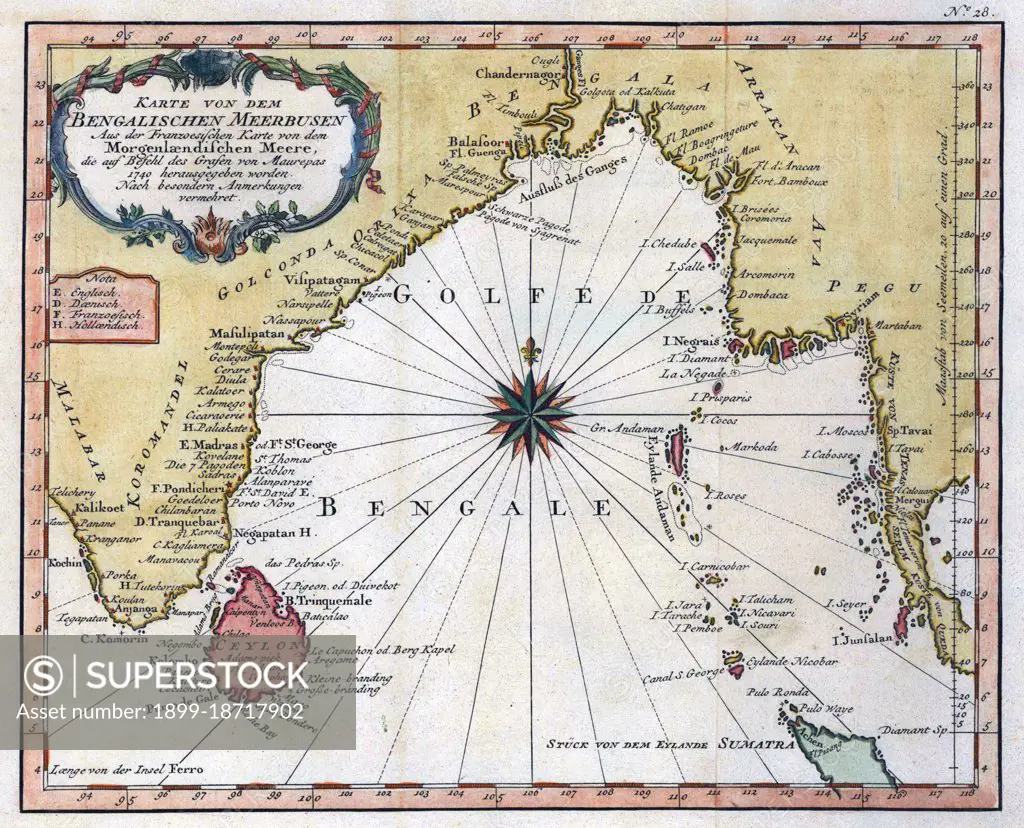
SuperStock offers millions of photos, videos, and stock assets to creatives around the world. This image of The southeastern coastline of India, known as the Coromandel Coast, was home to three Portuguese settlements by late 1530 at Nagapattinam, Sao Tome de Meliapore, and Pulicat. Later, in the 17th and 18th centuries, the Coromandel Coast was the scene of rivalries among European powers for control of the India trade and the 'Spice Trade'. The British established themselves at Fort St George (Madras) and Masulipatnam, the Dutch at Pulicat, Sadras and Covelong, the French at Pondicherry, Karaikal and Nizampatnam, and the Danish in Dansborg at Tharangambadi. Eventually the British won out, although France retained the tiny enclaves of Pondicherry and Karaikal until 1954. Chinese lacquer goods, including boxes, screens, and chests, became known as 'Coromandel' goods in the 18th century, because many Chinese exports were consolidated at the Coromandel ports. by Pictures From History/Universal Images is available for licensing today.
Looking for a license?
Click here, and we'll help you find it! Questions? Just ask!
Click here, and we'll help you find it! Questions? Just ask!
DETAILS
Image Number: 1899-18717902Rights ManagedCredit Line:Pictures From History/Universal Images/SuperStockCollection:Universal Images Contributor:Pictures From History Model Release:NoProperty Release:NoResolution:4926×3985