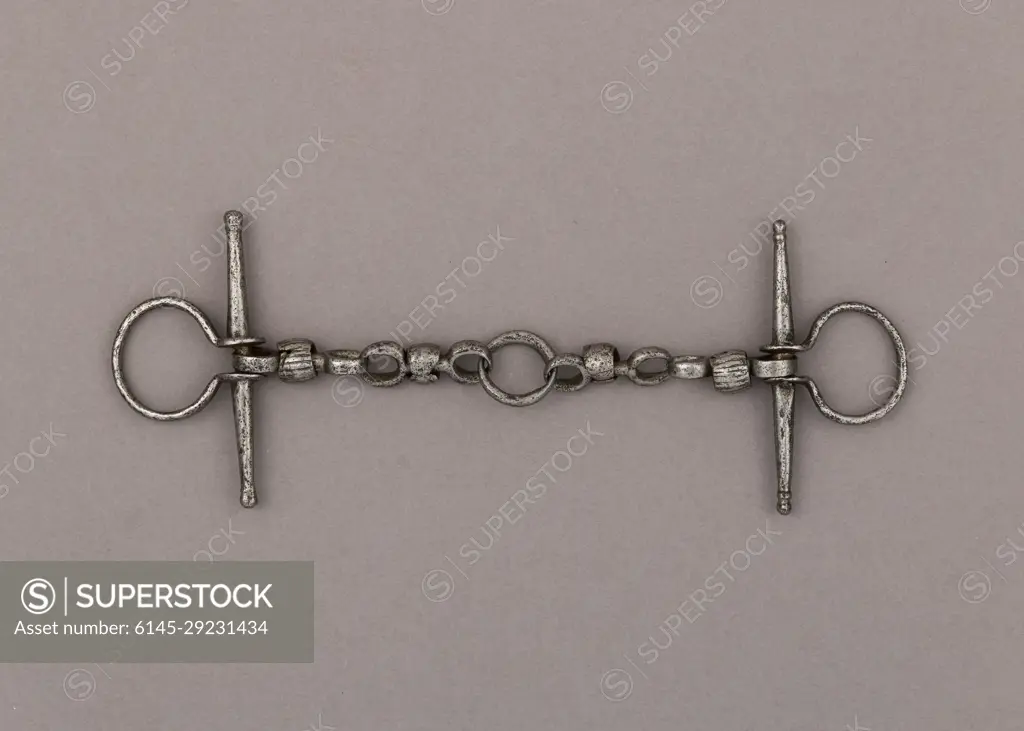
Snaffle Bit late 16th - 17th century German This type of mouthpiece corresponds to the contemporary Waterford bit. It was used for horses that lean on the bit too much. The many mobile links in the mouthpiece prevent the horse from taking hold of it, but it was comfortable and fairly gentle in the mouth, not severe when in the hands of a good rider. The snaffle bit is the simplest type of horse bit, and has an effect on the bars (part of the horses jaw without teeth) and the corners of the lips. The rings on the sides would serve to hang the bit on the headstall and attach the reins. The cheekpieces press on the side of the mouth when a rein is pulled, helping indicate the intended direction to the horse and keeping the rings from pulling through the horse's mouth.According to contemporary equestrian manuals, this bit was probably used as a racing bit. It is virtually identical to some bits still used today.. Snaffle Bit. German. late 16th - 17th century. Iron alloy. Equestrian Equipm
SuperStock offers millions of photos, videos, and stock assets to creatives around the world. This image of Snaffle Bit late 16th - 17th century German This type of mouthpiece corresponds to the contemporary Waterford bit. It was used for horses that lean on the bit too much. The many mobile links in the mouthpiece prevent the horse from taking hold of it, but it was comfortable and fairly gentle in the mouth, not severe when in the hands of a good rider. The snaffle bit is the simplest type of horse bit, and has an effect on the bars (part of the horses jaw without teeth) and the corners of the lips. The rings on the sides would serve to hang the bit on the headstall and attach the reins. The cheekpieces press on the side of the mouth when a rein is pulled, helping indicate the intended direction to the horse and keeping the rings from pulling through the horse's mouth.According to contemporary equestrian manuals, this bit was probably used as a racing bit. It is virtually identical to some bits still used today.. Snaffle Bit. German. late 16th - 17th century. Iron alloy. Equestrian Equipm by Piemags/PL Photography Limited is available for licensing today.
Looking for a license?
Click here, and we'll help you find it! Questions? Just ask!
Click here, and we'll help you find it! Questions? Just ask!
DETAILS
Image Number: 6145-29231434Royalty FreeCredit Line:Piemags/PL Photography Limited/SuperStockCollection:PL Photography Limited Contributor:Piemags Model Release:NoProperty Release:NoResolution:4000×2857