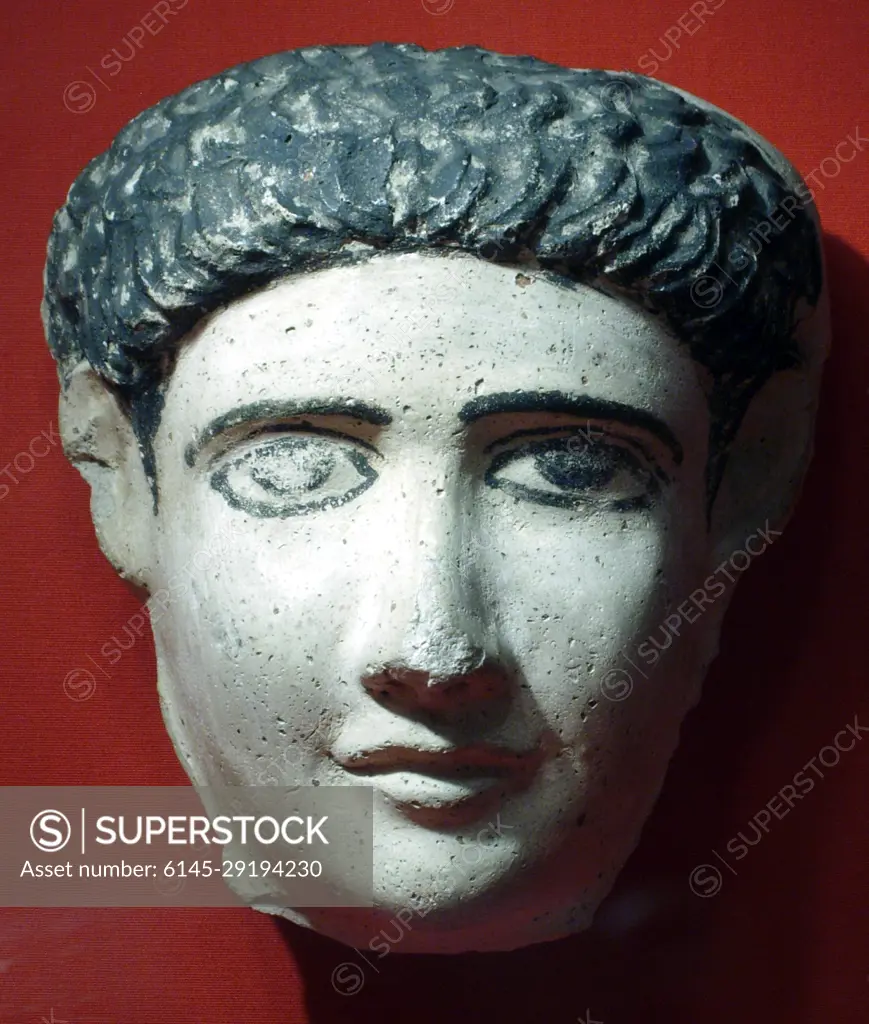
Small mask, possibly of a boy, with short locks combed to the front A.D. 1st-mid 2nd century Roman Period The plaster masks derive from pharaonic traditions, in which the mask served as a substitute for the head of the deceased and as a means of elevating him or her to immortal status. The derivation is often reflected in paintings and texts located on the mantle surrounding the head. Like the painted mummy portraits, the masks suggest strongly individualized appearances and affect Roman fashions in hairstyle, jewelry, and dress. They follow, however, a somewhat different pattern. For example, female masks may have coiffures that combine Roman arrangements of the upper part of the hair with long corkscrew locks that were considered typically Egyptian. Despite the seeming individuality of the masks, most faces were made in a mold. Distinguishing details were worked in the plaster with a spatula or knife. The ears were added separately, and sometimes eyes were inlaid with glass or stone.
SuperStock offers millions of photos, videos, and stock assets to creatives around the world. This image of Small mask, possibly of a boy, with short locks combed to the front A.D. 1st-mid 2nd century Roman Period The plaster masks derive from pharaonic traditions, in which the mask served as a substitute for the head of the deceased and as a means of elevating him or her to immortal status. The derivation is often reflected in paintings and texts located on the mantle surrounding the head. Like the painted mummy portraits, the masks suggest strongly individualized appearances and affect Roman fashions in hairstyle, jewelry, and dress. They follow, however, a somewhat different pattern. For example, female masks may have coiffures that combine Roman arrangements of the upper part of the hair with long corkscrew locks that were considered typically Egyptian. Despite the seeming individuality of the masks, most faces were made in a mold. Distinguishing details were worked in the plaster with a spatula or knife. The ears were added separately, and sometimes eyes were inlaid with glass or stone. by Piemags/PL Photography Limited is available for licensing today.
Looking for a license?
Click here, and we'll help you find it! Questions? Just ask!
Click here, and we'll help you find it! Questions? Just ask!
DETAILS
Image Number: 6145-29194230Royalty FreeCredit Line:Piemags/PL Photography Limited/SuperStockCollection:PL Photography Limited Contributor:Piemags Model Release:NoProperty Release:NoResolution:1416×1668