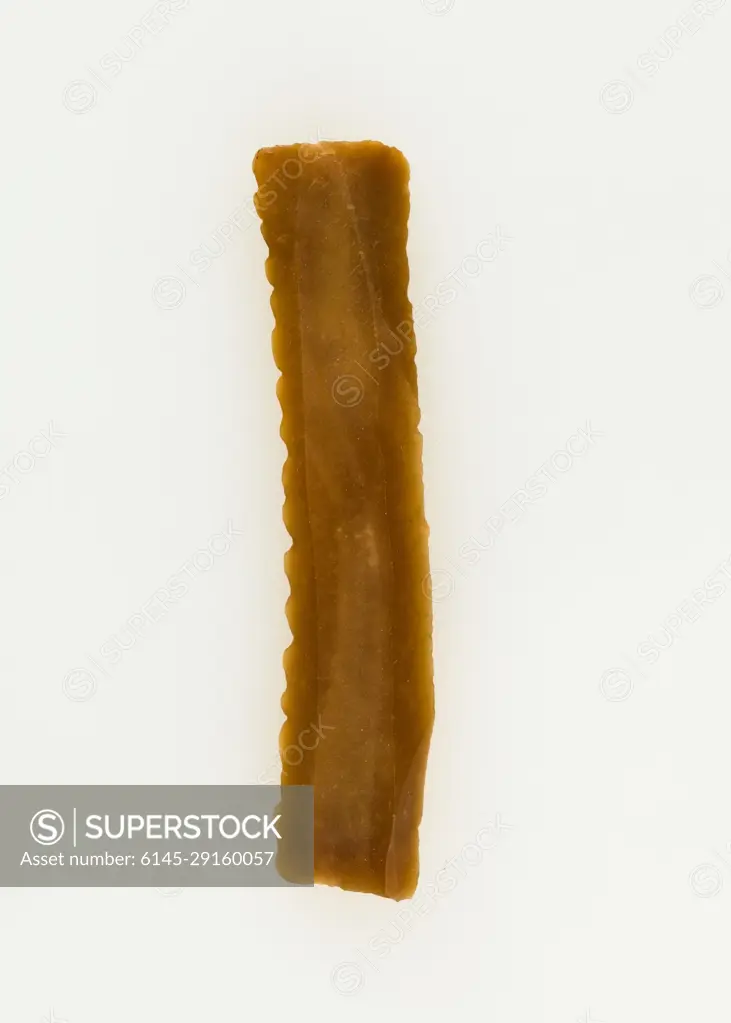
Sickle Insert ca. 1184-664 B.C. Probably New Kingdom, Ramesside-Third Intermediate Period This small piece of flint was a key element to a successful agricultural season in ancient Egypt. Grain was a staple of the economy, as bread and beer made from grain were consumed daily. They also formed the foundation of eternal sustenance, as funerary offerings. Ancient Egyptians used sickles made from flint and wood to reap grain. Pieces of flint such as this one were shaped to fit into a wooden haft along with a number of other such inserts, and secured with an adhesive. The flint pieces provided a sharp edge to cut the grain stalks. With use, the flint would wear down and develop a shiny gloss. The flint inserts could be re-sharpened or replaced as needed. Flint, rather than copper alloy, was the primary material used to make sickles in Egypt until the first millennium B.C. when iron became more widely available. The reason for using flint was probably multifaceted and included consideration
SuperStock offers millions of photos, videos, and stock assets to creatives around the world. This image of Sickle Insert ca. 1184-664 B.C. Probably New Kingdom, Ramesside-Third Intermediate Period This small piece of flint was a key element to a successful agricultural season in ancient Egypt. Grain was a staple of the economy, as bread and beer made from grain were consumed daily. They also formed the foundation of eternal sustenance, as funerary offerings. Ancient Egyptians used sickles made from flint and wood to reap grain. Pieces of flint such as this one were shaped to fit into a wooden haft along with a number of other such inserts, and secured with an adhesive. The flint pieces provided a sharp edge to cut the grain stalks. With use, the flint would wear down and develop a shiny gloss. The flint inserts could be re-sharpened or replaced as needed. Flint, rather than copper alloy, was the primary material used to make sickles in Egypt until the first millennium B.C. when iron became more widely available. The reason for using flint was probably multifaceted and included consideration by Piemags/PL Photography Limited is available for licensing today.
Looking for a license?
Click here, and we'll help you find it! Questions? Just ask!
Click here, and we'll help you find it! Questions? Just ask!
DETAILS
Image Number: 6145-29160057Royalty FreeCredit Line:Piemags/PL Photography Limited/SuperStockCollection:PL Photography Limited Contributor:Piemags Model Release:NoProperty Release:NoResolution:2712×3796