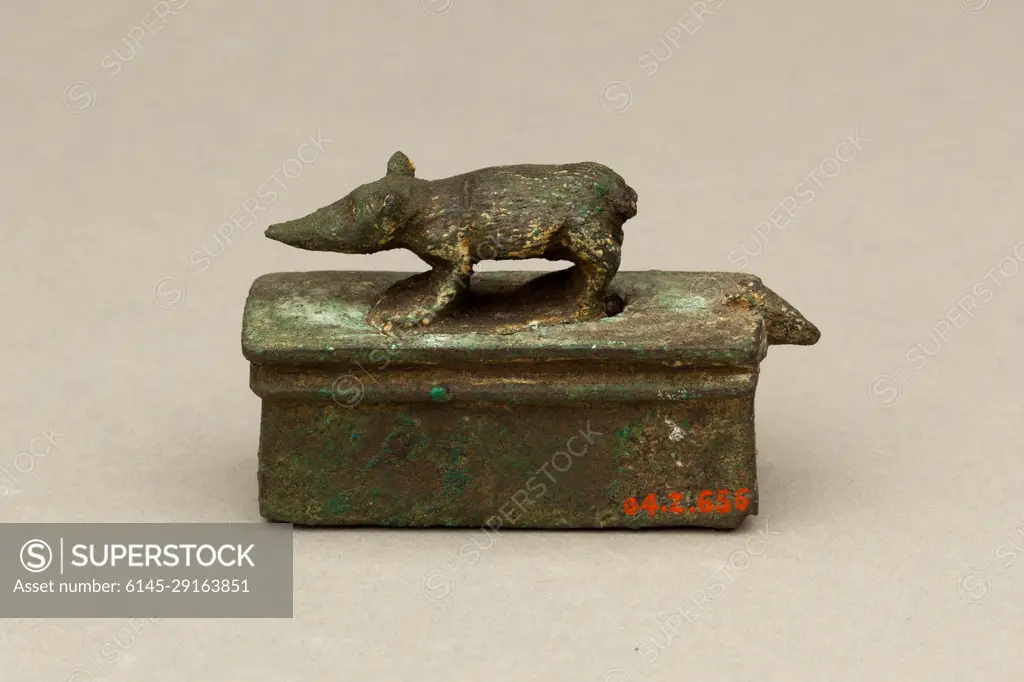
Shrew-mouse surmounting shrine-shaped box for an animal mummy 664-30 B.C. Late Period-Ptolemaic Period The shrew mouse was an animal sacred to the solar deity Horus of Letopolis, but was honored all over Egypt, particularly in the Delta. The mouse was considered to be the blind eye of Horus, which was miraculously healed, thereby symbolizing resurrection and rebirth. The shrew has a long narrow snout, rounded ears, and a thin body. It stands in a slightly crouched position on a shrine-shaped box that is open at the back for the insertion of an animal mummy; the tail is broken but the tip is preserved and extends slightly past the edge of the box, an uncommon feature. These types of shrew boxes were offered together with other statuettes and animal mummies in temples and catacombs, not just to Horus of Letopolis, but more broadly in contexts related to solar cult. More detailed examples, such as 04.2.465, have solar symbols inscribed on the back that testify to the regenerative power of
SuperStock offers millions of photos, videos, and stock assets to creatives around the world. This image of Shrew-mouse surmounting shrine-shaped box for an animal mummy 664-30 B.C. Late Period-Ptolemaic Period The shrew mouse was an animal sacred to the solar deity Horus of Letopolis, but was honored all over Egypt, particularly in the Delta. The mouse was considered to be the blind eye of Horus, which was miraculously healed, thereby symbolizing resurrection and rebirth. The shrew has a long narrow snout, rounded ears, and a thin body. It stands in a slightly crouched position on a shrine-shaped box that is open at the back for the insertion of an animal mummy; the tail is broken but the tip is preserved and extends slightly past the edge of the box, an uncommon feature. These types of shrew boxes were offered together with other statuettes and animal mummies in temples and catacombs, not just to Horus of Letopolis, but more broadly in contexts related to solar cult. More detailed examples, such as 04.2.465, have solar symbols inscribed on the back that testify to the regenerative power of by Piemags/PL Photography Limited is available for licensing today.
Looking for a license?
Click here, and we'll help you find it! Questions? Just ask!
Click here, and we'll help you find it! Questions? Just ask!
DETAILS
Image Number: 6145-29163851Royalty FreeCredit Line:Piemags/PL Photography Limited/SuperStockCollection:PL Photography Limited Contributor:Piemags Model Release:NoProperty Release:NoResolution:2000×1333