Shawl 1840-49 probably French This is an attractive shawl of the 1840s which interestingly combines a woven pattern and printed pattern. This works well in incorporating both Eastern and Western aesthetic sensibilities.The shawl held a place as a high fashion accessory for a relatively large period between the end of the 18th century to the 1870s. These accessories were originally adopted by men with exposure to India and Persia through the Trading Companies. The changing fashions near the end of the 18th century brought a renewed interest in Indian and Persian shawls as a form of warmth over the thin muslins of fashionable Empire silhouette dresses. The shawls came in many designs which generally incorporated the boteh form. This form, which is mostly known as the paisley now, is an ancient Persian design based upon the tree of life and inspired by buds, cones and palm fronds. These objects were hand woven and extremely costly which inspired European manufacturers to attempt to produc
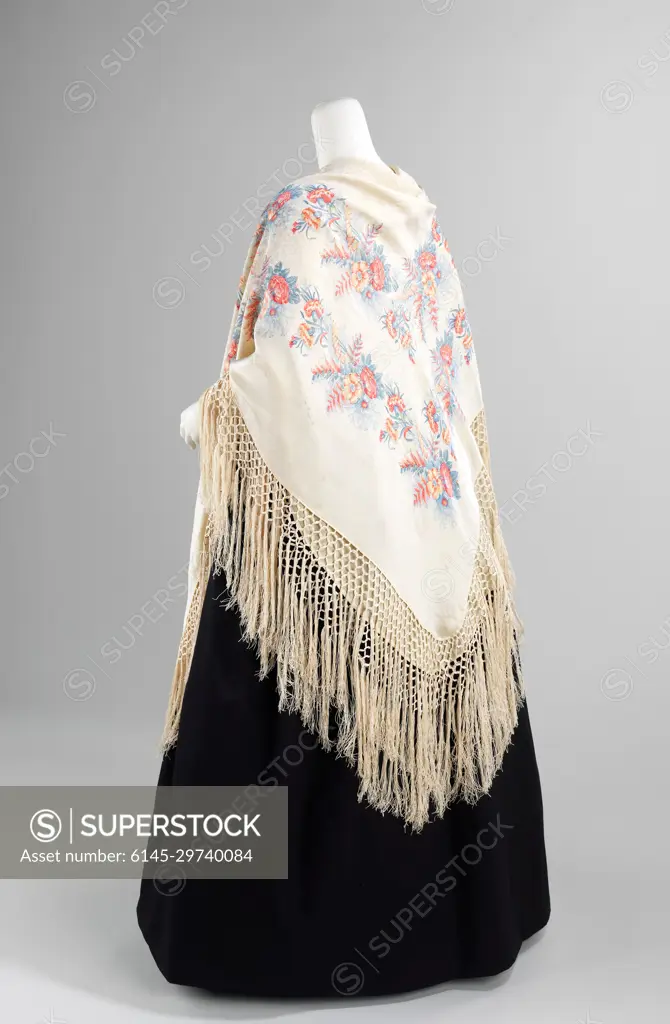
SuperStock offers millions of photos, videos, and stock assets to creatives around the world. This image of Shawl 1840-49 probably French This is an attractive shawl of the 1840s which interestingly combines a woven pattern and printed pattern. This works well in incorporating both Eastern and Western aesthetic sensibilities.The shawl held a place as a high fashion accessory for a relatively large period between the end of the 18th century to the 1870s. These accessories were originally adopted by men with exposure to India and Persia through the Trading Companies. The changing fashions near the end of the 18th century brought a renewed interest in Indian and Persian shawls as a form of warmth over the thin muslins of fashionable Empire silhouette dresses. The shawls came in many designs which generally incorporated the boteh form. This form, which is mostly known as the paisley now, is an ancient Persian design based upon the tree of life and inspired by buds, cones and palm fronds. These objects were hand woven and extremely costly which inspired European manufacturers to attempt to produc by Piemags/PL Photography Limited is available for licensing today.
Looking for a license?
Click here, and we'll help you find it! Questions? Just ask!
Click here, and we'll help you find it! Questions? Just ask!
DETAILS
Image Number: 6145-29740084Royalty FreeCredit Line:Piemags/PL Photography Limited/SuperStockCollection:PL Photography Limited Contributor:Piemags Model Release:NoProperty Release:NoResolution:2621×4000