Shakuhachi 18th century Japanese (possibly Uzan) The shakuhachi descends from the hitoyogiri.Both instruments have four finger holes and a thumb hole, are held vertically, and have a blowing edge formed by an outward cut at the rim. The hitoyogiri ceased to be used by the 19th century, but the shakuhachi survives today.The shakuhachi took shape during the Momayama period (1534-1615), but developed its final form during the Edo period (1615-1868), when it was adopted by the komuso, wandering monks. These monks, many of whom were masterless samurai and stripped of their swords, kept the favor of the shogun by acting as his spies. The monks altered the hitoyogiri, by making it thicker, longer, and slightly curved at the bell. This new design allowed the shakuhachi to serve as a club. The shakuhachi now accompanies poetry, plays in ensemble with the koto and shamisen, and is heard in virtuosic solos.. Shakuhachi. Japanese (possibly Uzan). 18th century. Bamboo. Japan. Aerophone-Blow Hole-en
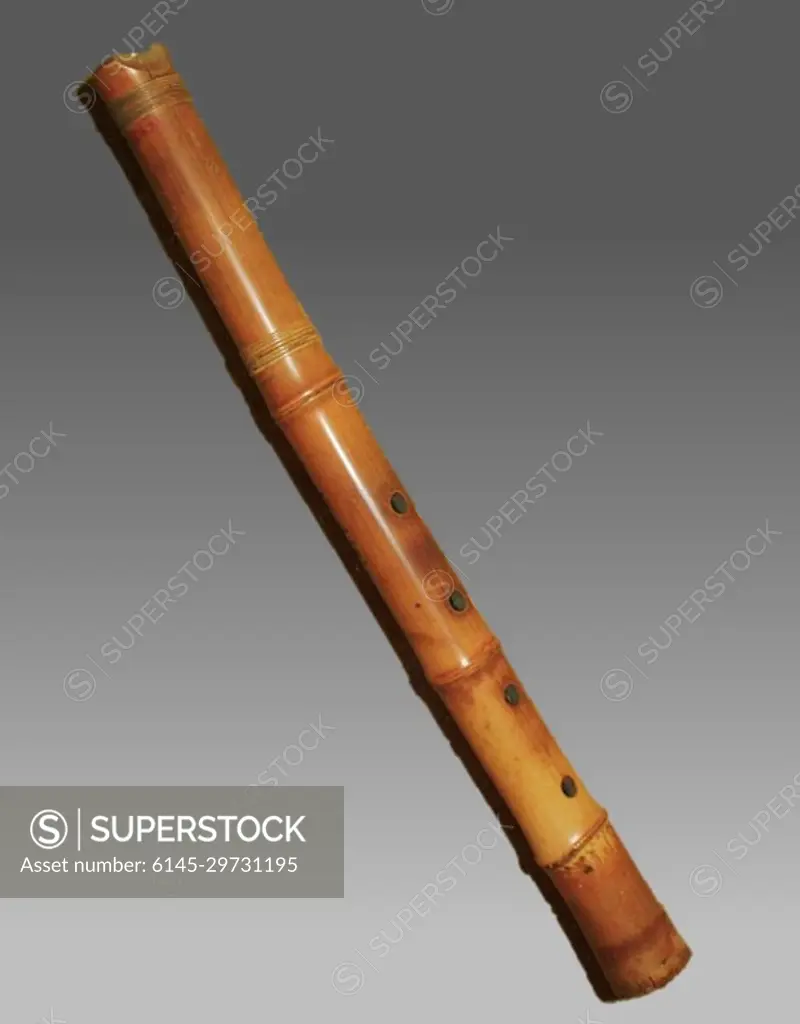
SuperStock offers millions of photos, videos, and stock assets to creatives around the world. This image of Shakuhachi 18th century Japanese (possibly Uzan) The shakuhachi descends from the hitoyogiri.Both instruments have four finger holes and a thumb hole, are held vertically, and have a blowing edge formed by an outward cut at the rim. The hitoyogiri ceased to be used by the 19th century, but the shakuhachi survives today.The shakuhachi took shape during the Momayama period (1534-1615), but developed its final form during the Edo period (1615-1868), when it was adopted by the komuso, wandering monks. These monks, many of whom were masterless samurai and stripped of their swords, kept the favor of the shogun by acting as his spies. The monks altered the hitoyogiri, by making it thicker, longer, and slightly curved at the bell. This new design allowed the shakuhachi to serve as a club. The shakuhachi now accompanies poetry, plays in ensemble with the koto and shamisen, and is heard in virtuosic solos.. Shakuhachi. Japanese (possibly Uzan). 18th century. Bamboo. Japan. Aerophone-Blow Hole-en by Piemags/PL Photography Limited is available for licensing today.
Looking for a license?
Click here, and we'll help you find it! Questions? Just ask!
Click here, and we'll help you find it! Questions? Just ask!
DETAILS
Image Number: 6145-29731195Royalty FreeCredit Line:Piemags/PL Photography Limited/SuperStockCollection:PL Photography Limited Contributor:Piemags Model Release:NoProperty Release:NoResolution:563×720