Shahsevan Saddle Bag ca. 1850 While the term "carpet" evokes a heavy, large rectangular textile (either knotted pile or flat-woven tapestry, called kilim) that covers a floor, a vast array of rug genres and techniques can be found in the Islamic world, where they serve various functions in nomadic encampments, villages, cities, and palaces. Flat-woven and richly embroidered textiles, such as this one, belong to the kinds of smaller tribal weavings that were common in the Middle East from Anatolia to Iran; it was generously given to The Met by Inger G. and William B. Ginsberg of New York. Such textiles were woven by nomadic tribes as containers for everyday items. Some were designed specifically to transport or store bedding, flour, salt, and wooden spindles used to make the woolen yarns from which these works were woven. Others were of smaller size, comparable to cross-body women's handbags, or çanta, or also possibly used by children. Most notable is the ubiquitous double saddlebag, k
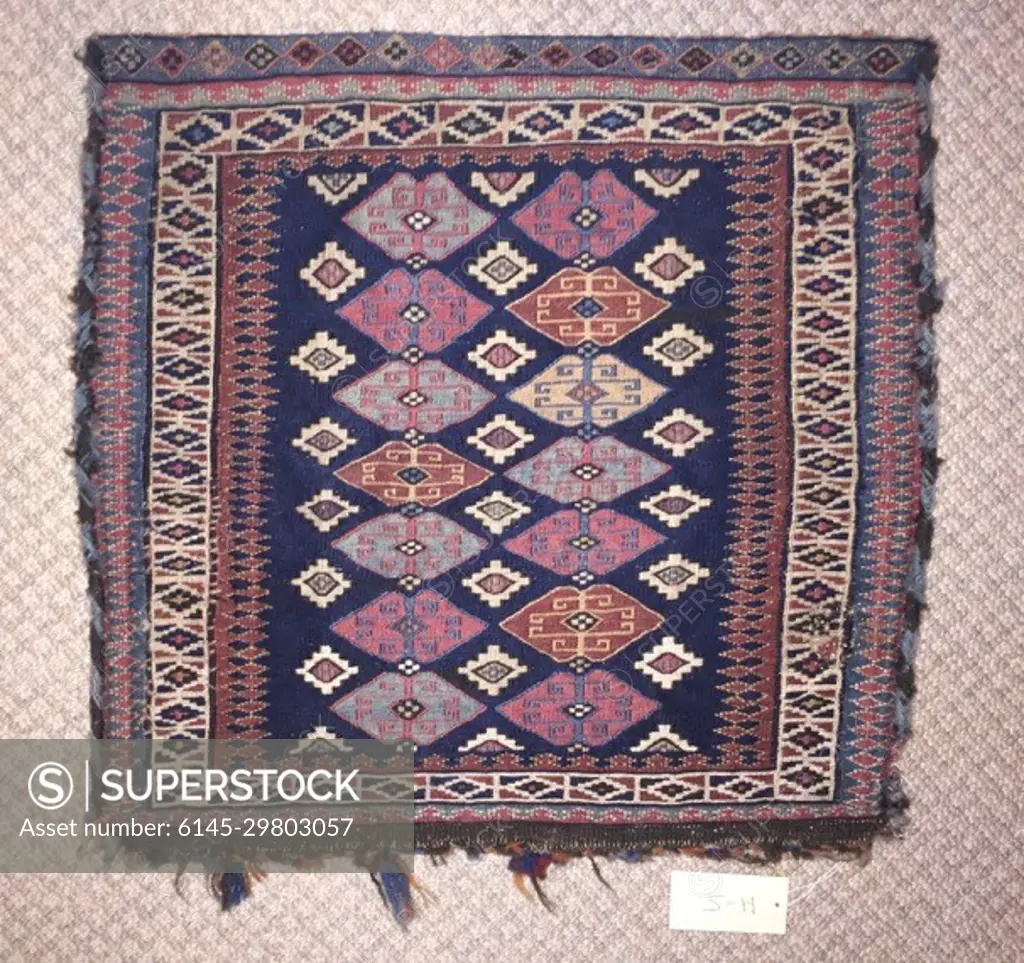
SuperStock offers millions of photos, videos, and stock assets to creatives around the world. This image of Shahsevan Saddle Bag ca. 1850 While the term "carpet" evokes a heavy, large rectangular textile (either knotted pile or flat-woven tapestry, called kilim) that covers a floor, a vast array of rug genres and techniques can be found in the Islamic world, where they serve various functions in nomadic encampments, villages, cities, and palaces. Flat-woven and richly embroidered textiles, such as this one, belong to the kinds of smaller tribal weavings that were common in the Middle East from Anatolia to Iran; it was generously given to The Met by Inger G. and William B. Ginsberg of New York. Such textiles were woven by nomadic tribes as containers for everyday items. Some were designed specifically to transport or store bedding, flour, salt, and wooden spindles used to make the woolen yarns from which these works were woven. Others were of smaller size, comparable to cross-body women's handbags, or çanta, or also possibly used by children. Most notable is the ubiquitous double saddlebag, k by Piemags/PL Photography Limited is available for licensing today.
Looking for a license?
Click here, and we'll help you find it! Questions? Just ask!
Click here, and we'll help you find it! Questions? Just ask!
DETAILS
Image Number: 6145-29803057Royalty FreeCredit Line:Piemags/PL Photography Limited/SuperStockCollection:PL Photography Limited Contributor:Piemags Model Release:NoProperty Release:NoResolution:606×570