Seven-Panel Buddhist Monks Vestment (Shichijō kesa) with Crane Patterns on Hexagonal Diaper Pattern (Mokkō) Background early 17th century Japan The bestowal of a Buddhist masters vestment (kesa) upon a disciple represents the transmission of the dharma (teaching). This is especially true in Zen Buddhism, as only the master can recognize that the disciple is on the way to—or has reached—enlightenment. Kesa thus indicate the rank of the owner within the religious hierarchy and are treasured vestments associated with those who wore them. As a reminder of the Buddhas simple, patched garment, small rectangular pieces of fabric are sewn together to form one kesa, worn diagonally over the left shoulder. This vestment has been created from cut-up pieces of a Noh costume (karaori), which was perhaps a religious offering.. Seven-Panel Buddhist Monks Vestment (Shichijō kesa) with Crane Patterns on Hexagonal Diaper Pattern (Mokkō) Background 68308
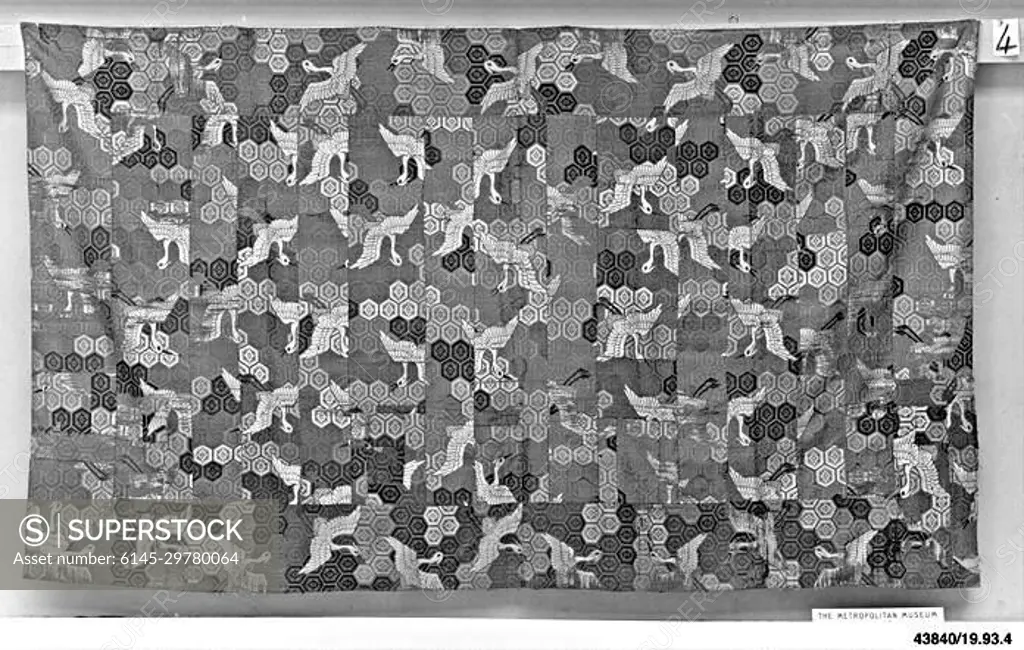
SuperStock offers millions of photos, videos, and stock assets to creatives around the world. This image of Seven-Panel Buddhist Monks Vestment (Shichijō kesa) with Crane Patterns on Hexagonal Diaper Pattern (Mokkō) Background early 17th century Japan The bestowal of a Buddhist masters vestment (kesa) upon a disciple represents the transmission of the dharma (teaching). This is especially true in Zen Buddhism, as only the master can recognize that the disciple is on the way to—or has reached—enlightenment. Kesa thus indicate the rank of the owner within the religious hierarchy and are treasured vestments associated with those who wore them. As a reminder of the Buddhas simple, patched garment, small rectangular pieces of fabric are sewn together to form one kesa, worn diagonally over the left shoulder. This vestment has been created from cut-up pieces of a Noh costume (karaori), which was perhaps a religious offering.. Seven-Panel Buddhist Monks Vestment (Shichijō kesa) with Crane Patterns on Hexagonal Diaper Pattern (Mokkō) Background 68308 by Piemags/PL Photography Limited is available for licensing today.
Looking for a license?
Click here, and we'll help you find it! Questions? Just ask!
Click here, and we'll help you find it! Questions? Just ask!
DETAILS
Image Number: 6145-29780064Royalty FreeCredit Line:Piemags/PL Photography Limited/SuperStockCollection:PL Photography Limited Contributor:Piemags Model Release:NoProperty Release:NoResolution:696×442