Serindian art developed from the 2nd through the 11th century C.E. in Serindia or Xinjiang, the western region of China that forms part of Central Asia. It derives from the art of the Gandhara district of what is now Afghanistan and Pakistan. Gandharan sculpture combined Indian traditions with Greek influences. Greek-influenced culture may have existed in the region before Alexander the Great's invasions, but the empires founded by him and his successors were a major syncretic cultural force. Buddhist missionaries travelling on the Silk Road introduced this art, along with Buddhism, into Xinjiang, where it mixed with Chinese and Persian influences. Serindian art was rediscovered through the expeditions of Sir Aurel Stein in Central Asia at the beginning of the 20th century.
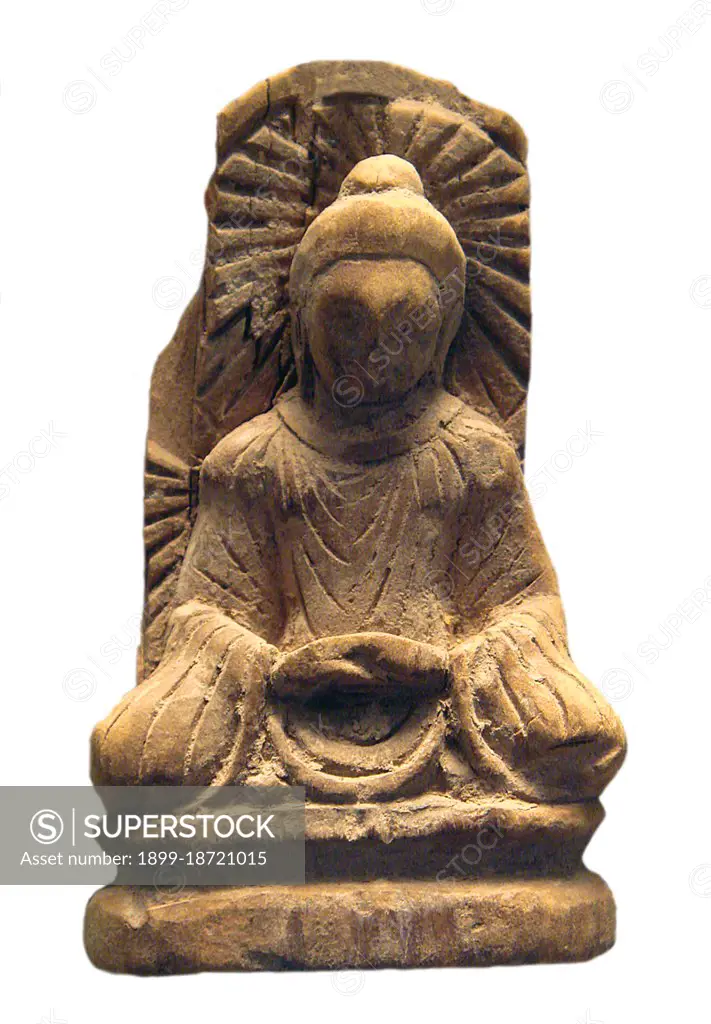
SuperStock offers millions of photos, videos, and stock assets to creatives around the world. This image of Serindian art developed from the 2nd through the 11th century C.E. in Serindia or Xinjiang, the western region of China that forms part of Central Asia. It derives from the art of the Gandhara district of what is now Afghanistan and Pakistan. Gandharan sculpture combined Indian traditions with Greek influences. Greek-influenced culture may have existed in the region before Alexander the Great's invasions, but the empires founded by him and his successors were a major syncretic cultural force. Buddhist missionaries travelling on the Silk Road introduced this art, along with Buddhism, into Xinjiang, where it mixed with Chinese and Persian influences. Serindian art was rediscovered through the expeditions of Sir Aurel Stein in Central Asia at the beginning of the 20th century. by Pictures From History/Universal Images is available for licensing today.
Looking for a license?
Click here, and we'll help you find it! Questions? Just ask!
Click here, and we'll help you find it! Questions? Just ask!
DETAILS
Image Number: 1899-18721015Rights ManagedCredit Line:Pictures From History/Universal Images/SuperStockCollection:Universal Images Contributor:Pictures From History Model Release:NoProperty Release:NoResolution:3500×5038