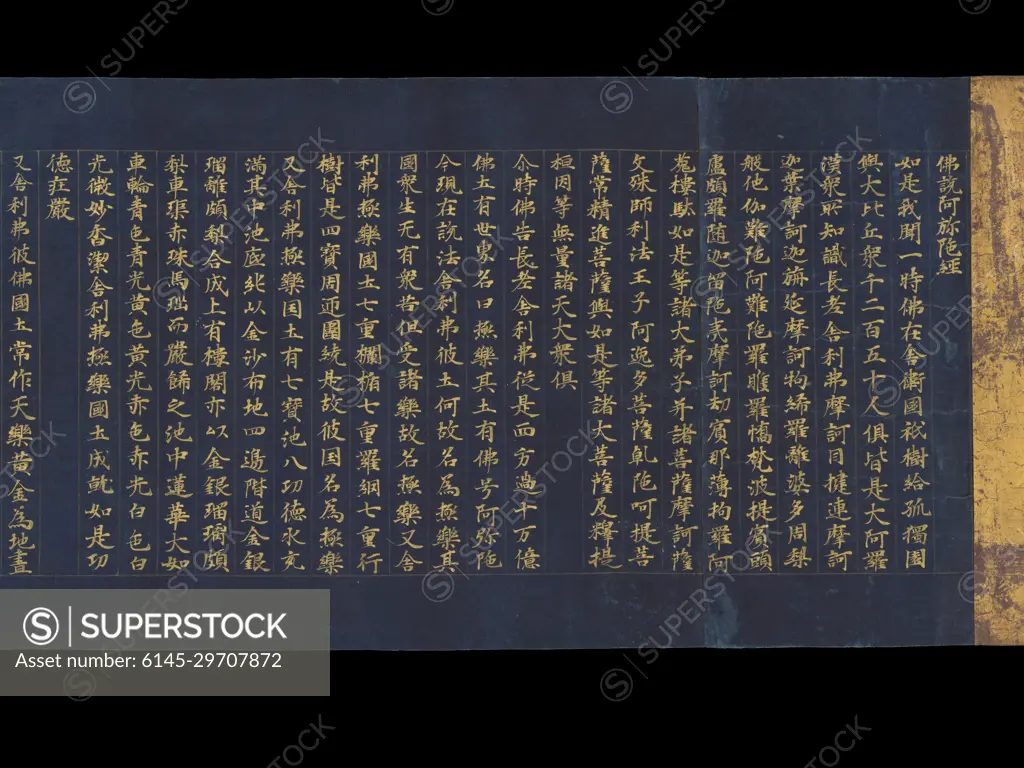
Section of The Amitabha Sutra mid-13th century Unidentified The Amida Sutra (Sanskrit: Sukhavativyuha Sutra), one of two Mahayana Buddhist scriptural texts that describe the beautiful Pure Land paradise of Amida (Sanskrit: Amitabha) Buddha, was inscribed in alternating lines of gold and silver inks on a paper repeatedly soaked in a dark blue indigo dye intended to resemble the color of precious lapis lazuli. This style of sutra transcription was popular from the twelfth through the fourteenth century, when wealthy patrons commissioned richly executed sutra scrolls such as this as offerings to temples, in the hope of gaining spiritual merit. It was a commonly held belief that the copying of sacred texts improved ones chance to achieve salvation, and patrons supplied artists with expensive and valuable materials with which to work, in lieu of copying the texts themselves. Once they had been dedicated to a temple, scrolls of this quality were stored in sutra repositories and rarely used;
SuperStock offers millions of photos, videos, and stock assets to creatives around the world. This image of Section of The Amitabha Sutra mid-13th century Unidentified The Amida Sutra (Sanskrit: Sukhavativyuha Sutra), one of two Mahayana Buddhist scriptural texts that describe the beautiful Pure Land paradise of Amida (Sanskrit: Amitabha) Buddha, was inscribed in alternating lines of gold and silver inks on a paper repeatedly soaked in a dark blue indigo dye intended to resemble the color of precious lapis lazuli. This style of sutra transcription was popular from the twelfth through the fourteenth century, when wealthy patrons commissioned richly executed sutra scrolls such as this as offerings to temples, in the hope of gaining spiritual merit. It was a commonly held belief that the copying of sacred texts improved ones chance to achieve salvation, and patrons supplied artists with expensive and valuable materials with which to work, in lieu of copying the texts themselves. Once they had been dedicated to a temple, scrolls of this quality were stored in sutra repositories and rarely used; by Piemags/PL Photography Limited is available for licensing today.
Looking for a license?
Click here, and we'll help you find it! Questions? Just ask!
Click here, and we'll help you find it! Questions? Just ask!
DETAILS
Image Number: 6145-29707872Royalty FreeCredit Line:Piemags/PL Photography Limited/SuperStockCollection:PL Photography Limited Contributor:Piemags Model Release:NoProperty Release:NoResolution:4000×3000