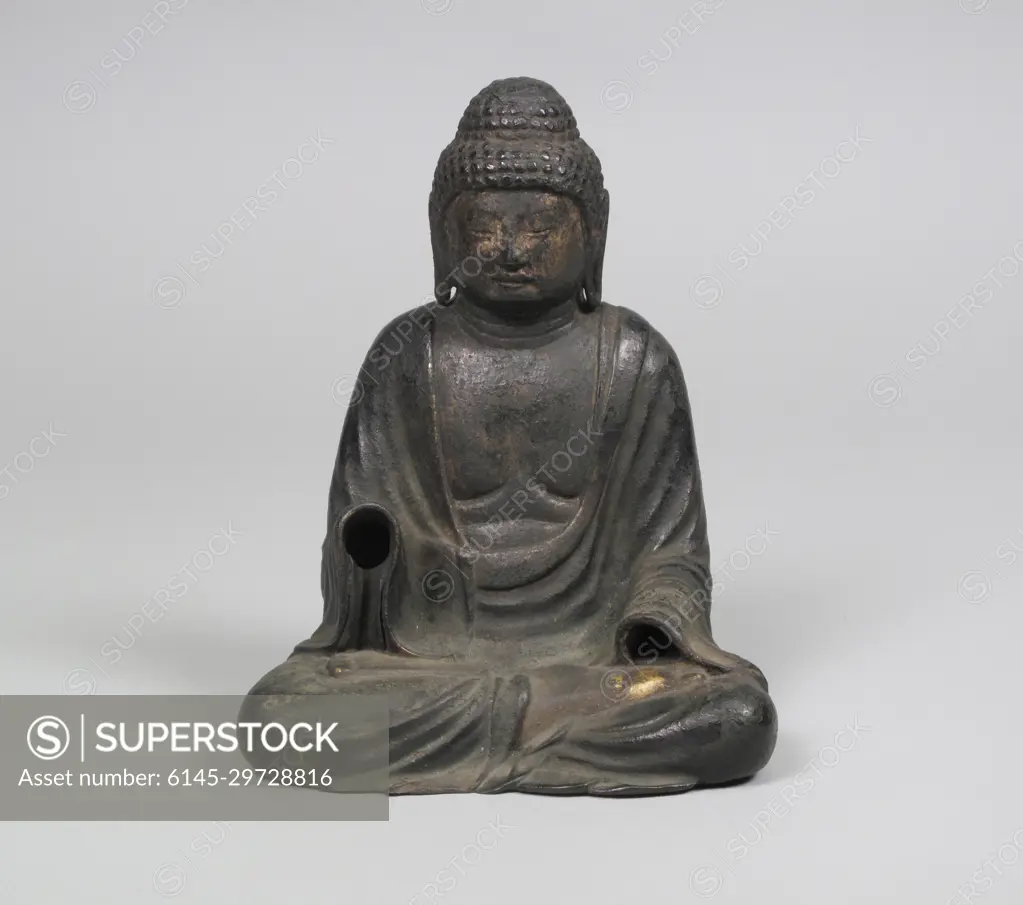
Seated Buddha 10th-11th century Japan This small image probably represents Shakyamuni, the historical Buddha, in his enlightened state, seated in the posture of meditation. Short whorls of hair (rahotsu) cover the head, and a cranial protuberance symbolizes his profound wisdom. The hands, which were cast separately, would have formed the characteristic mudras associated with his image: the right, raised and open in a gesture of reassurance, represents the benevolent gift of life without fear that is the result of Buddhist enlightenment; the left, resting on the knee with palm open, extended to the worshipper in a gesture of offering, symbolizes the fulfillment of the Buddha's vow to attain enlightenment and to teach it to all sentient beings.. Seated Buddha. Japan. 10th-11th century. Gilt bronze. Heian period (794-1185). Sculpture
SuperStock offers millions of photos, videos, and stock assets to creatives around the world. This image of Seated Buddha 10th-11th century Japan This small image probably represents Shakyamuni, the historical Buddha, in his enlightened state, seated in the posture of meditation. Short whorls of hair (rahotsu) cover the head, and a cranial protuberance symbolizes his profound wisdom. The hands, which were cast separately, would have formed the characteristic mudras associated with his image: the right, raised and open in a gesture of reassurance, represents the benevolent gift of life without fear that is the result of Buddhist enlightenment; the left, resting on the knee with palm open, extended to the worshipper in a gesture of offering, symbolizes the fulfillment of the Buddha's vow to attain enlightenment and to teach it to all sentient beings.. Seated Buddha. Japan. 10th-11th century. Gilt bronze. Heian period (794-1185). Sculpture by Piemags/PL Photography Limited is available for licensing today.
Looking for a license?
Click here, and we'll help you find it! Questions? Just ask!
Click here, and we'll help you find it! Questions? Just ask!
DETAILS
Image Number: 6145-29728816Royalty FreeCredit Line:Piemags/PL Photography Limited/SuperStockCollection:PL Photography Limited Contributor:Piemags Model Release:NoProperty Release:NoResolution:3738×3306