Scarab of the Overseer of the Troops Sebeknakht ca. 1760-1670 B.C. Middle Kingdom Scarabs bearing the names of nonroyal individuals first appeared in the later Twelfth Dynasty, concurrent with other significant cultural and political developments. Thereafter scarabs were mass produced, primarily as amulets, though they often also functioned as administrative seals. Scarab beetles lay their eggs in round balls of dung from which their young emerge, actions that the ancient Egyptians equated with the sun god and rebirth, appropriate symbolism for amulets that were often placed in tombs. Link to a blog about soldiers in Ancient EgyptIn Honor of Pharaoh's Fighters. Scarab of the Overseer of the Troops Sebeknakht. ca. 1760-1670 B.C.. Glazed steatite. Middle Kingdom. From Egypt. Dynasty 13
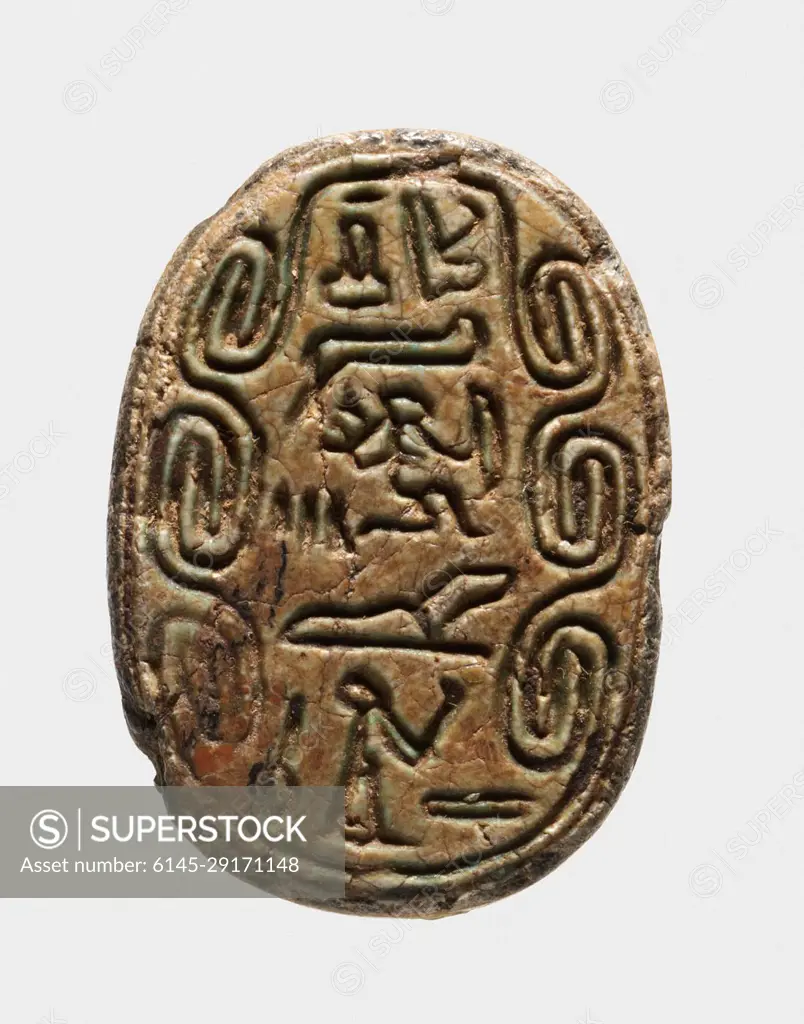
SuperStock offers millions of photos, videos, and stock assets to creatives around the world. This image of Scarab of the Overseer of the Troops Sebeknakht ca. 1760-1670 B.C. Middle Kingdom Scarabs bearing the names of nonroyal individuals first appeared in the later Twelfth Dynasty, concurrent with other significant cultural and political developments. Thereafter scarabs were mass produced, primarily as amulets, though they often also functioned as administrative seals. Scarab beetles lay their eggs in round balls of dung from which their young emerge, actions that the ancient Egyptians equated with the sun god and rebirth, appropriate symbolism for amulets that were often placed in tombs. Link to a blog about soldiers in Ancient EgyptIn Honor of Pharaoh's Fighters. Scarab of the Overseer of the Troops Sebeknakht. ca. 1760-1670 B.C.. Glazed steatite. Middle Kingdom. From Egypt. Dynasty 13 by Piemags/PL Photography Limited is available for licensing today.
Looking for a license?
Click here, and we'll help you find it! Questions? Just ask!
Click here, and we'll help you find it! Questions? Just ask!
DETAILS
Image Number: 6145-29171148Royalty FreeCredit Line:Piemags/PL Photography Limited/SuperStockCollection:PL Photography Limited Contributor:Piemags Model Release:NoProperty Release:NoResolution:1099×1398