Scarab with Hieroglyphs and Recumbent Donkey ca. 1700-1600 B.C. (Middle Bronze Age IIB) Second Intermediate Period The underside of this Canaanite Middle Bronze Age scarab is decorated with the representation of recumbent quadruped, which can be identified as a wild ass or donkey based on its long ears and equid-like muzzle. Above and behind the animal are the hieroglyphs for good (nefer) and unification (sema). While the donkey was one of the most important animals of burden in ancient Egypt, in the Levant, the donkey was commonly ridden too.. Scarab with Hieroglyphs and Recumbent Donkey 557120
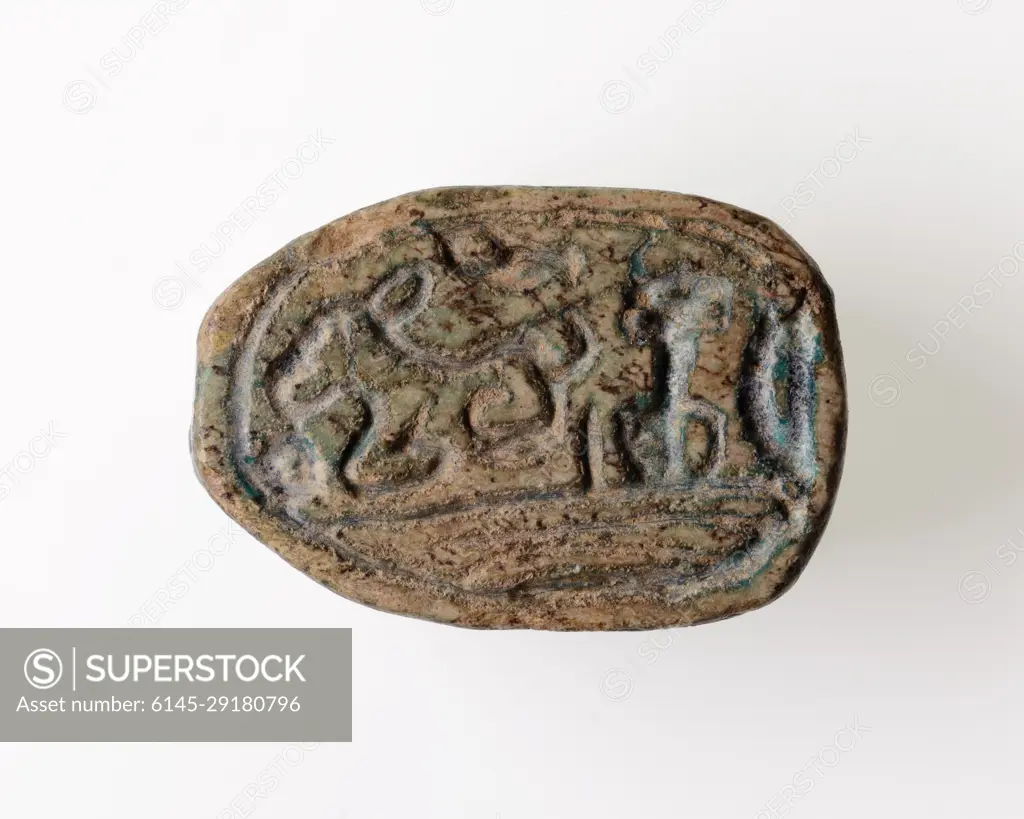
SuperStock offers millions of photos, videos, and stock assets to creatives around the world. This image of Scarab with Hieroglyphs and Recumbent Donkey ca. 1700-1600 B.C. (Middle Bronze Age IIB) Second Intermediate Period The underside of this Canaanite Middle Bronze Age scarab is decorated with the representation of recumbent quadruped, which can be identified as a wild ass or donkey based on its long ears and equid-like muzzle. Above and behind the animal are the hieroglyphs for good (nefer) and unification (sema). While the donkey was one of the most important animals of burden in ancient Egypt, in the Levant, the donkey was commonly ridden too.. Scarab with Hieroglyphs and Recumbent Donkey 557120 by Piemags/PL Photography Limited is available for licensing today.
Looking for a license?
Click here, and we'll help you find it! Questions? Just ask!
Click here, and we'll help you find it! Questions? Just ask!
DETAILS
Image Number: 6145-29180796Royalty FreeCredit Line:Piemags/PL Photography Limited/SuperStockCollection:PL Photography Limited Contributor:Piemags Model Release:NoProperty Release:NoResolution:4000×3200