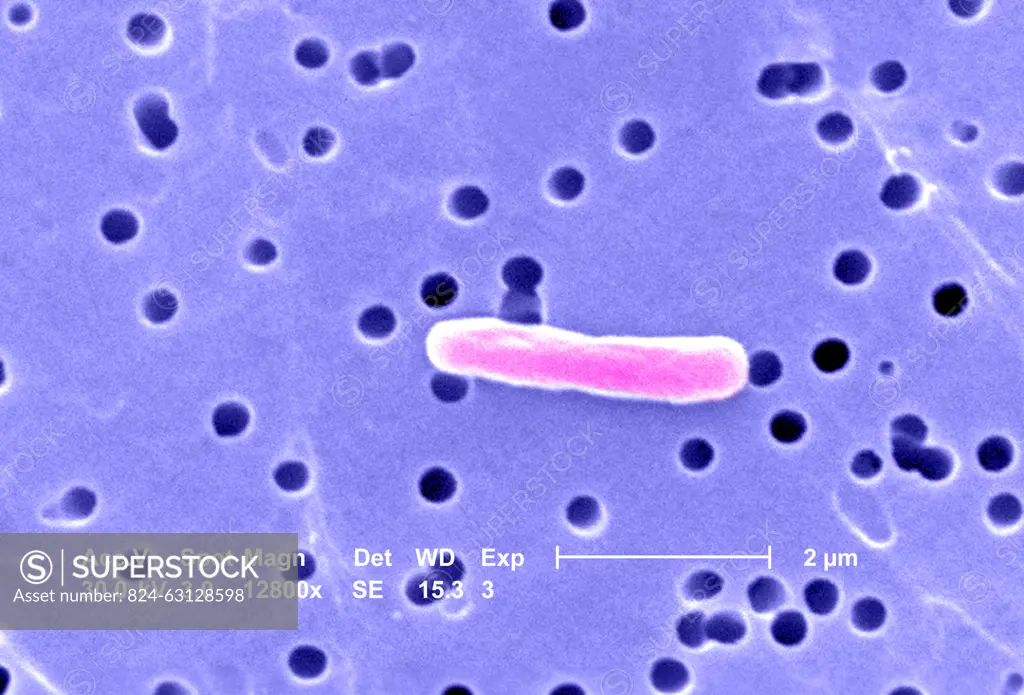
This scanning electron micrograph (SEM) depicts a highly magnified view of a rod-shaped Escherichia coli bacterium, Magnification 12800x. Escherichia coli is a Gram-negative bacterium that normally colonizes the digestive tract of most warm-blooded animals, including human beings. E. coli are facultative in nature, which means that they can adapt to their environments, switching between aerobic, and anaerobic metabolic growth depending environmental stresses. One strain of E. coli, O157:H7, causes an estimated 73,000 cases of infection, and 61 deaths in the United States each year. Infection often leads to bloody diarrhea, and occasionally to kidney failure. Most has been associated with eating undercooked illness, contaminated ground beef. Person-to-person contact in families and child care centers is also an important mode of transmission. Infection can also occur after drinking raw milk and after swimming in or drinking sewage-contaminated water. See image n0827005 on the site.
SuperStock offers millions of photos, videos, and stock assets to creatives around the world. This image of This scanning electron micrograph (SEM) depicts a highly magnified view of a rod-shaped Escherichia coli bacterium, Magnification 12800x. Escherichia coli is a Gram-negative bacterium that normally colonizes the digestive tract of most warm-blooded animals, including human beings. E. coli are facultative in nature, which means that they can adapt to their environments, switching between aerobic, and anaerobic metabolic growth depending environmental stresses. One strain of E. coli, O157:H7, causes an estimated 73,000 cases of infection, and 61 deaths in the United States each year. Infection often leads to bloody diarrhea, and occasionally to kidney failure. Most has been associated with eating undercooked illness, contaminated ground beef. Person-to-person contact in families and child care centers is also an important mode of transmission. Infection can also occur after drinking raw milk and after swimming in or drinking sewage-contaminated water. See image n0827005 on the site. by CDC/IMAGE POINT FR/BSIP is available for licensing today.
Looking for a license?
Click here, and we'll help you find it! Questions? Just ask!
Click here, and we'll help you find it! Questions? Just ask!
DETAILS
Image Number: 824-63128598Royalty FreeCredit Line:CDC/IMAGE POINT FR/BSIP/SuperStockCollection:BSIP Contributor:CDC / IMAGE POINT FR / BSIP Model Release:NoProperty Release:NoResolution:3630×2467