Sash ca. 1628-58 Mens sashes, called patkas, were wrapped two or three times around the wearers waist and tied with their ends hanging down in the front. Worn over jamas, the long robes typical of Mughal India, they allowed men to display their wealth by tucking daggers, pen cases, and other precious objects into the fabric. After being exported to Europe in the colonial period, a modified version of the patka became part of tuxedo sets, taking its name from the Hindustani and Persian term kamarband, which means ‘waist bound up. Individual stitches running the length of this patka create pleating in the fabric, indicating that it was worn folded over with the ends splayed out.. Sash. ca. 1628-58. Cotton. Attributed to India. Textiles-Costumes
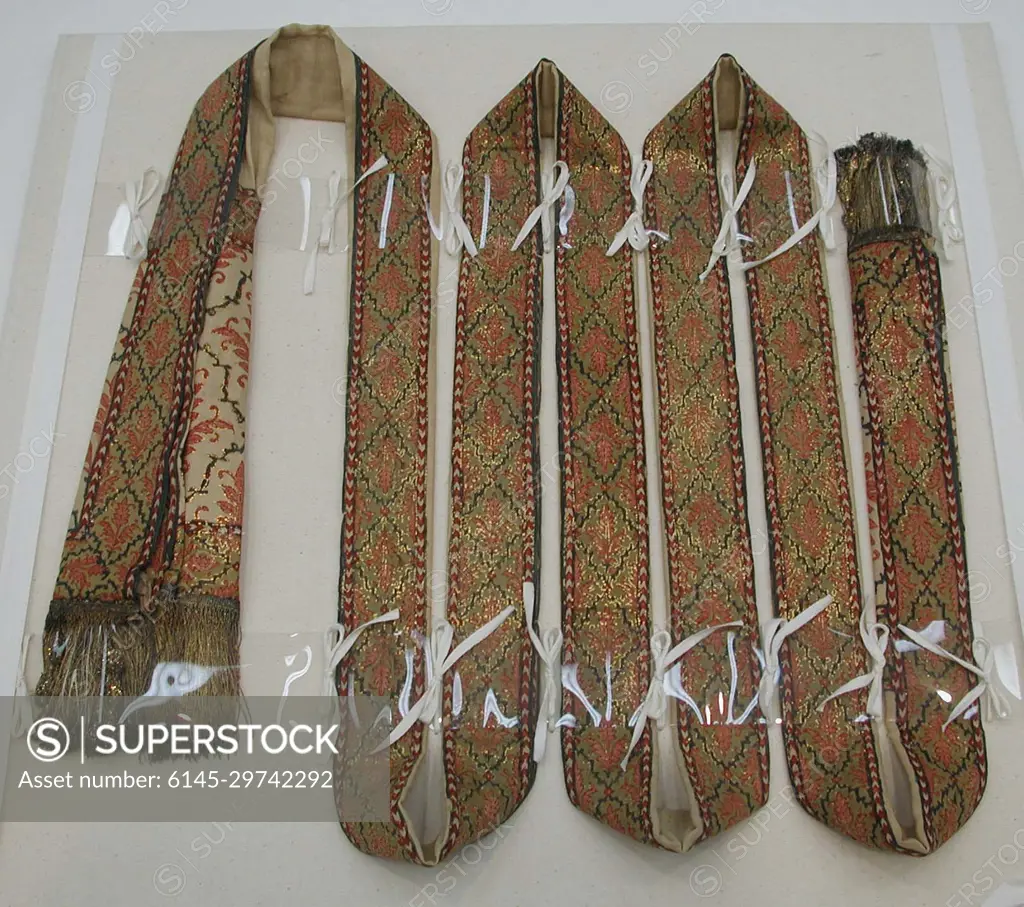
SuperStock offers millions of photos, videos, and stock assets to creatives around the world. This image of Sash ca. 1628-58 Mens sashes, called patkas, were wrapped two or three times around the wearers waist and tied with their ends hanging down in the front. Worn over jamas, the long robes typical of Mughal India, they allowed men to display their wealth by tucking daggers, pen cases, and other precious objects into the fabric. After being exported to Europe in the colonial period, a modified version of the patka became part of tuxedo sets, taking its name from the Hindustani and Persian term kamarband, which means ‘waist bound up. Individual stitches running the length of this patka create pleating in the fabric, indicating that it was worn folded over with the ends splayed out.. Sash. ca. 1628-58. Cotton. Attributed to India. Textiles-Costumes by Piemags/PL Photography Limited is available for licensing today.
Looking for a license?
Click here, and we'll help you find it! Questions? Just ask!
Click here, and we'll help you find it! Questions? Just ask!
DETAILS
Image Number: 6145-29742292Royalty FreeCredit Line:Piemags/PL Photography Limited/SuperStockCollection:PL Photography Limited Contributor:Piemags Model Release:NoProperty Release:NoResolution:1618×1434