The Royal Palace supposedly dates back to the Licchavi period (5th-13th century), but, with the exception of a few inscriptions, there is little substantial evidence for this. In the earliest inscription, which hails from the year 643 CE and which was found at the Keshav Narayan Chowk, Licchavi King Narendra Deva announced the abolition of three types of taxes, presumably making him popular with his subjects. This indicates that there may at the time have been a palace at the site of Keshav Narayan Chowk, which is part of the present royal palace complex. The royal palace as seen today in Durbar Square has its origins in the 14th century; however, the most active building period was the 17th century.
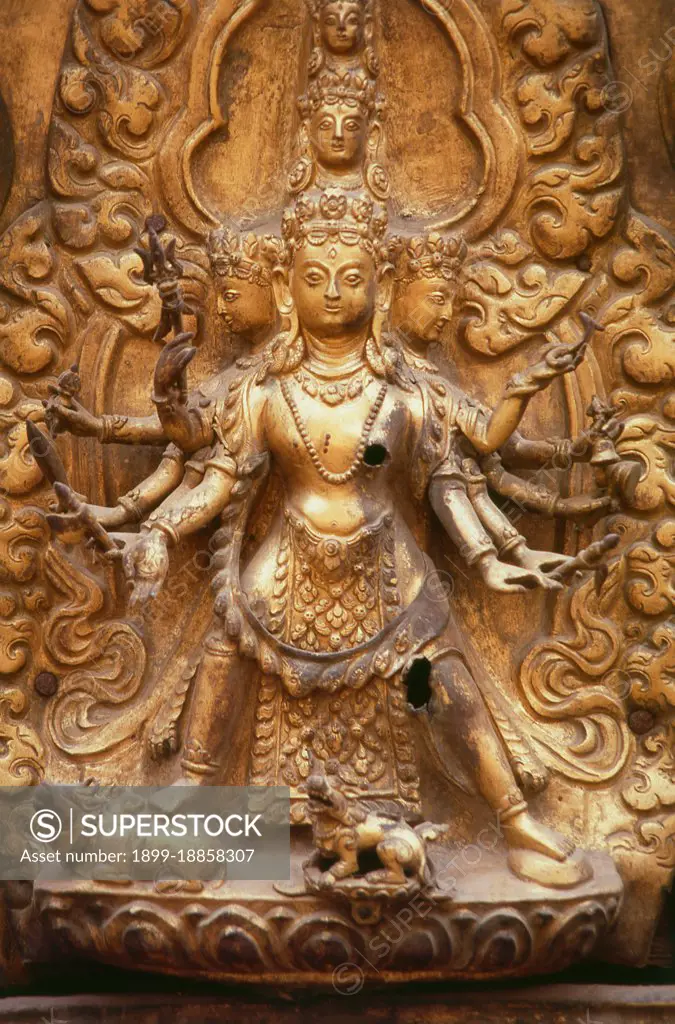
SuperStock offers millions of photos, videos, and stock assets to creatives around the world. This image of The Royal Palace supposedly dates back to the Licchavi period (5th-13th century), but, with the exception of a few inscriptions, there is little substantial evidence for this. In the earliest inscription, which hails from the year 643 CE and which was found at the Keshav Narayan Chowk, Licchavi King Narendra Deva announced the abolition of three types of taxes, presumably making him popular with his subjects. This indicates that there may at the time have been a palace at the site of Keshav Narayan Chowk, which is part of the present royal palace complex. The royal palace as seen today in Durbar Square has its origins in the 14th century; however, the most active building period was the 17th century. by Pictures From History/Universal Images is available for licensing today.
Looking for a license?
Click here, and we'll help you find it! Questions? Just ask!
Click here, and we'll help you find it! Questions? Just ask!
DETAILS
Image Number: 1899-18858307Rights ManagedCredit Line:Pictures From History/Universal Images/SuperStockCollection:Universal Images Contributor:Pictures From History Model Release:NoProperty Release:NoResolution:3357×5086