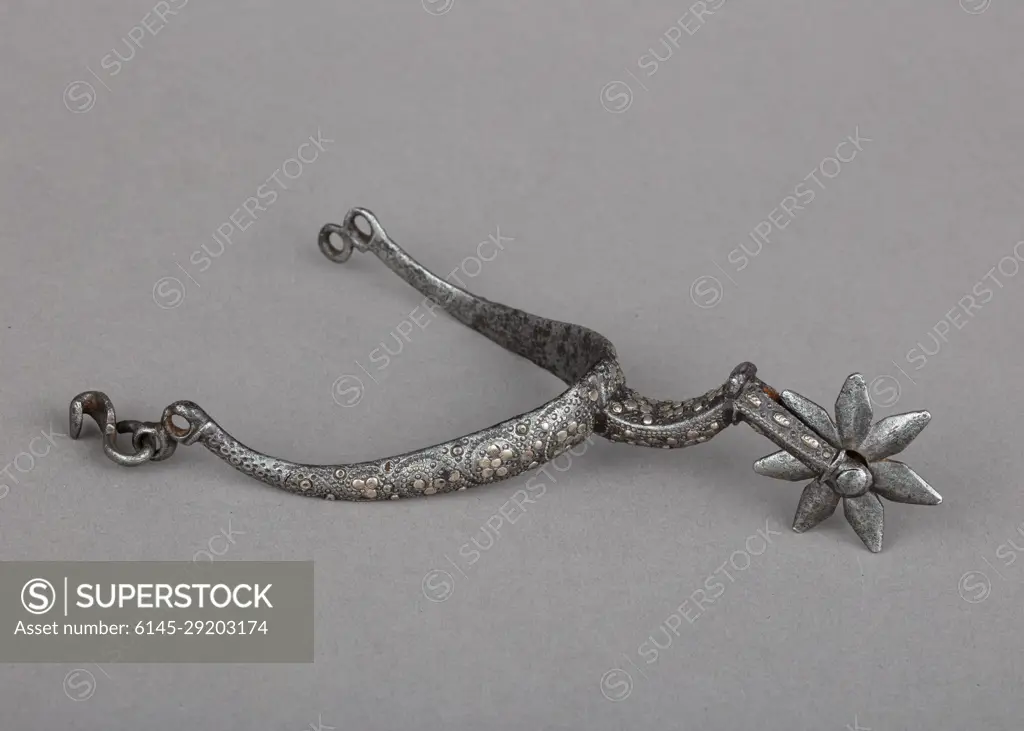
Rowel Spur first half 17th century British or German This type of silver-inlaid decoration standing out against a blackened background is often found on German and British rapiers hilts made in the early 17th century.In the first half of the 17th century, the fashion trend for gentlemen was to wear boots and spurs even non-riding circumstances, including for dancing or walking around at court. Spurs became then more than equestrian tools, but pieces of male jewelry often enriched by the same goldsmiths also working on armor and weapons. Their decoration was sometimes intended to match the sword hilt and the general outfit and horse tack of their owner. These trendy accessories were also a significant mark of status for gentlemen, sometimes nonetheless copied by the bourgeoisie. This fashion progressively disappeared after the mid-17th century.. Rowel Spur. British or German. first half 17th century. Iron alloy, silver. Equestrian Equipment-Spurs
SuperStock offers millions of photos, videos, and stock assets to creatives around the world. This image of Rowel Spur first half 17th century British or German This type of silver-inlaid decoration standing out against a blackened background is often found on German and British rapiers hilts made in the early 17th century.In the first half of the 17th century, the fashion trend for gentlemen was to wear boots and spurs even non-riding circumstances, including for dancing or walking around at court. Spurs became then more than equestrian tools, but pieces of male jewelry often enriched by the same goldsmiths also working on armor and weapons. Their decoration was sometimes intended to match the sword hilt and the general outfit and horse tack of their owner. These trendy accessories were also a significant mark of status for gentlemen, sometimes nonetheless copied by the bourgeoisie. This fashion progressively disappeared after the mid-17th century.. Rowel Spur. British or German. first half 17th century. Iron alloy, silver. Equestrian Equipment-Spurs by Piemags/PL Photography Limited is available for licensing today.
Looking for a license?
Click here, and we'll help you find it! Questions? Just ask!
Click here, and we'll help you find it! Questions? Just ask!
DETAILS
Image Number: 6145-29203174Royalty FreeCredit Line:Piemags/PL Photography Limited/SuperStockCollection:PL Photography Limited Contributor:Piemags Model Release:NoProperty Release:NoResolution:4000×2857