The Roman mythographer Julius Pollux, writing in the 2nd century BCE, asserts (Onomasticon I, 45-49) that Purple Tyrian dye was first discovered by Heracles, or rather, by his dog, whose mouth was stained purple from chewing on snails along the coast of the Levant. However, the recent archaeological discovery of substantial numbers of Murex shells on Crete suggests that the Minoans may have pioneered the extraction of Imperial purple centuries before the Tyrians. Dating from collocated pottery suggests the dye may have been produced during the Middle Minoan period in the 20th-18th century BCE. Accumulations of crushed murex shells from a hut at the site of Coppa Nevigata in southern Italy may indicate production of purple dye there from at least the 18th century BCE.
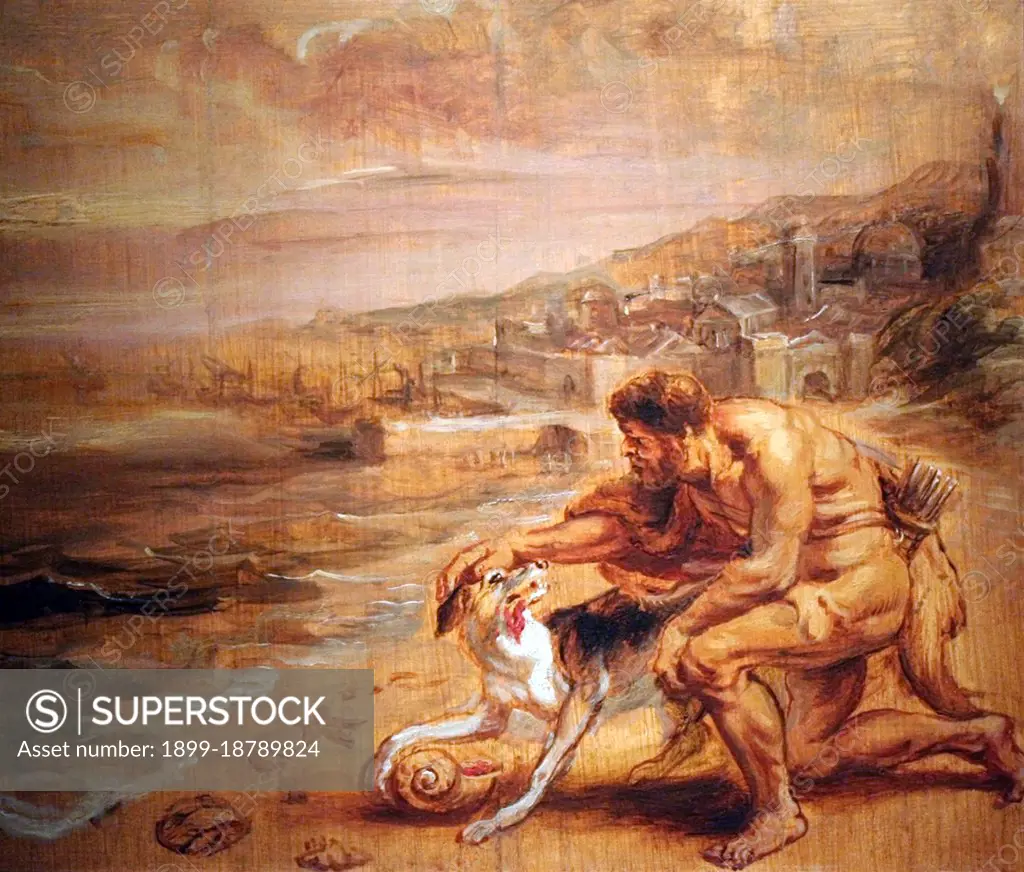
SuperStock offers millions of photos, videos, and stock assets to creatives around the world. This image of The Roman mythographer Julius Pollux, writing in the 2nd century BCE, asserts (Onomasticon I, 45-49) that Purple Tyrian dye was first discovered by Heracles, or rather, by his dog, whose mouth was stained purple from chewing on snails along the coast of the Levant. However, the recent archaeological discovery of substantial numbers of Murex shells on Crete suggests that the Minoans may have pioneered the extraction of Imperial purple centuries before the Tyrians. Dating from collocated pottery suggests the dye may have been produced during the Middle Minoan period in the 20th-18th century BCE. Accumulations of crushed murex shells from a hut at the site of Coppa Nevigata in southern Italy may indicate production of purple dye there from at least the 18th century BCE. by Pictures From History/Universal Images is available for licensing today.
Looking for a license?
Click here, and we'll help you find it! Questions? Just ask!
Click here, and we'll help you find it! Questions? Just ask!
DETAILS
Image Number: 1899-18789824Rights ManagedCredit Line:Pictures From History/Universal Images/SuperStockCollection:Universal Images Contributor:Pictures From History Model Release:NoProperty Release:NoResolution:4454×3793