Robe à la Polonaise 1780-85 American The polonaise gown first came into fashion in the 1770s. It was a style of gown with a close-fitting bodice and the back of the skirt gathered up into three separate puffed sections to reveal the petticoat below. The method of suspending the fabric varied. Most often the dress had rows of little rings sewn inside the skirt through which a cord ran from hem to waist. Alternatively, ribbon ties would be used, with the ribbons forming decorative bows. However, in some instances the skirt was held in place by simple cords sewn to the inner waist of the dress and looped over buttons attached to the outside waistline. The stays underpinning the bodice of the polonaise were not markedly different from those which supported the robe à la française.Russian, German, and French Rococo styles absorbed chinoiserie into a seamless whole of frivoles, fêtes galantes, and colorful narratives. One particular syncretism is evident in painted wallpapers and dress, wher
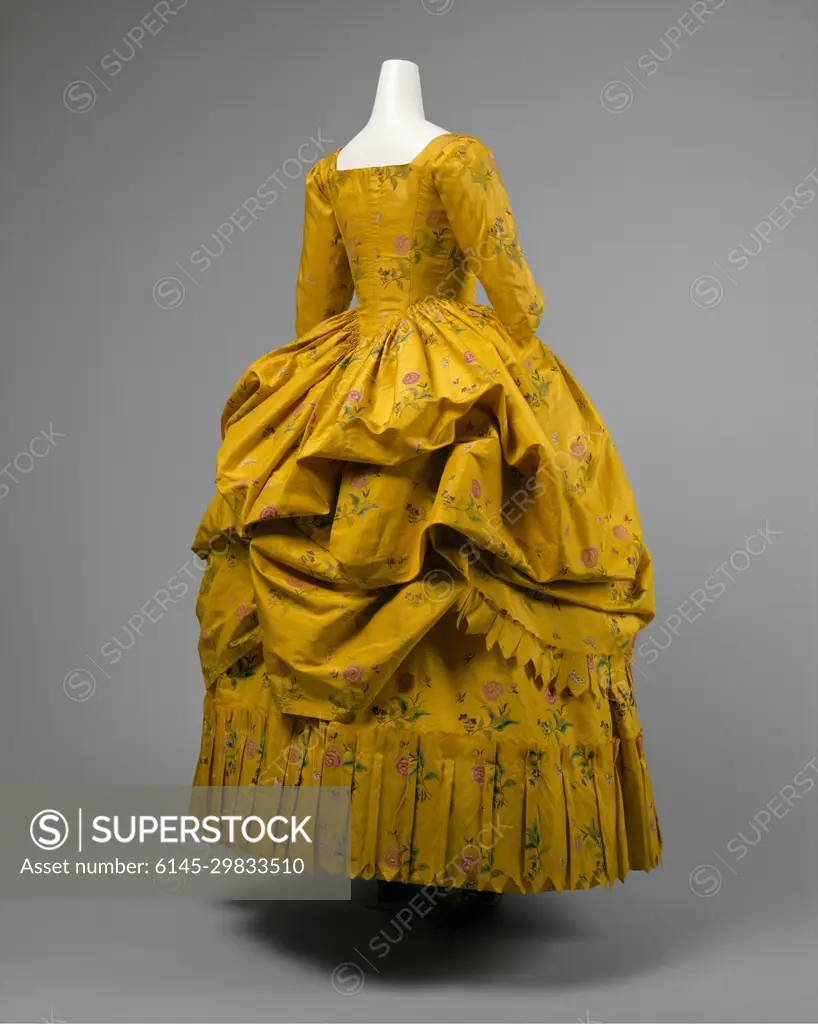
SuperStock offers millions of photos, videos, and stock assets to creatives around the world. This image of Robe à la Polonaise 1780-85 American The polonaise gown first came into fashion in the 1770s. It was a style of gown with a close-fitting bodice and the back of the skirt gathered up into three separate puffed sections to reveal the petticoat below. The method of suspending the fabric varied. Most often the dress had rows of little rings sewn inside the skirt through which a cord ran from hem to waist. Alternatively, ribbon ties would be used, with the ribbons forming decorative bows. However, in some instances the skirt was held in place by simple cords sewn to the inner waist of the dress and looped over buttons attached to the outside waistline. The stays underpinning the bodice of the polonaise were not markedly different from those which supported the robe à la française.Russian, German, and French Rococo styles absorbed chinoiserie into a seamless whole of frivoles, fêtes galantes, and colorful narratives. One particular syncretism is evident in painted wallpapers and dress, wher by Piemags/PL Photography Limited is available for licensing today.
Looking for a license?
Click here, and we'll help you find it! Questions? Just ask!
Click here, and we'll help you find it! Questions? Just ask!
DETAILS
Image Number: 6145-29833510Royalty FreeCredit Line:Piemags/PL Photography Limited/SuperStockCollection:PL Photography Limited Contributor:Piemags Model Release:NoProperty Release:NoResolution:1488×1861