Robe (Kosode) with Pines and Interlocking Squares second half of the 18th century Japan A pattern of overlapping squares as well as pine branches embellish the blue figured silk satin of this robe. Using a traditional tie-dye, or resist-dyeing, technique known as kanoko shibori (from the Japanese verb to squeeze”), the fabric is first twisted and compressed into tiny, three-dimensional shapes, bound, and then dyed. The design emerges when the binding is released and the fabric flattened. In the most popular variation of the technique, kanoko (fawn), the artisan hand-ties the fabric in small pinches to create a pattern of undyed details, typically similar to a small square with a tiny dot in the center that varies only subtly in shape. As products of a time-consuming and expensive technique, full kanoko-patterned garments were essential to the trousseaux of the eldest daughters of wealthy Kyoto merchants. Robes with kanoko covering their entire surface were the ultimate luxury.. Robe (
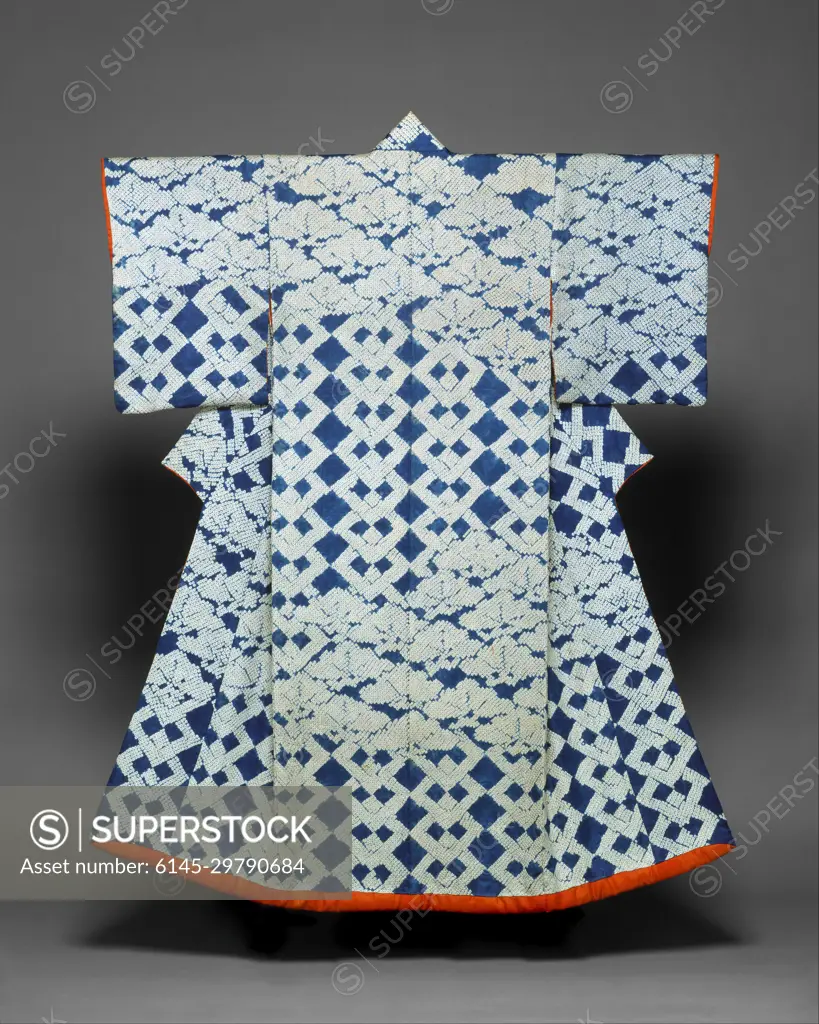
SuperStock offers millions of photos, videos, and stock assets to creatives around the world. This image of Robe (Kosode) with Pines and Interlocking Squares second half of the 18th century Japan A pattern of overlapping squares as well as pine branches embellish the blue figured silk satin of this robe. Using a traditional tie-dye, or resist-dyeing, technique known as kanoko shibori (from the Japanese verb to squeeze”), the fabric is first twisted and compressed into tiny, three-dimensional shapes, bound, and then dyed. The design emerges when the binding is released and the fabric flattened. In the most popular variation of the technique, kanoko (fawn), the artisan hand-ties the fabric in small pinches to create a pattern of undyed details, typically similar to a small square with a tiny dot in the center that varies only subtly in shape. As products of a time-consuming and expensive technique, full kanoko-patterned garments were essential to the trousseaux of the eldest daughters of wealthy Kyoto merchants. Robes with kanoko covering their entire surface were the ultimate luxury.. Robe ( by Piemags/PL Photography Limited is available for licensing today.
Looking for a license?
Click here, and we'll help you find it! Questions? Just ask!
Click here, and we'll help you find it! Questions? Just ask!
DETAILS
Image Number: 6145-29790684Royalty FreeCredit Line:Piemags/PL Photography Limited/SuperStockCollection:PL Photography Limited Contributor:Piemags Model Release:NoProperty Release:NoResolution:2978×3722