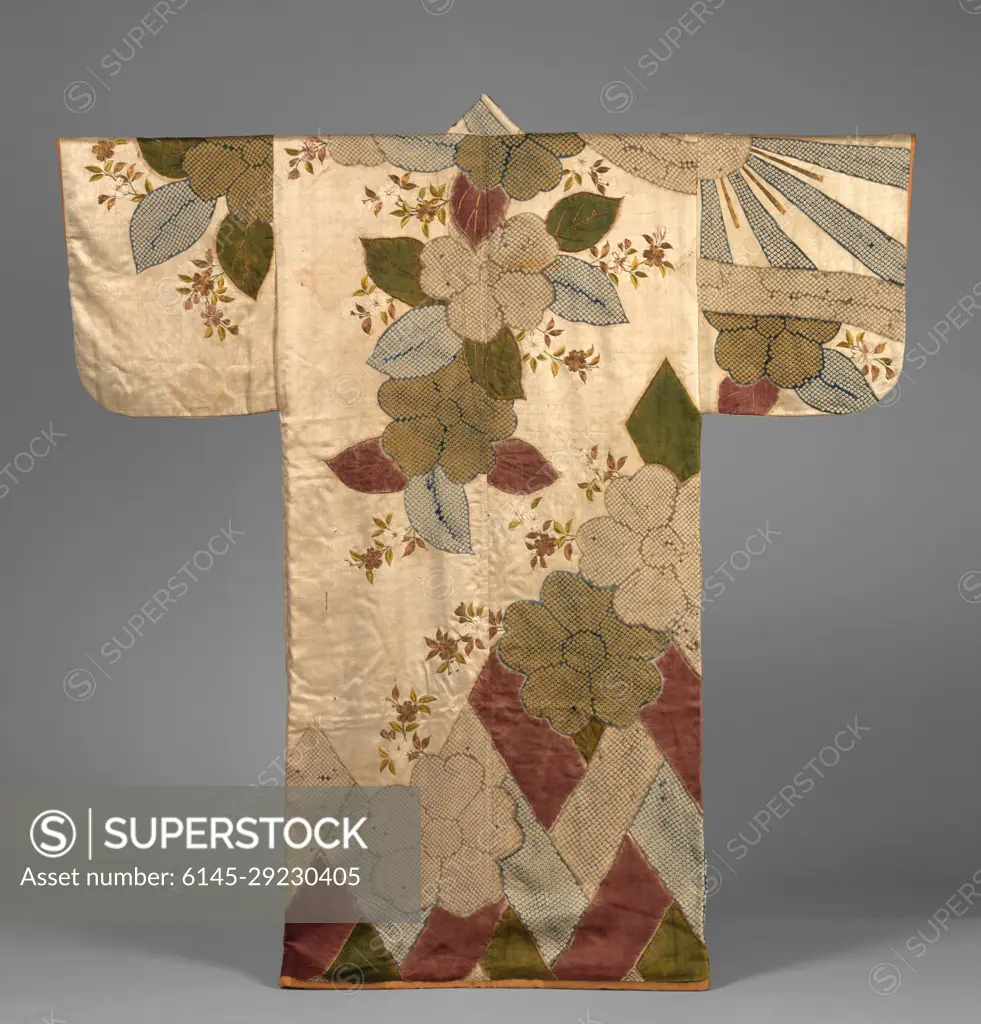
Robe (Kosode) with Cherry Blossoms and Cypress Fence second half of the 17th century Japan The design on this rare kosode (garment with small sleeve openings), with its pattern of cherry blossoms, a fence, and carriage wheels, is an example of the bold, largely diagonal compositions that appeared beginning in the mid-seventeenth century. The donation of precious garments to Buddhist temples has been a common practice throughout much of Japanese history, and these gifts of clothing were often transformed into Buddhist altar cloths (uchishiki) and vestments (kesa). This kosodes past is unknown, but it has been remade, and its slightly incomplete form suggests that it may once have been an altar cloth.. Robe (Kosode) with Cherry Blossoms and Cypress Fence. Japan. second half of the 17th century. Silk and metallic thread embroidery with resist dyeing on satin damask. Edo period (1615-1868). Textiles-Costumes
SuperStock offers millions of photos, videos, and stock assets to creatives around the world. This image of Robe (Kosode) with Cherry Blossoms and Cypress Fence second half of the 17th century Japan The design on this rare kosode (garment with small sleeve openings), with its pattern of cherry blossoms, a fence, and carriage wheels, is an example of the bold, largely diagonal compositions that appeared beginning in the mid-seventeenth century. The donation of precious garments to Buddhist temples has been a common practice throughout much of Japanese history, and these gifts of clothing were often transformed into Buddhist altar cloths (uchishiki) and vestments (kesa). This kosodes past is unknown, but it has been remade, and its slightly incomplete form suggests that it may once have been an altar cloth.. Robe (Kosode) with Cherry Blossoms and Cypress Fence. Japan. second half of the 17th century. Silk and metallic thread embroidery with resist dyeing on satin damask. Edo period (1615-1868). Textiles-Costumes by Piemags/PL Photography Limited is available for licensing today.
Looking for a license?
Click here, and we'll help you find it! Questions? Just ask!
Click here, and we'll help you find it! Questions? Just ask!
DETAILS
Image Number: 6145-29230405Royalty FreeCredit Line:Piemags/PL Photography Limited/SuperStockCollection:PL Photography Limited Contributor:Piemags Model Release:NoProperty Release:NoResolution:3835×4000