Robe first half 19th century or earlier Tekke Turkoman women's mantles are typically embroidered, by women, with small motifs in silk thread with a lacing stitch (kesdi). They are worn over the tunic (kurta) cloak-fashion, covering the head and shoulders, with the long vestigial sleeves hanging down the back and joined by an embroidered band. Among the Tekke, the chyrpy's color indicated the age of the wearer: dark blue or black for a young woman, yellow for a married woman of middle age, and white for a matriarch. The motifs were most frequently stylized flowers, and especially the tulip, the most prolific wildflower of the region. The fish in the present piece, however, represent another ubiquitous requirement in Turkoman life, that of good fortune and the provision of protection. Robe. first half 19th century or earlier. Silk; embroidered in silk thread; cotton lining. Attributed to Turkmenistan. Textiles-Costumes
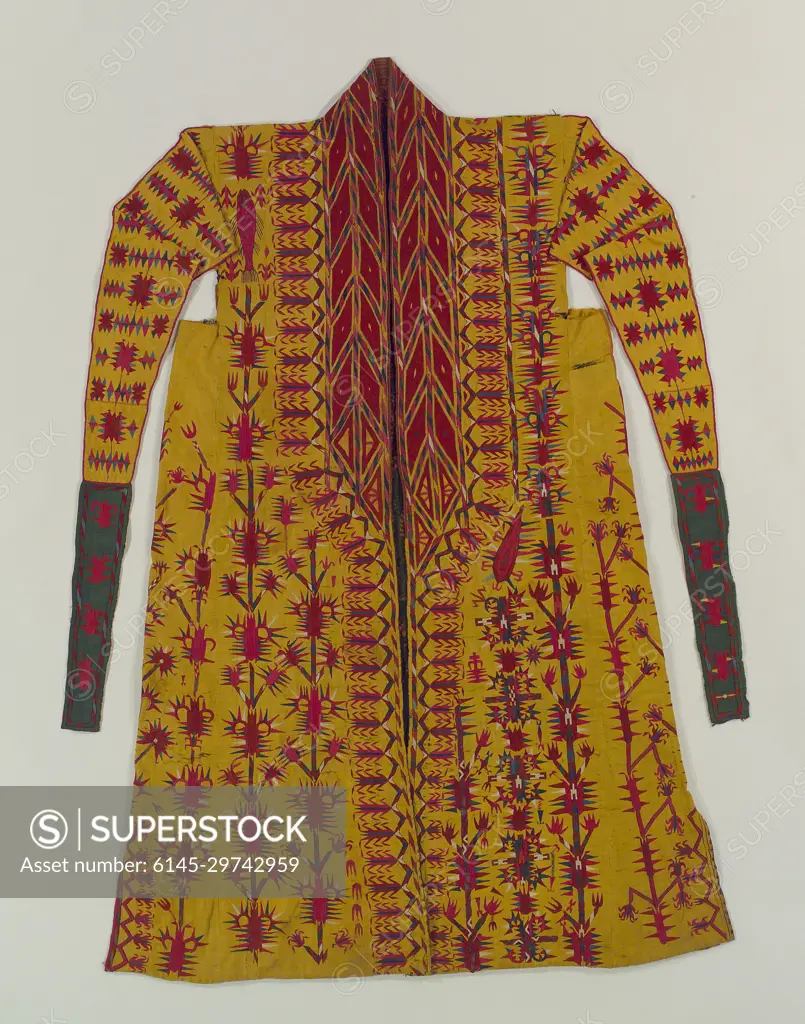
SuperStock offers millions of photos, videos, and stock assets to creatives around the world. This image of Robe first half 19th century or earlier Tekke Turkoman women's mantles are typically embroidered, by women, with small motifs in silk thread with a lacing stitch (kesdi). They are worn over the tunic (kurta) cloak-fashion, covering the head and shoulders, with the long vestigial sleeves hanging down the back and joined by an embroidered band. Among the Tekke, the chyrpy's color indicated the age of the wearer: dark blue or black for a young woman, yellow for a married woman of middle age, and white for a matriarch. The motifs were most frequently stylized flowers, and especially the tulip, the most prolific wildflower of the region. The fish in the present piece, however, represent another ubiquitous requirement in Turkoman life, that of good fortune and the provision of protection. Robe. first half 19th century or earlier. Silk; embroidered in silk thread; cotton lining. Attributed to Turkmenistan. Textiles-Costumes by Piemags/PL Photography Limited is available for licensing today.
Looking for a license?
Click here, and we'll help you find it! Questions? Just ask!
Click here, and we'll help you find it! Questions? Just ask!
DETAILS
Image Number: 6145-29742959Royalty FreeCredit Line:Piemags/PL Photography Limited/SuperStockCollection:PL Photography Limited Contributor:Piemags Model Release:NoProperty Release:NoResolution:2643×3359