Ring 9th-11th century In medieval Iran, carnelian is popularly found in jewelry owing largely to qualities such as its availability, toughness, and resistance to abrasion. According to al-Biruni, an eleventh-century polymath who wrote an important treatise on gemstones, carnelian was meant to provide courage in battle and cease hemorrhaging on the body. Excavated at Nishapur, this striking ring, therefore would have served as a talisman for its wearer.. Ring. 9th-11th century. Silver; set with carnelian. Excavated in Iran, Nishapur. Jewelry
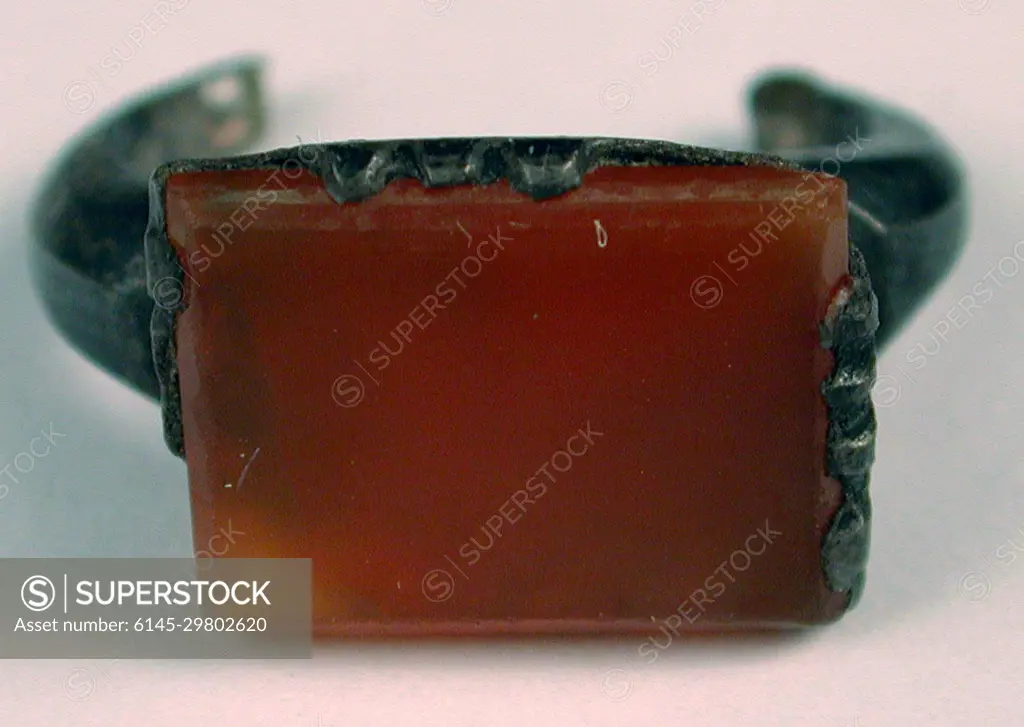
SuperStock offers millions of photos, videos, and stock assets to creatives around the world. This image of Ring 9th-11th century In medieval Iran, carnelian is popularly found in jewelry owing largely to qualities such as its availability, toughness, and resistance to abrasion. According to al-Biruni, an eleventh-century polymath who wrote an important treatise on gemstones, carnelian was meant to provide courage in battle and cease hemorrhaging on the body. Excavated at Nishapur, this striking ring, therefore would have served as a talisman for its wearer.. Ring. 9th-11th century. Silver; set with carnelian. Excavated in Iran, Nishapur. Jewelry by Piemags/PL Photography Limited is available for licensing today.
Looking for a license?
Click here, and we'll help you find it! Questions? Just ask!
Click here, and we'll help you find it! Questions? Just ask!
DETAILS
Image Number: 6145-29802620Royalty FreeCredit Line:Piemags/PL Photography Limited/SuperStockCollection:PL Photography Limited Contributor:Piemags Model Release:NoProperty Release:NoResolution:1132×804