Rhinoceros-Shaped Incense Burner in the Cochin (Kchi) Style second half of the 18th century Attributed to Okuda Eisen This rare work, attributed to Okuda Eisen, one of the most well-known potters of the late Edo period, is an example of revived interest in Chinese culture in eighteenth-century Kyoto. Its shape is based on ancient Chinese bronze spouted wine vessels (gong), and its decoration of dragons and other mythical animals is reminiscent of Chinese Cochin or Jiaozhi (Kchi) ware. The only other known example of this type of refined censer is preserved at the Ninnaji Temple in Kyoto.. Rhinoceros-Shaped Incense Burner in the Cochin (Kchi) Style. Attributed to Okuda Eisen (Japanese, 1753-1811). Japan. second half of the 18th century. Stoneware with polychrome overglaze enamels (Kyoto ware). Edo period (1615-1868). Ceramics
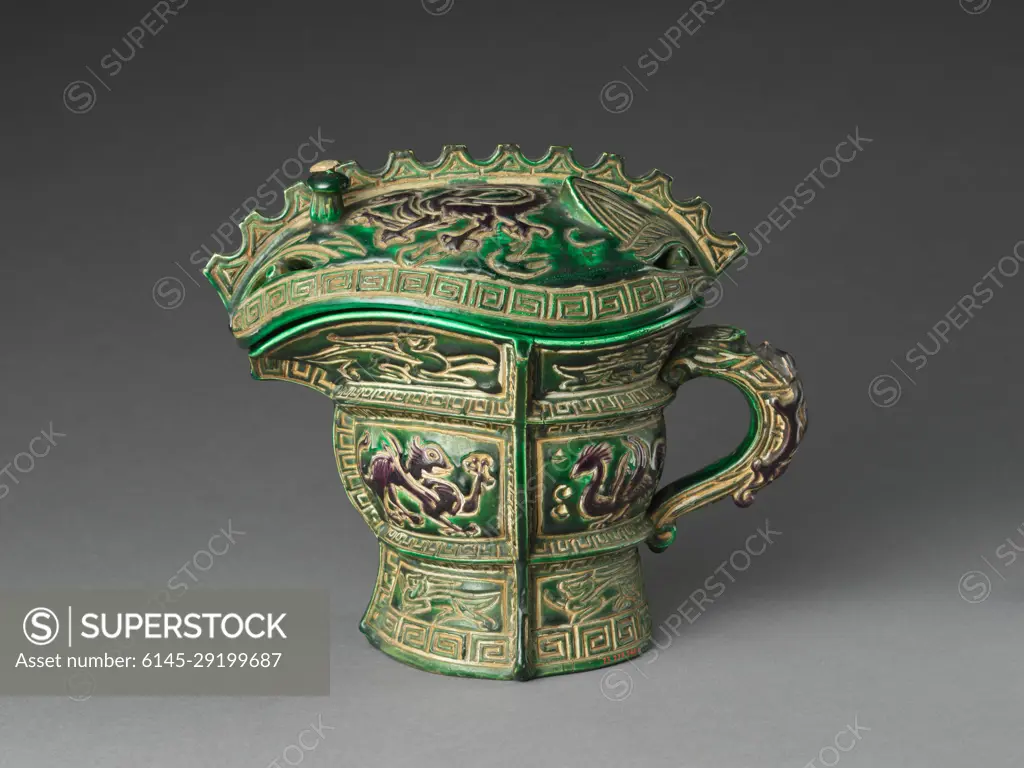
SuperStock offers millions of photos, videos, and stock assets to creatives around the world. This image of Rhinoceros-Shaped Incense Burner in the Cochin (Kchi) Style second half of the 18th century Attributed to Okuda Eisen This rare work, attributed to Okuda Eisen, one of the most well-known potters of the late Edo period, is an example of revived interest in Chinese culture in eighteenth-century Kyoto. Its shape is based on ancient Chinese bronze spouted wine vessels (gong), and its decoration of dragons and other mythical animals is reminiscent of Chinese Cochin or Jiaozhi (Kchi) ware. The only other known example of this type of refined censer is preserved at the Ninnaji Temple in Kyoto.. Rhinoceros-Shaped Incense Burner in the Cochin (Kchi) Style. Attributed to Okuda Eisen (Japanese, 1753-1811). Japan. second half of the 18th century. Stoneware with polychrome overglaze enamels (Kyoto ware). Edo period (1615-1868). Ceramics by Piemags/PL Photography Limited is available for licensing today.
Looking for a license?
Click here, and we'll help you find it! Questions? Just ask!
Click here, and we'll help you find it! Questions? Just ask!
DETAILS
Image Number: 6145-29199687Royalty FreeCredit Line:Piemags/PL Photography Limited/SuperStockCollection:PL Photography Limited Contributor:Piemags Model Release:NoProperty Release:NoResolution:4000×3000