Rgya-Gling 19th century Tibetan Rgya-gling (shawm) may be used in temple orchestras or may alternate with dung-chens for the morning and evening calls from the monastery roof. Like other Tibetan wind instruments this double-reed example is played in pairs. The reed (not present) fits onto the thin metal tube (staple) atop the ornate metal pirouette (disk) that slips into the small end of the wooden tube. A monk takes the reed completely into his mouth and presses his lips against the disk provided above the pirouette's bulbous assemblage. Double-reed instruments like the European oboe used two reeds that are secured at their bases to produce a loud, penetrating and "nasal" sound. Listen to experts illuminate this artwork's story Listen Play or pause #9362. Rgya-Gling Supported by Bloomberg Philanthropies We're sorry, the transcript for this audio track is not available at this time. We are working to make it available as soon as possible.. Rgya-Gling 502008
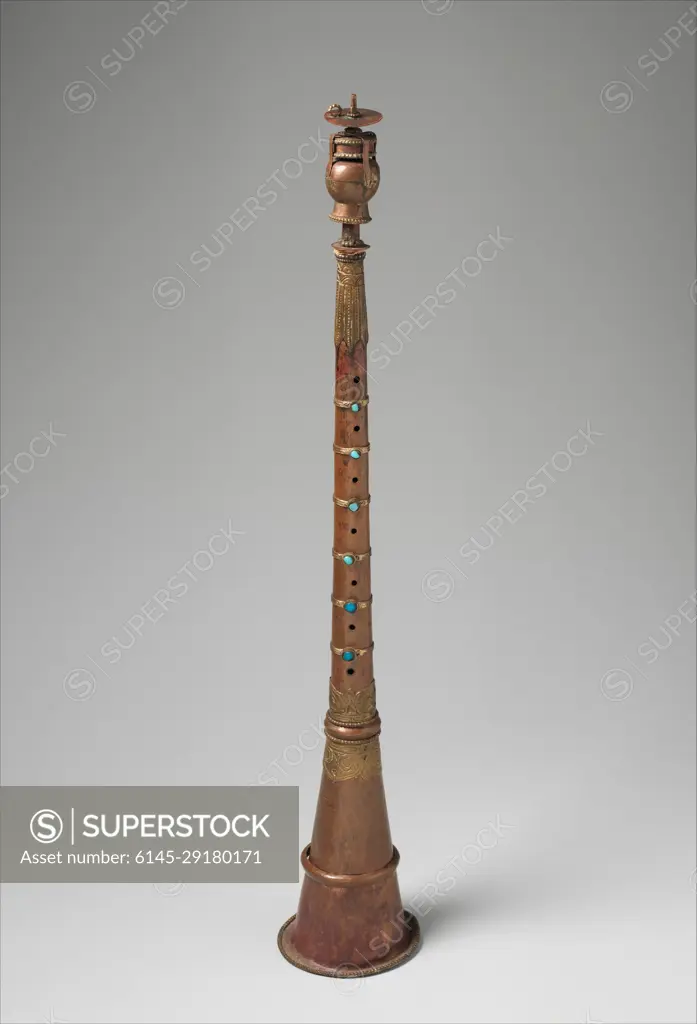
SuperStock offers millions of photos, videos, and stock assets to creatives around the world. This image of Rgya-Gling 19th century Tibetan Rgya-gling (shawm) may be used in temple orchestras or may alternate with dung-chens for the morning and evening calls from the monastery roof. Like other Tibetan wind instruments this double-reed example is played in pairs. The reed (not present) fits onto the thin metal tube (staple) atop the ornate metal pirouette (disk) that slips into the small end of the wooden tube. A monk takes the reed completely into his mouth and presses his lips against the disk provided above the pirouette's bulbous assemblage. Double-reed instruments like the European oboe used two reeds that are secured at their bases to produce a loud, penetrating and "nasal" sound. Listen to experts illuminate this artwork's story Listen Play or pause #9362. Rgya-Gling Supported by Bloomberg Philanthropies We're sorry, the transcript for this audio track is not available at this time. We are working to make it available as soon as possible.. Rgya-Gling 502008 by Piemags/PL Photography Limited is available for licensing today.
Looking for a license?
Click here, and we'll help you find it! Questions? Just ask!
Click here, and we'll help you find it! Questions? Just ask!
DETAILS
Image Number: 6145-29180171Royalty FreeCredit Line:Piemags/PL Photography Limited/SuperStockCollection:PL Photography Limited Contributor:Piemags Model Release:NoProperty Release:NoResolution:2652×3892