Reliquary 18th century Portuguese The cult of relics was an integral part of Catholic devotion from early in the Christian era. Relics of the Passion of Christ (the events leading up to the Crucifixion), as well as those associated with numerous saints and martyrs, were prized by churches and pious individuals throughout western Europe and Byzantium. Believers in the miraculous power of relics promoted a sumptuous form of artwork by commissioning resplendent cases to surround the often miniscule fragments. Sometimes the framework would echo the source of the relic (an arm, a foot, a head). In other instances, relics were preserved in containers of more traditional form. Jewels containing relics served as gestures of piety as well as displays of personal wealth. Such devotional ornaments became especially popular in early-seventeenth-century Spain, where sumptuary laws restricted most nonreligious personal adornment. Many of the most elaborate works produced by goldsmiths and jewelers w
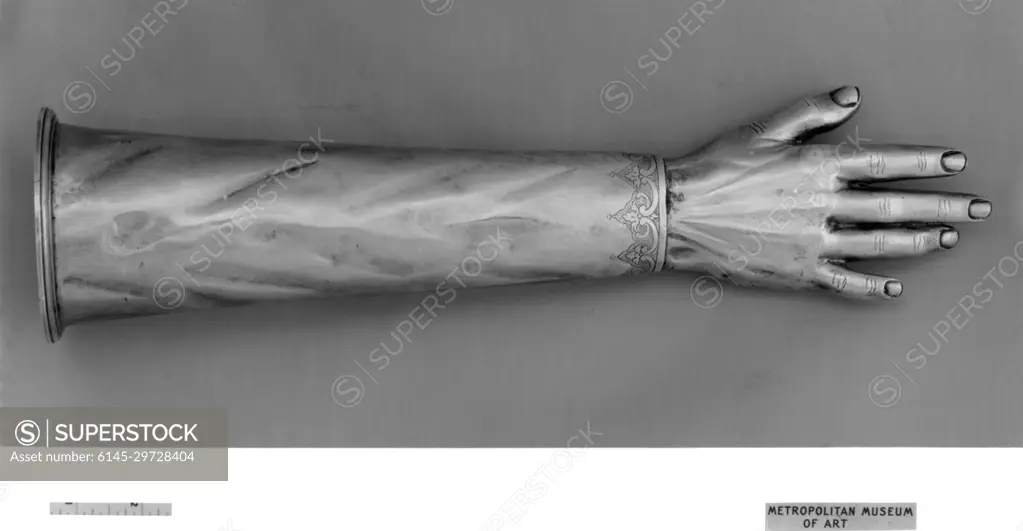
SuperStock offers millions of photos, videos, and stock assets to creatives around the world. This image of Reliquary 18th century Portuguese The cult of relics was an integral part of Catholic devotion from early in the Christian era. Relics of the Passion of Christ (the events leading up to the Crucifixion), as well as those associated with numerous saints and martyrs, were prized by churches and pious individuals throughout western Europe and Byzantium. Believers in the miraculous power of relics promoted a sumptuous form of artwork by commissioning resplendent cases to surround the often miniscule fragments. Sometimes the framework would echo the source of the relic (an arm, a foot, a head). In other instances, relics were preserved in containers of more traditional form. Jewels containing relics served as gestures of piety as well as displays of personal wealth. Such devotional ornaments became especially popular in early-seventeenth-century Spain, where sumptuary laws restricted most nonreligious personal adornment. Many of the most elaborate works produced by goldsmiths and jewelers w by Piemags/PL Photography Limited is available for licensing today.
Looking for a license?
Click here, and we'll help you find it! Questions? Just ask!
Click here, and we'll help you find it! Questions? Just ask!
DETAILS
Image Number: 6145-29728404Royalty FreeCredit Line:Piemags/PL Photography Limited/SuperStockCollection:PL Photography Limited Contributor:Piemags Model Release:NoProperty Release:NoResolution:1896×984