Red and White Tale of Genji, vol. 4: Festival of the Cherry Blossoms, 1709, Okumura Masanobu, Japanese, 1686 - 1764, 10 7/16 × 7 1/8 × 1/4 in. (26.51 × 18.1 × 0.64 cm), Woodblock printed book; ink on paper, Japan, 18th century, By the early 1700s, when this printed version of The Tale of Genji was published, very few people could understand the complex written language in which the original tale had been written 700 years earlier. For this illustrated and modernized version of the tale, Okumura Masanobu wrote in a manner that reflected Japanese as it was spoken in the early 1700s. The text was rendered freely, placing emphasis on conveying the meaning rather than offering a verbatim presentation of the original tale.
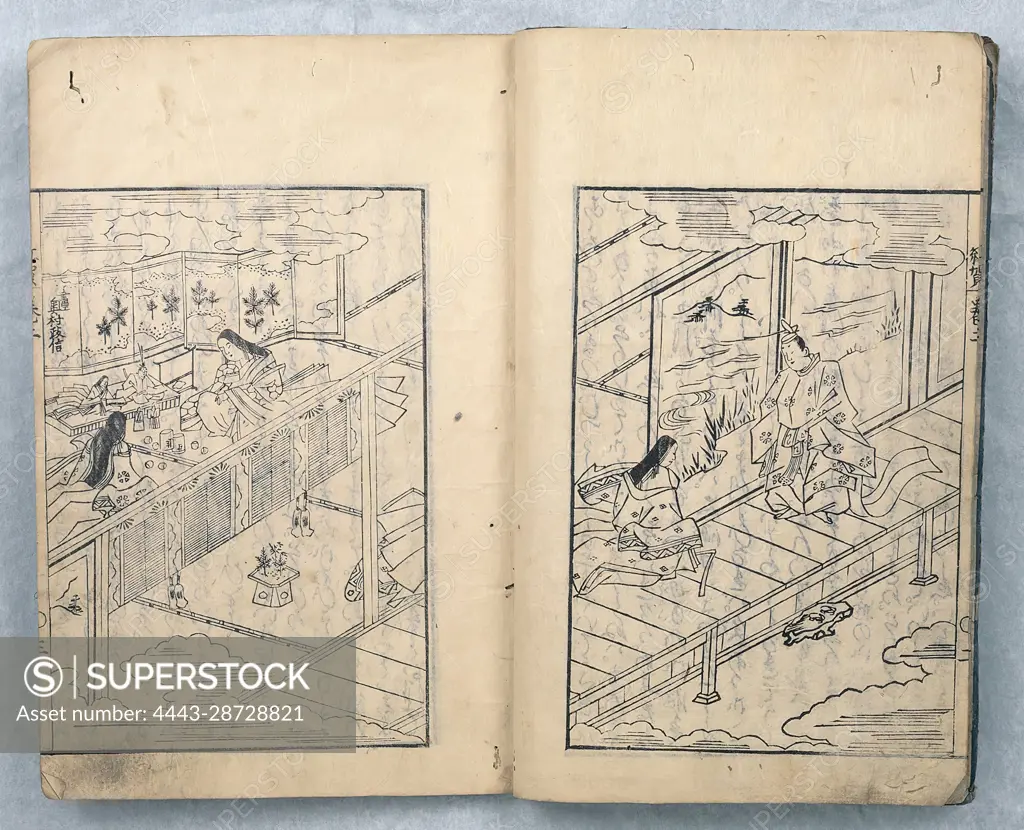
SuperStock offers millions of photos, videos, and stock assets to creatives around the world. This image of Red and White Tale of Genji, vol. 4: Festival of the Cherry Blossoms, 1709, Okumura Masanobu, Japanese, 1686 - 1764, 10 7/16 × 7 1/8 × 1/4 in. (26.51 × 18.1 × 0.64 cm), Woodblock printed book; ink on paper, Japan, 18th century, By the early 1700s, when this printed version of The Tale of Genji was published, very few people could understand the complex written language in which the original tale had been written 700 years earlier. For this illustrated and modernized version of the tale, Okumura Masanobu wrote in a manner that reflected Japanese as it was spoken in the early 1700s. The text was rendered freely, placing emphasis on conveying the meaning rather than offering a verbatim presentation of the original tale. by Artokoloro is available for licensing today.
Looking for a license?
Click here, and we'll help you find it! Questions? Just ask!
Click here, and we'll help you find it! Questions? Just ask!
DETAILS
Image Number: 4443-28728821Rights ManagedCredit Line:Artokoloro/SuperStockCollection:Artokoloro Model Release:NoProperty Release:NoResolution:2880×2337