Prick Spur 4th-1st century B.C. Greek or Italic This type of spur has been found in several Italic burials, as well as some Greek sanctuaries, from the late 5th century B.C. onwards.In high antiquity, spurs were not used in pairs, but rather as a single accessory attached to only one of the feet, usually on the left. The first pairs are recorded in some Greek regions in the late 2nd century B.C. They were used, as they are today, for directing a horse to move forwards. The prick spur was the first type of spur to be invented, and it consists of a goad or prick, more or less pointed, connected to side arms or a heel plate. The earliest spurs were probably simple thorns attached at the back of the heel or ankle, before they began to be made out of metal.. Prick Spur. Greek or Italic. 4th-1st century B.C.. Copper alloy (bronze). Equestrian Equipment-Spurs
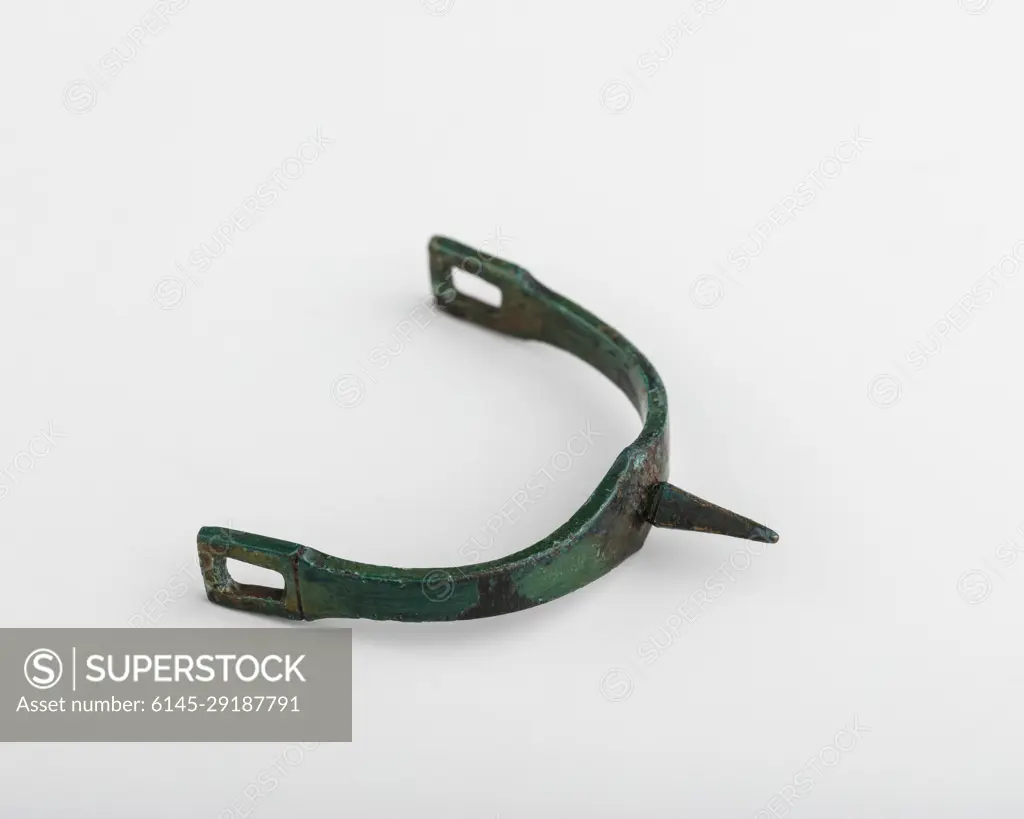
SuperStock offers millions of photos, videos, and stock assets to creatives around the world. This image of Prick Spur 4th-1st century B.C. Greek or Italic This type of spur has been found in several Italic burials, as well as some Greek sanctuaries, from the late 5th century B.C. onwards.In high antiquity, spurs were not used in pairs, but rather as a single accessory attached to only one of the feet, usually on the left. The first pairs are recorded in some Greek regions in the late 2nd century B.C. They were used, as they are today, for directing a horse to move forwards. The prick spur was the first type of spur to be invented, and it consists of a goad or prick, more or less pointed, connected to side arms or a heel plate. The earliest spurs were probably simple thorns attached at the back of the heel or ankle, before they began to be made out of metal.. Prick Spur. Greek or Italic. 4th-1st century B.C.. Copper alloy (bronze). Equestrian Equipment-Spurs by Piemags/PL Photography Limited is available for licensing today.
Looking for a license?
Click here, and we'll help you find it! Questions? Just ask!
Click here, and we'll help you find it! Questions? Just ask!
DETAILS
Image Number: 6145-29187791Royalty FreeCredit Line:Piemags/PL Photography Limited/SuperStockCollection:PL Photography Limited Contributor:Piemags Model Release:NoProperty Release:NoResolution:4000×3200