Presentation medal (Gnadenpfennig) of Maximilian, Archduke of Austria (1558-1620) ca. 1612 Alessandro Abondio This presentation medal was designed by an imperial artist for the Habsburg Archduke Maximilian III of Austria, brother of Archduke Albert VII. On its reverse is Maximilian IIIs motto and the image of an ancient Roman army camp. The very same camp architecture can be found on the Otho dish, where it provides the setting for Othos noble suicide. Both the dish and the medal were inspired by an image published in Du Chouls antiquarian treatise. Correspondences such as these suggest that whatever the origin of the Silver Caesars, they were likely designed with Habsburg iconography in mind.. Presentation medal (Gnadenpfennig) of Maximilian, Archduke of Austria (1558-1620). Austrian, probably Vienna. ca. 1612. Gold, partly enameled; pearl
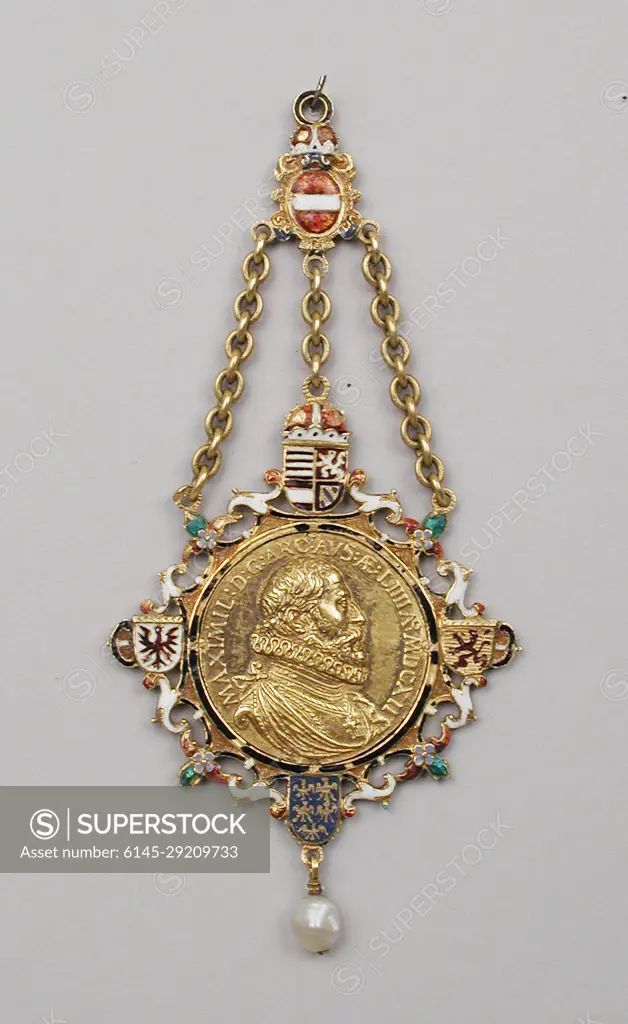
SuperStock offers millions of photos, videos, and stock assets to creatives around the world. This image of Presentation medal (Gnadenpfennig) of Maximilian, Archduke of Austria (1558-1620) ca. 1612 Alessandro Abondio This presentation medal was designed by an imperial artist for the Habsburg Archduke Maximilian III of Austria, brother of Archduke Albert VII. On its reverse is Maximilian IIIs motto and the image of an ancient Roman army camp. The very same camp architecture can be found on the Otho dish, where it provides the setting for Othos noble suicide. Both the dish and the medal were inspired by an image published in Du Chouls antiquarian treatise. Correspondences such as these suggest that whatever the origin of the Silver Caesars, they were likely designed with Habsburg iconography in mind.. Presentation medal (Gnadenpfennig) of Maximilian, Archduke of Austria (1558-1620). Austrian, probably Vienna. ca. 1612. Gold, partly enameled; pearl by Piemags/PL Photography Limited is available for licensing today.
Looking for a license?
Click here, and we'll help you find it! Questions? Just ask!
Click here, and we'll help you find it! Questions? Just ask!
DETAILS
Image Number: 6145-29209733Royalty FreeCredit Line:Piemags/PL Photography Limited/SuperStockCollection:PL Photography Limited Contributor:Piemags Model Release:NoProperty Release:NoResolution:993×1618