Portrait of a thin-faced, bearded man A.D. 160-180 Roman Period The term encaustic designates painting in which beeswax is mixed with pigments. The technique was first used by Greek painters of the fifth and fourth centuries B.C. Ancient descriptions are difficult to interpret, and Egyptian mummy portraits--the only works in the medium surviving from antiquity--have not yet been analyzed extensively. Therefore, many questions concerning the details of the techniques used by mummy-portrait painters remain open, although the work of a few scholars and modern artists who paint in encaustic has provided some insight. The first step in producing a mummy portrait was to sketch the outlines of face and garment on a wood panel that had been prepared with distemper, transparent glue, or dark wax. Then, a mixture of beeswax with powdered pigments was prepared. The wax could be used hot or cold. When used in molten state, the wax was either pure or supplemented with resin, glue, egg, gum, or oil.
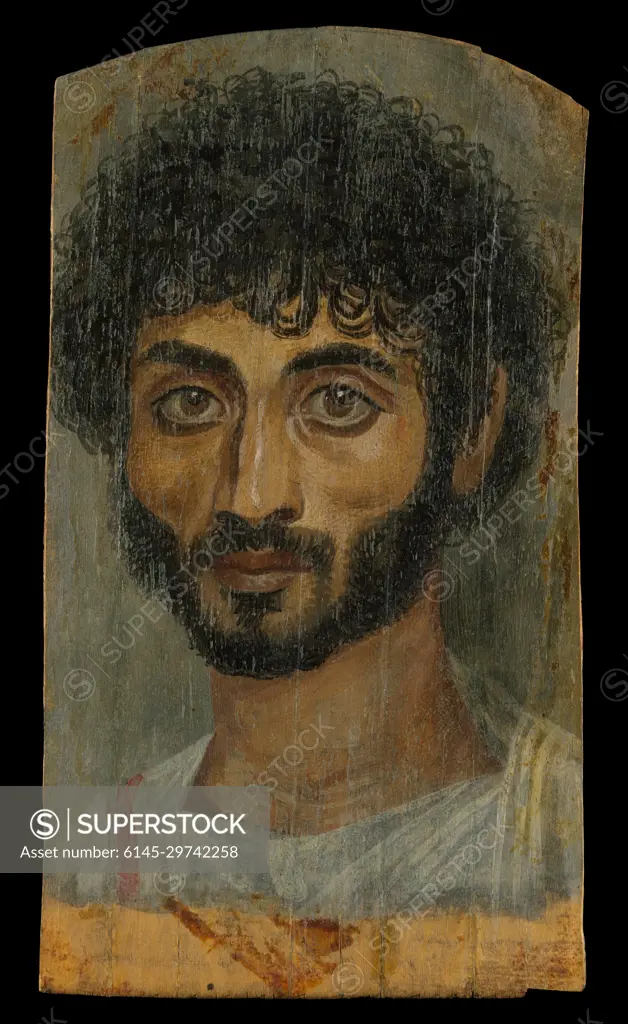
SuperStock offers millions of photos, videos, and stock assets to creatives around the world. This image of Portrait of a thin-faced, bearded man A.D. 160-180 Roman Period The term encaustic designates painting in which beeswax is mixed with pigments. The technique was first used by Greek painters of the fifth and fourth centuries B.C. Ancient descriptions are difficult to interpret, and Egyptian mummy portraits--the only works in the medium surviving from antiquity--have not yet been analyzed extensively. Therefore, many questions concerning the details of the techniques used by mummy-portrait painters remain open, although the work of a few scholars and modern artists who paint in encaustic has provided some insight. The first step in producing a mummy portrait was to sketch the outlines of face and garment on a wood panel that had been prepared with distemper, transparent glue, or dark wax. Then, a mixture of beeswax with powdered pigments was prepared. The wax could be used hot or cold. When used in molten state, the wax was either pure or supplemented with resin, glue, egg, gum, or oil. by Piemags/PL Photography Limited is available for licensing today.
Looking for a license?
Click here, and we'll help you find it! Questions? Just ask!
Click here, and we'll help you find it! Questions? Just ask!
DETAILS
Image Number: 6145-29742258Royalty FreeCredit Line:Piemags/PL Photography Limited/SuperStockCollection:PL Photography Limited Contributor:Piemags Model Release:NoProperty Release:NoResolution:2286×3722