Portrait of Jifei Ruyi (Sokuhi Nyoichi, 1616-1671) 1666 Kita Genki Japanese Genki, a Nagasaki artist, painted this portrait of the Ōbaku master Jifei Ruyi, which was inscribed in Chinese by the subject himself while he was resident at Fukujuji, a temple patronized by the daimyo of Kokura (present-day Kita Kyushu). The port of Nagasaki was one of the few places under the tightly regulated Tokugawa government where contemporary Chinese culture and learning could be openly discussed and studied. In the mid-seventeenth century, new ideas on Confucianism and Zen (Chinese: Chan) Buddhism were brought to Japan by Chinese monks travelling through Nagasaki (including Jifei Ruyi) and by envoys from Korea. These monks formed what was known in Japan as the Ōbaku school, after the Japanese rendering of the name of the Tang dynasty monk Huangbo Xiyun (d. 850).There are several versions of this portrait, each with a different inscription. In Zen, the teachings of the Buddha Shakyamuni are transmitted
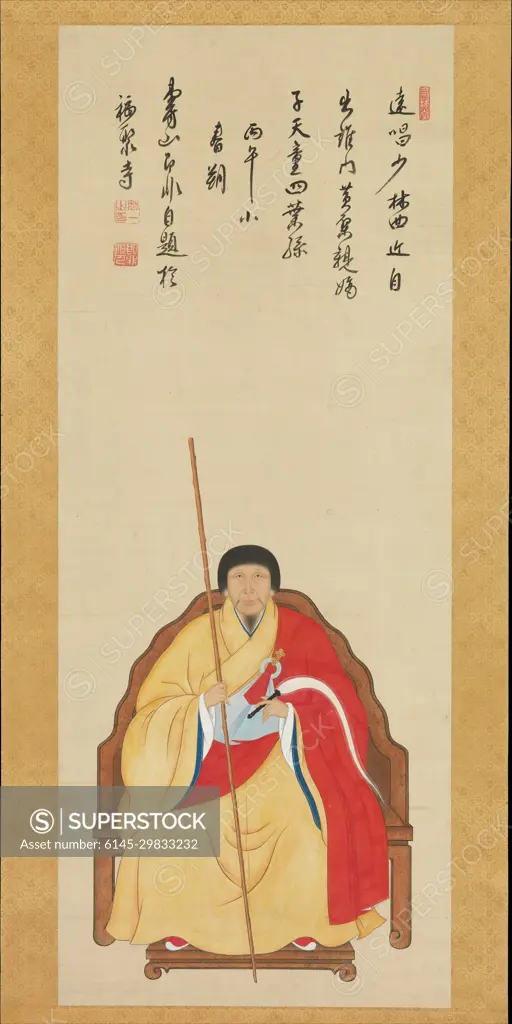
SuperStock offers millions of photos, videos, and stock assets to creatives around the world. This image of Portrait of Jifei Ruyi (Sokuhi Nyoichi, 1616-1671) 1666 Kita Genki Japanese Genki, a Nagasaki artist, painted this portrait of the Ōbaku master Jifei Ruyi, which was inscribed in Chinese by the subject himself while he was resident at Fukujuji, a temple patronized by the daimyo of Kokura (present-day Kita Kyushu). The port of Nagasaki was one of the few places under the tightly regulated Tokugawa government where contemporary Chinese culture and learning could be openly discussed and studied. In the mid-seventeenth century, new ideas on Confucianism and Zen (Chinese: Chan) Buddhism were brought to Japan by Chinese monks travelling through Nagasaki (including Jifei Ruyi) and by envoys from Korea. These monks formed what was known in Japan as the Ōbaku school, after the Japanese rendering of the name of the Tang dynasty monk Huangbo Xiyun (d. 850).There are several versions of this portrait, each with a different inscription. In Zen, the teachings of the Buddha Shakyamuni are transmitted by Piemags/PL Photography Limited is available for licensing today.
Looking for a license?
Click here, and we'll help you find it! Questions? Just ask!
Click here, and we'll help you find it! Questions? Just ask!
DETAILS
Image Number: 6145-29833232Royalty FreeCredit Line:Piemags/PL Photography Limited/SuperStockCollection:PL Photography Limited Contributor:Piemags Model Release:NoProperty Release:NoResolution:1940×3880