Porphyry basin 2nd-3rd century A.D. Roman Stone basins such as this served as bathing tubs in one or another of the large imperial baths with which Rome was furnished. This example, although undecorated, provides a good impression of the richness and extravagance ofimperial patronage. Porphyry was regarded as a stone that had special associations with the emperor, because of its purple color and also because of the great expense of quarrying, transporting, and carving it. Most of the surviving Roman porphyry tubs are to be found in Rome, where they were reused later as sarcophagi in early Christian times.. Porphyry basin. Roman. 2nd-3rd century A.D.. Porphyry. Imperial. Stone Sculpture
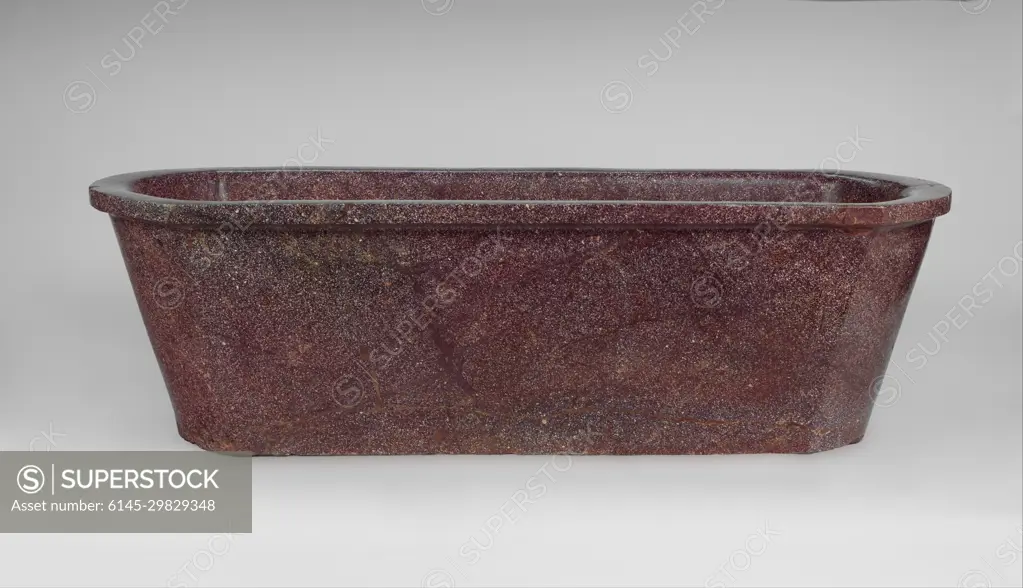
SuperStock offers millions of photos, videos, and stock assets to creatives around the world. This image of Porphyry basin 2nd-3rd century A.D. Roman Stone basins such as this served as bathing tubs in one or another of the large imperial baths with which Rome was furnished. This example, although undecorated, provides a good impression of the richness and extravagance ofimperial patronage. Porphyry was regarded as a stone that had special associations with the emperor, because of its purple color and also because of the great expense of quarrying, transporting, and carving it. Most of the surviving Roman porphyry tubs are to be found in Rome, where they were reused later as sarcophagi in early Christian times.. Porphyry basin. Roman. 2nd-3rd century A.D.. Porphyry. Imperial. Stone Sculpture by Piemags/PL Photography Limited is available for licensing today.
Looking for a license?
Click here, and we'll help you find it! Questions? Just ask!
Click here, and we'll help you find it! Questions? Just ask!
DETAILS
Image Number: 6145-29829348Royalty FreeCredit Line:Piemags/PL Photography Limited/SuperStockCollection:PL Photography Limited Contributor:Piemags Model Release:NoProperty Release:NoResolution:3859×2217