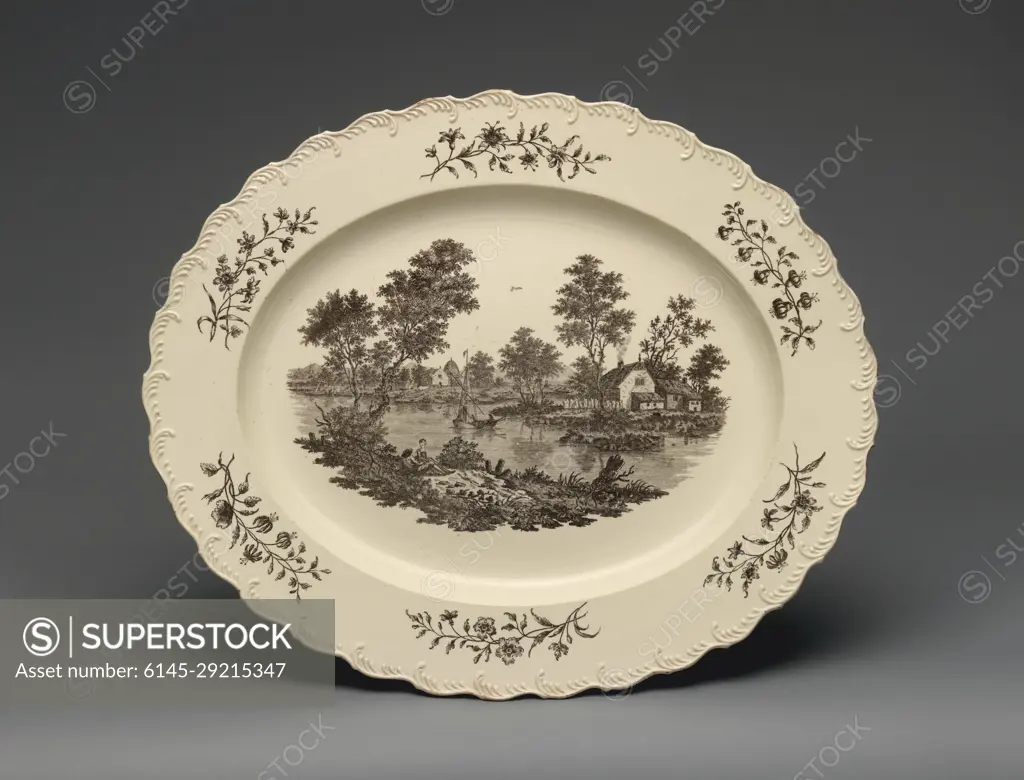
Platter ca. 1780 Josiah Wedgwood British This platter represents two great inventions of British potters in the eighteenth century: creamware, a durable white earthenware with yellowish glaze, and transfer-printing, a technique that allowed for high-quality decoration at a relatively low cost. Creamware was developed by Staffordshire potters around 1750 as a substitute for porcelain. Lightweight, yet durable, it proved ideal for moderately-priced domestic wares. Josiah Wedgwood achieved commercial success in producing creamware of elegant designs often with transfer-printed decoration. After gaining the patronage of Queen Charlotte, Wedgwood was allowed to use the name Queens ware.[Elizabeth Sullivan, 2014. Platter. British, Staffordshire. ca. 1780. Creamware with transfer-printed decoration in black. Ceramics-Pottery
SuperStock offers millions of photos, videos, and stock assets to creatives around the world. This image of Platter ca. 1780 Josiah Wedgwood British This platter represents two great inventions of British potters in the eighteenth century: creamware, a durable white earthenware with yellowish glaze, and transfer-printing, a technique that allowed for high-quality decoration at a relatively low cost. Creamware was developed by Staffordshire potters around 1750 as a substitute for porcelain. Lightweight, yet durable, it proved ideal for moderately-priced domestic wares. Josiah Wedgwood achieved commercial success in producing creamware of elegant designs often with transfer-printed decoration. After gaining the patronage of Queen Charlotte, Wedgwood was allowed to use the name Queens ware.[Elizabeth Sullivan, 2014. Platter. British, Staffordshire. ca. 1780. Creamware with transfer-printed decoration in black. Ceramics-Pottery by Piemags/PL Photography Limited is available for licensing today.
Looking for a license?
Click here, and we'll help you find it! Questions? Just ask!
Click here, and we'll help you find it! Questions? Just ask!
DETAILS
Image Number: 6145-29215347Royalty FreeCredit Line:Piemags/PL Photography Limited/SuperStockCollection:PL Photography Limited Contributor:Piemags Model Release:NoProperty Release:NoResolution:4000×3048