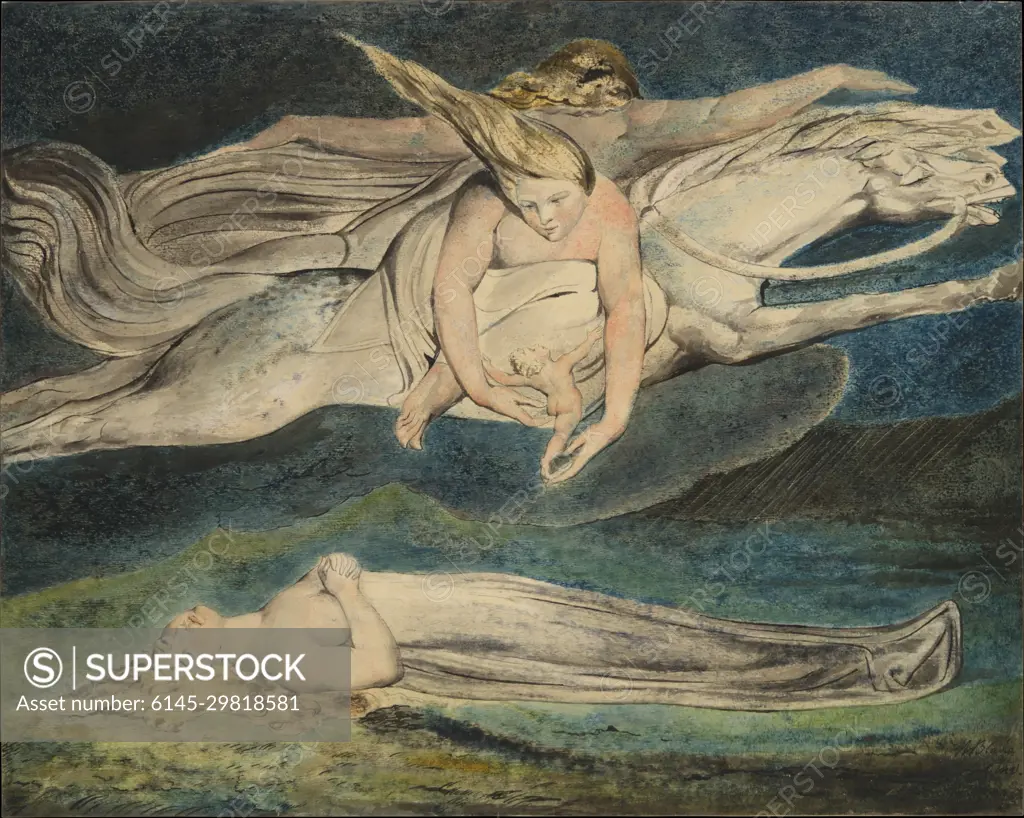
Pity ca. 1795 William Blake British Blake was inspired by lines from Macbeth (act 1, scene 7), in which the title character imagines the aftermath of his intended murder of Duncan, the king:"And pity, like a naked new-born babe,Striding the blast, or heavens cherubin, horsd Upon the sightless couriers of the air, Shall blow the horrid deed in every eye"Shakespeares similes are embodied here to form a dynamic interplay: a tiny baby springs from his mother towards an angel astride a blind steed. The artist inventively mixed relief etching with colors printed from millboard to produce the image, and then used ink and watercolor to define details. Blake called prints like this one "frescoes" and considered them part of a narrative sequence.. Pity. William Blake (British, London 1757-1827 London). ca. 1795. Relief etching, printed in color and finished with pen and ink and watercolor. Prints
SuperStock offers millions of photos, videos, and stock assets to creatives around the world. This image of Pity ca. 1795 William Blake British Blake was inspired by lines from Macbeth (act 1, scene 7), in which the title character imagines the aftermath of his intended murder of Duncan, the king:"And pity, like a naked new-born babe,Striding the blast, or heavens cherubin, horsd Upon the sightless couriers of the air, Shall blow the horrid deed in every eye"Shakespeares similes are embodied here to form a dynamic interplay: a tiny baby springs from his mother towards an angel astride a blind steed. The artist inventively mixed relief etching with colors printed from millboard to produce the image, and then used ink and watercolor to define details. Blake called prints like this one "frescoes" and considered them part of a narrative sequence.. Pity. William Blake (British, London 1757-1827 London). ca. 1795. Relief etching, printed in color and finished with pen and ink and watercolor. Prints by Piemags/PL Photography Limited is available for licensing today.
Looking for a license?
Click here, and we'll help you find it! Questions? Just ask!
Click here, and we'll help you find it! Questions? Just ask!
DETAILS
Image Number: 6145-29818581Royalty FreeCredit Line:Piemags/PL Photography Limited/SuperStockCollection:PL Photography Limited Contributor:Piemags Model Release:NoProperty Release:NoResolution:3681×2944