Pilgrim flask ca. 1st century B.C.-1st century A.D. Parthian This lentoid (i.e., lens-shaped) ceramic vessel is made of grey-brown clay and decorated with a plum slip. It has a narrow mouth, and is complete except for part of the rim. It was excavated at Shahr-i Qumis in northern Iran, which has been identified as the ancient city of Hecatompylos, established by the Parthians as the capital of their empire by about 200 B.C. In Greek Hecatompylos means a hundred gates,’ suggesting that the city was quite large. Indeed, the modern archaeological site includes several mounds, only a few of which have been excavated, and a vast area covered with potsherds. This vessel comes from Site VII, a building which may have originally been an elite residence but which was subsequently reused as a funerary structure.Vessels of this shape are often called pilgrim flasks’ because of their resemblance to the souvenir vessels sold at Christian pilgrimage sites around the Mediterranean, beginning in the
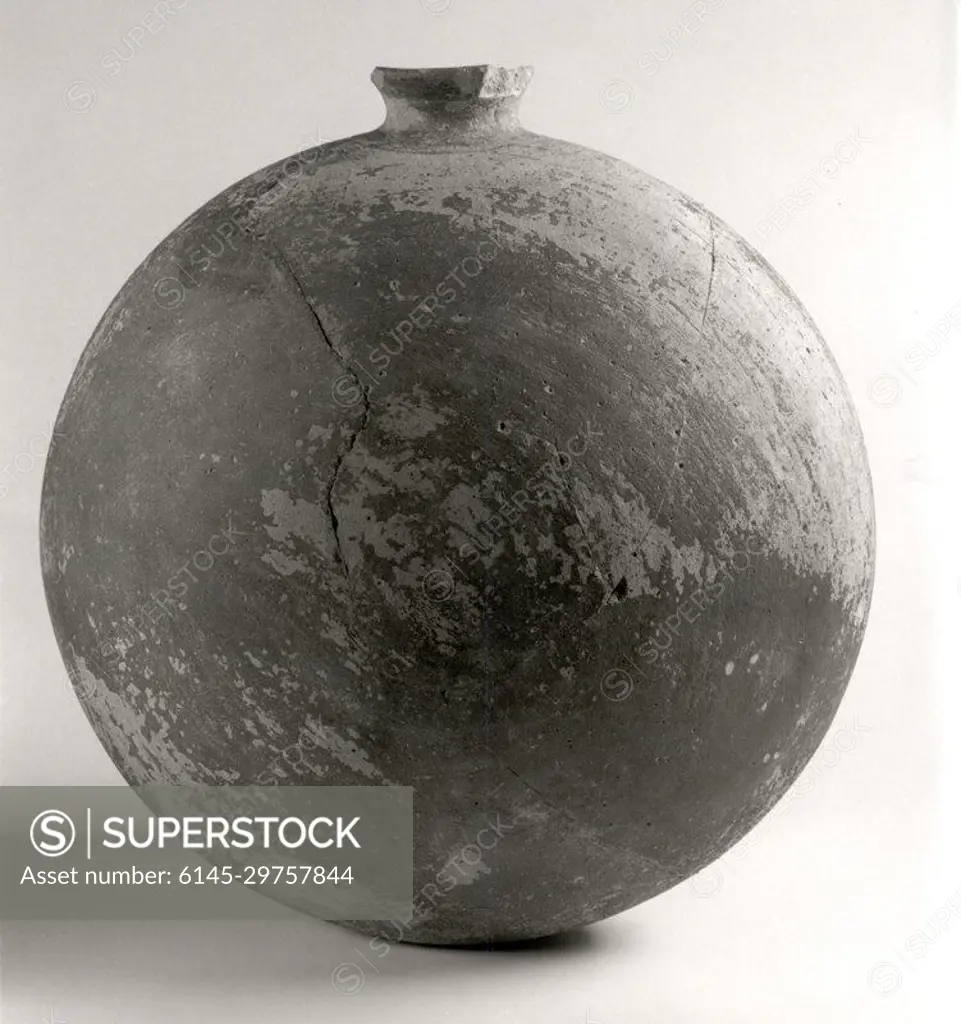
SuperStock offers millions of photos, videos, and stock assets to creatives around the world. This image of Pilgrim flask ca. 1st century B.C.-1st century A.D. Parthian This lentoid (i.e., lens-shaped) ceramic vessel is made of grey-brown clay and decorated with a plum slip. It has a narrow mouth, and is complete except for part of the rim. It was excavated at Shahr-i Qumis in northern Iran, which has been identified as the ancient city of Hecatompylos, established by the Parthians as the capital of their empire by about 200 B.C. In Greek Hecatompylos means a hundred gates,’ suggesting that the city was quite large. Indeed, the modern archaeological site includes several mounds, only a few of which have been excavated, and a vast area covered with potsherds. This vessel comes from Site VII, a building which may have originally been an elite residence but which was subsequently reused as a funerary structure.Vessels of this shape are often called pilgrim flasks’ because of their resemblance to the souvenir vessels sold at Christian pilgrimage sites around the Mediterranean, beginning in the by Piemags/PL Photography Limited is available for licensing today.
Looking for a license?
Click here, and we'll help you find it! Questions? Just ask!
Click here, and we'll help you find it! Questions? Just ask!
DETAILS
Image Number: 6145-29757844Royalty FreeCredit Line:Piemags/PL Photography Limited/SuperStockCollection:PL Photography Limited Contributor:Piemags Model Release:NoProperty Release:NoResolution:751×800