Pergamum Altar in the Pergamum Museum in Berlin. It is a monumental construction built during the reign of King Eumenes 11 in the first half of the 2nd century BC on one of the terraces of the acropolis of the ancient city of Pergamum in Asia Minor. It is 35.64 meters wide and 33.4 meters deep. The front stairway is almost 20 meters wide. The base is decorated with a frieze in high relief showing the battle between the Giants and Olympian gods known as the Gigantomachy. In 1878 the German engineer Carl Human began official excavations on the acropolis of Pergamum. The excavation was undertaken in order to rescue the altar friezes and expose the foundation of the edifice. Later, other ancient structures on the acropolis were brought to light.
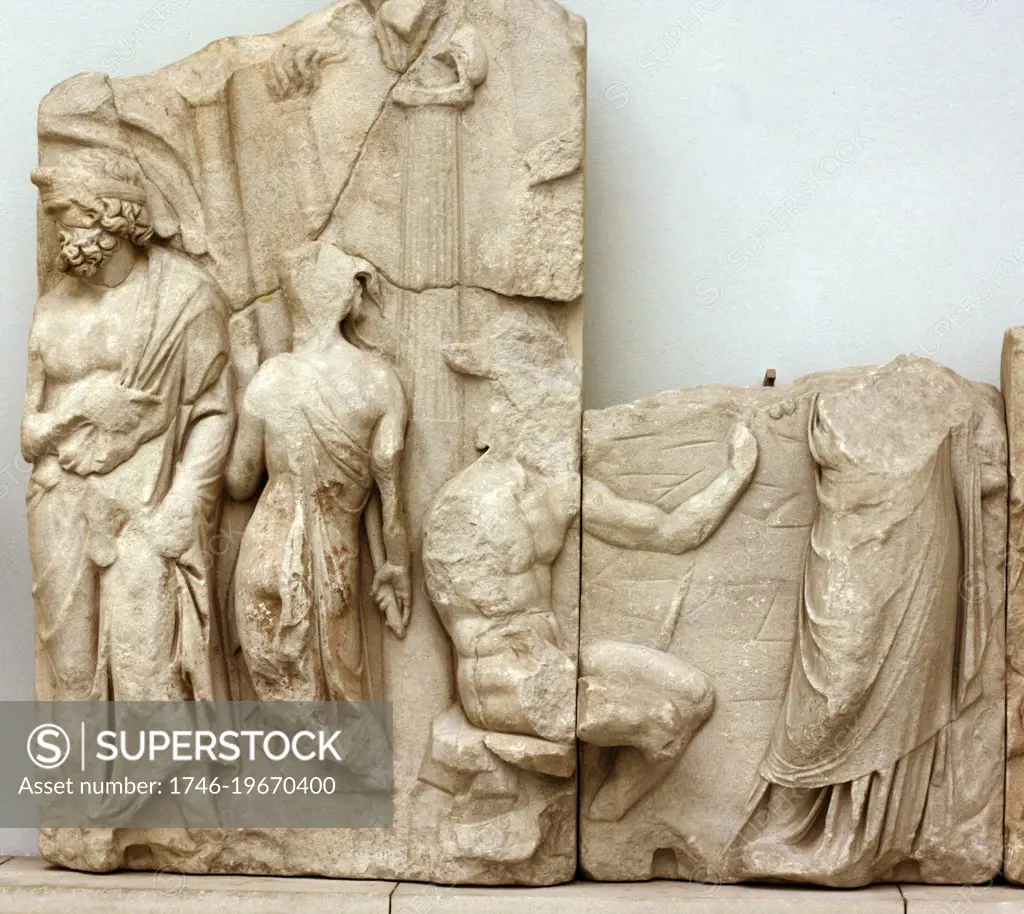
SuperStock offers millions of photos, videos, and stock assets to creatives around the world. This image of Pergamum Altar in the Pergamum Museum in Berlin. It is a monumental construction built during the reign of King Eumenes 11 in the first half of the 2nd century BC on one of the terraces of the acropolis of the ancient city of Pergamum in Asia Minor. It is 35.64 meters wide and 33.4 meters deep. The front stairway is almost 20 meters wide. The base is decorated with a frieze in high relief showing the battle between the Giants and Olympian gods known as the Gigantomachy. In 1878 the German engineer Carl Human began official excavations on the acropolis of Pergamum. The excavation was undertaken in order to rescue the altar friezes and expose the foundation of the edifice. Later, other ancient structures on the acropolis were brought to light. by World History Archive/Image Asset Management is available for licensing today.
Looking for a license?
Click here, and we'll help you find it! Questions? Just ask!
Click here, and we'll help you find it! Questions? Just ask!
DETAILS
Image Number: 1746-19670400Rights ManagedCredit Line:World History Archive/Image Asset Management/SuperStockCollection:Image Asset Management Contributor:World History Archive Model Release:NoProperty Release:NoResolution:4425×3950