Pepsinogen reacts with hydrochloric acid (HCl) in the stomach and turns into pepsin. The purpose of this mechanism is to reduce the negative effect of this enzyme against the cell or channel in which it is secreted. 3D illustration. Chloride and hydrogen ions are secreted separately from the cytoplasm of parietal cells and mixed in the canaliculi.
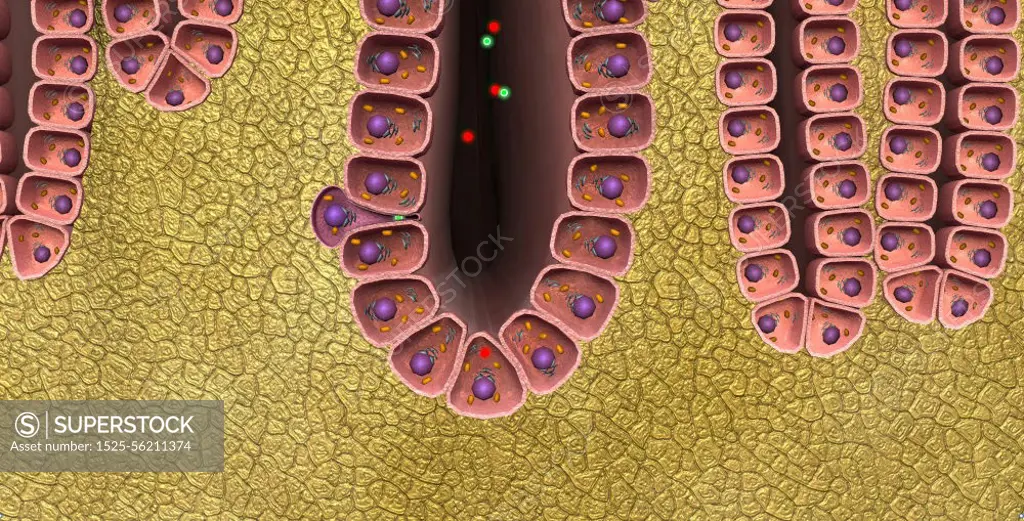
SuperStock offers millions of photos, videos, and stock assets to creatives around the world. This image of Pepsinogen reacts with hydrochloric acid (HCl) in the stomach and turns into pepsin. The purpose of this mechanism is to reduce the negative effect of this enzyme against the cell or channel in which it is secreted. 3D illustration. Chloride and hydrogen ions are secreted separately from the cytoplasm of parietal cells and mixed in the canaliculi. by Isignstock Contributors/Ingram Publishing is available for licensing today.
Looking for a license?
Click here, and we'll help you find it! Questions? Just ask!
Click here, and we'll help you find it! Questions? Just ask!
DETAILS
Image Number: 1525-56211374Royalty FreeCredit Line:Isignstock Contributors/Ingram Publishing/SuperStockCollection:Ingram Publishing Contributor:Isignstock Contributors Model Release:NoProperty Release:NoResolution:5728×2918