Pauldron (proper left) and Grandguard, c. 1560-1580. South Germany, 16th century. Steel, leather straps, brass rivets; part 1: 28.5 x 27.5 cm (11 1/4 x 10 13/16 in.); part 2: 29 x 29.2 cm (11 7/16 x 11 1/2 in.). This armor was developed for the joust--a sporting combat between two mounted contestants. Although all of the elements of this armor date from the same period, they are not all from the same suit. This armor is thus called "composed." It also shows the asymmetry of jousting armor. The participants rode along a wall-like barrier known as a "tilt" with their left sides facing one another. Consequently, armor on that side of the body had to be thicker. Note the large plate (grandguard) over the left shoulder for extra protection. Also, the breathing holes in the helmet were placed on the right side (farthest from an opponent's lance) to avoid injuries from splinters. The bracket attached to the right breastplate is called the lance-rest, a shock-absorbing support designed to acc
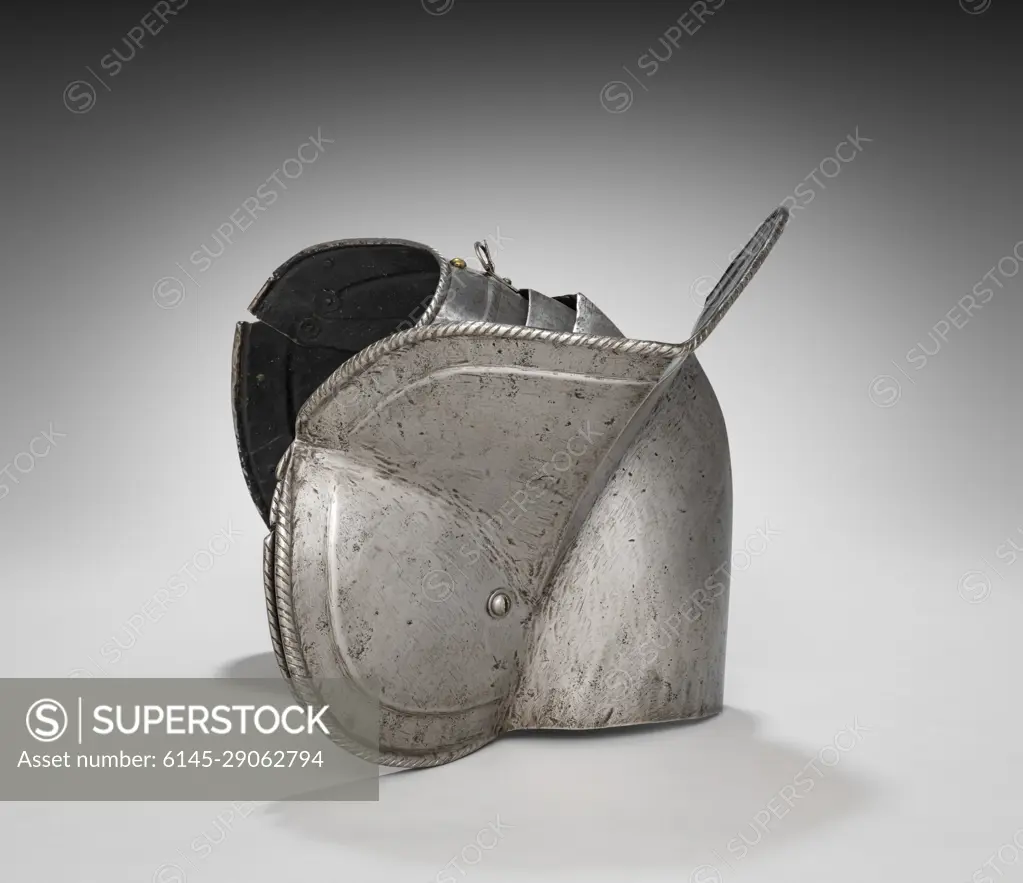
SuperStock offers millions of photos, videos, and stock assets to creatives around the world. This image of Explore the Intricate Design of Medieval Armor: A Detailed Look at a Historic Noseguard Helmet by Piemags/PL Photography Limited is available for licensing today.
Looking for a license?
Click here, and we'll help you find it! Questions? Just ask!
Click here, and we'll help you find it! Questions? Just ask!
DETAILS
Image Number: 6145-29062794Royalty FreeCredit Line:Piemags/PL Photography Limited/SuperStockCollection:PL Photography Limited Contributor:Piemags Model Release:NoProperty Release:NoResolution:3400×2935